
转录因子WRKY41-黄酮3'-羟化酶模块微调马铃薯中的类黄酮代谢和耐寒性。
The transcription factor WRKY41-FLAVONOID 3'-HYDROXYLASE module fine-tunes flavonoid metabolism and cold tolerance in potato.
作者信息
Bao Huihui, Yuan Li, Luo Yongchao, Zhang Jinxiu, Liu Xi, Wu Qiuju, Wang Xiyao, Liu Jitao, Zhu Guangtao
机构信息
Shenzhen Branch, Guangdong Laboratory of Lingnan Modern Agriculture, Genome Analysis Laboratory of the Ministry of Agriculture and Rural Affairs, Agricultural Genomics Institute at Shenzhen, Chinese Academy of Agricultural Sciences, Shenzhen 518120, China.
Yunnan Key Laboratory of Potato Biology, Engineering Research Center of Sustainable Development and Utilization of Biomass Energy, Ministry of Education, School of Energy and Environment Sciences, Yunnan Normal University, Kunming 650500, China.
出版信息
Plant Physiol. 2025 Mar 1;197(3). doi: 10.1093/plphys/kiaf070.
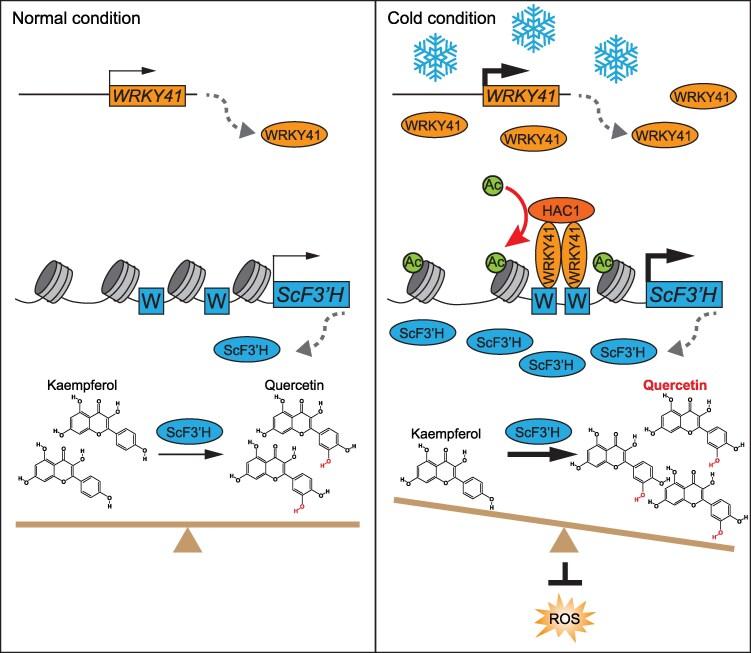
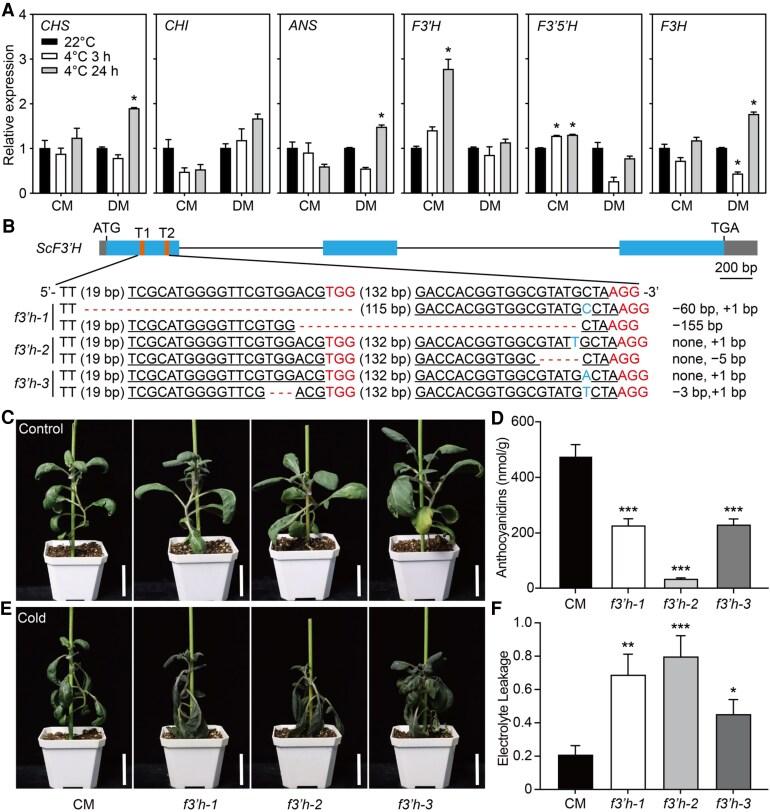
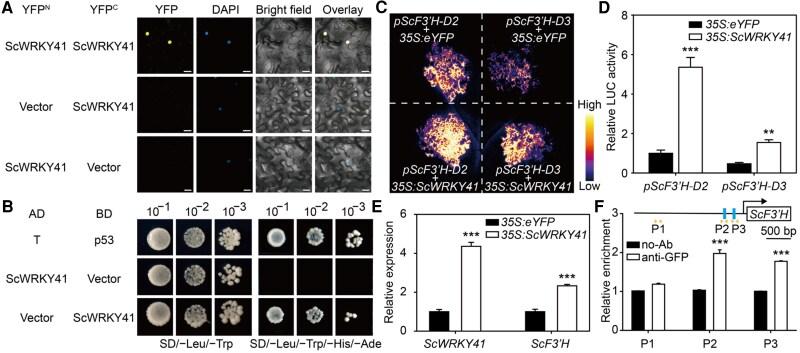
Cold stress adversely affects crop growth and productivity. Resolving the genetic basis of freezing tolerance is important for crop improvement. Wild potato (Solanum commersonii) exhibits excellent freezing tolerance. However, the genetic factors underlying its freezing tolerance remain poorly understood. Here, we identified flavonoid 3'-hydroxylase (F3'H), a key gene in the flavonoid biosynthesis pathway, as highly expressed in S. commersonii compared with cultivated potato (S. tuberosum L.). Loss of ScF3'H function impaired freezing tolerance in S. commersonii, while ScF3'H overexpression in cultivated potato enhanced its freezing tolerance. Metabolic analysis revealed that F3'H generates more downstream products by adding hydroxyl (-OH) groups to the flavonoid ring structures. These flavonoids enhance reactive oxygen species scavenging, thereby contributing to freezing tolerance. Furthermore, the W-box element in the F3'H promoter plays a critical role in cold responses. Cold-induced transcription factor ScWRKY41 directly binds to the ScF3'H promoter region and recruits histone acetyltransferase 1 (ScHAC1), which enhances histone acetylation at the F3'H locus and activates its transcription. Overall, we identified the cold-responsive WRKY41-F3'H module that enhances freezing tolerance by augmenting the antioxidant capacity of flavonoids. This study reveals a valuable natural gene module for breeding enhanced freezing tolerance in potato and other crops.
冷胁迫对作物生长和生产力产生不利影响。解析耐寒性的遗传基础对作物改良至关重要。野生马铃薯(茄属Commersonii)表现出优异的耐寒性。然而,其耐寒性背后的遗传因素仍知之甚少。在此,我们鉴定出黄酮类3'-羟化酶(F3'H),它是黄酮类生物合成途径中的关键基因,与栽培马铃薯(S. tuberosum L.)相比,在茄属Commersonii中高表达。ScF3'H功能缺失会损害茄属Commersonii的耐寒性,而在栽培马铃薯中过表达ScF3'H则增强了其耐寒性。代谢分析表明,F3'H通过向黄酮类环结构添加羟基(-OH)基团产生更多下游产物。这些黄酮类物质增强了活性氧清除能力,从而有助于提高耐寒性。此外,F3'H启动子中的W-box元件在冷响应中起关键作用。冷诱导转录因子ScWRKY41直接与ScF3'H启动子区域结合并募集组蛋白乙酰转移酶1(ScHAC1),后者增强F3'H基因座处的组蛋白乙酰化并激活其转录。总体而言,我们鉴定出了冷响应WRKY41-F3'H模块,该模块通过增强黄酮类物质的抗氧化能力来提高耐寒性。这项研究揭示了一个有价值的天然基因模块,可用于培育马铃薯和其他作物增强的耐寒性。



 Zotero 插件