
糖皮质激素暴露引起的人类早产儿、人肺成纤维细胞和海马神经元细胞表观遗传年龄改变。
Glucocorticoid exposure-induced alterations in epigenetic age from human preterm infants and human lung fibroblasts and hippocampal neuronal cells.
作者信息
Wu Xiaohui, Lu Chenglin, Deng Zhiying, Xiao Wenbo, Ni Hongyu, Zhao Cunyou
机构信息
Key Laboratory of Mental Health of the Ministry of Education, Guangdong-Hong Kong-Macao Greater Bay Area Center for Brain Science and Brain-Inspired Intelligence, Guangdong-Hong Kong Joint Laboratory for Psychiatric Disorders, Guangdong Province Key Laboratory of Psychiatric Disorders, Guangdong Basic Research Center of Excellence for Integrated Traditional and Western Medicine for Qingzhi Diseases, Guangdong Mental Health Center, Guangdong Provincial People's Hospital (Guangdong Academy of Medical Science), Guangdong Engineering and Technology Research Center for Genetic Testing, and Department of Medical Genetics, School of Basic Medical Sciences, Southern Medical University, Guangzhou, 510515, China.
Experimental Education/Administration Center, School of Basic Medical Science, Southern Medical University, Guangzhou, China.
出版信息
Clin Epigenetics. 2025 Feb 20;17(1):29. doi: 10.1186/s13148-025-01837-9.
BACKGROUND
Maternal antenatal corticosteroid treatment is standard care to accelerate fetal maturation. However, there are growing concerns that antenatal corticosteroid administration may harm fetal neurodevelopment. Quantitative assessments of the effects of antenatal corticosteroid on the neonates have not been performed and poorly understood about their complex biology.
RESULTS
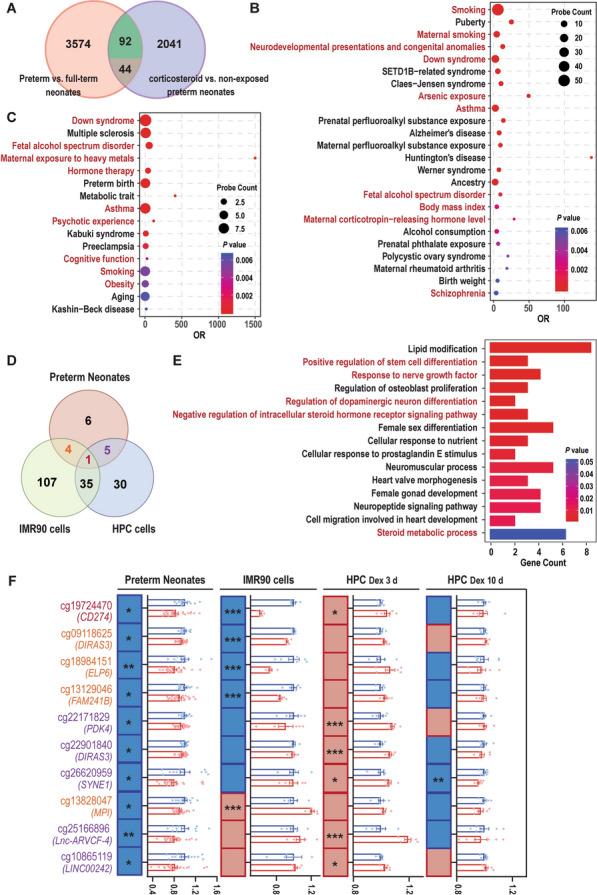
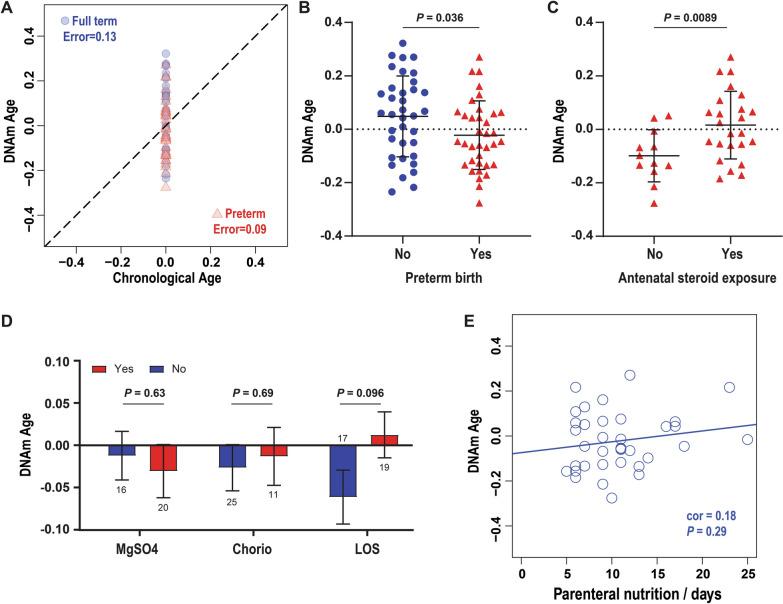
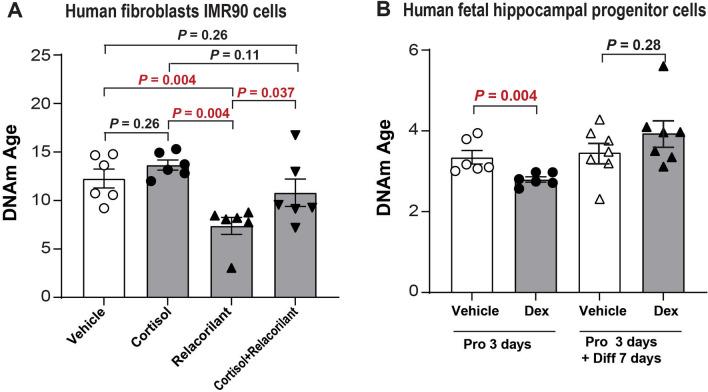
We collected Methylation BeadChips-generated DNA methylation data from the Gene Expression Omnibus (GEO) database and then employed "multi-tissue predictor" to quantify the DNAm age of saliva from 36 preterm neonates, which were stratified by the absence (n = 12) or presence (n = 24) of antenatal corticosteroid exposure, as well as 36 full-term neonates. Next, the DNAm age of human lung fibroblast IMR90 cells and human fetal multipotent hippocampal progenitor HPC cells, with or without glucocorticoid treatment, was also determined. We observed that the DNAm age of full-term neonates was significantly higher than that of the preterm neonates, and antenatal corticosteroid exposure accelerated the DNAm age of preterm neonates, while glucocorticoid exposure accelerated the DNAm age of IMR90 cells. Conversely, dexamethasone exposure delayed the DNAm age of HPC cells during the proliferation phase. It is noteworthy that 65% of the differentially methylated probes (DMPs) linked to the multi-tissue predictor marked CpGs and corticosteroid exposure in IMR90 cells exhibited comparable methylation patterns with the DMPs associated with the antenatal corticosteroid exposure in preterm neonates. Conversely, the majority of these DMPs exhibited inverse methylation alterations in dexamethasone-induced HPC cells. Furthermore, the epigenome-wide association study (EWAS) trait enrichment analyses of the DMPs linked to the antenatal corticosteroid exposure in preterm neonates revealed significant associations with prenatal adverse environmental exposure, growth and development, and neuropsychiatric disorders.
CONCLUSIONS
Our results identified the cellular and molecular evidences of epigenetic clock changes in neonatal growth and developmental trajectories with the interference of antenatal corticosteroid treatment and provided potential clinical guidance for the future development of noninvasive fetal assessments to identify pregnant women who could benefit from antenatal corticosteroid in a wider gestational age.
背景
母体产前使用皮质类固醇治疗是加速胎儿成熟的标准护理措施。然而,越来越多的人担心产前使用皮质类固醇可能会损害胎儿神经发育。目前尚未对产前皮质类固醇对新生儿的影响进行定量评估,且对其复杂生物学机制了解甚少。
结果
我们从基因表达综合数据库(GEO)收集了甲基化芯片生成的DNA甲基化数据,然后使用“多组织预测器”对36例早产儿和36例足月儿唾液的DNA甲基化年龄进行定量,其中早产儿根据是否暴露于产前皮质类固醇分为未暴露组(n = 12)和暴露组(n = 24)。接下来,还测定了人肺成纤维细胞IMR90和人胎儿多能海马祖细胞HPC在有或没有糖皮质激素处理情况下的DNA甲基化年龄。我们观察到,足月儿的DNA甲基化年龄显著高于早产儿,产前皮质类固醇暴露加速了早产儿的DNA甲基化年龄,而糖皮质激素暴露加速了IMR90细胞的DNA甲基化年龄。相反,地塞米松暴露在增殖期延迟了HPC细胞的DNA甲基化年龄。值得注意的是,与多组织预测器相关的65%差异甲基化探针(DMP)标记的CpG以及IMR90细胞中的皮质类固醇暴露表现出与早产儿产前皮质类固醇暴露相关的DMP类似的甲基化模式。相反,这些DMP中的大多数在地塞米松诱导的HPC细胞中表现出相反的甲基化改变。此外,对与早产儿产前皮质类固醇暴露相关的DMP进行的全表观基因组关联研究(EWAS)性状富集分析显示,与产前不良环境暴露、生长发育和神经精神疾病存在显著关联。
结论
我们的研究结果确定了产前皮质类固醇治疗干扰下新生儿生长发育轨迹中表观遗传时钟变化的细胞和分子证据,并为未来无创胎儿评估的发展提供了潜在的临床指导,以识别在更广泛孕周内可从产前皮质类固醇中获益的孕妇。
 Zotero 插件