
钙电穿孔通过上调人结肠癌细胞中的HSP27、HSP70、天冬氨酸β-羟化酶和CD133诱导应激反应。
Calcium electroporation induces stress response through upregulation of HSP27, HSP70, aspartate β-hydroxylase, and CD133 in human colon cancer cells.
作者信息
Szewczyk Anna, Rembiałkowska Nina, Saczko Jolanta, Daczewska Małgorzata, Novickij Vitalij, Kulbacka Julita
机构信息
Department of Molecular and Cellular Biology, Faculty of Pharmacy, Wroclaw Medical University, Wrocław, Poland.
State Research Institute Centre for Innovative Medicine, Department of Immunology and Bioelectrochemistry, Vilnius, Lithuania.
出版信息
Biol Res. 2025 Feb 21;58(1):10. doi: 10.1186/s40659-025-00591-9.
BACKGROUND
Electroporation (EP) leverages electric pulses to permeabilize cell membranes, enabling the delivery of therapeutic agents like calcium in cancer treatment. Calcium electroporation (CaEP) induces a rapid influx of calcium ions, disrupting cellular calcium homeostasis and triggering cell death pathways. This study aims to compare the cellular responses between microsecond (µsEP) and nanosecond (nsEP) electroporation, particularly in terms of oxidative stress, immune response activation, and cancer stem cell (CSC) viability in drug-resistant (LoVo Dx) and non-resistant (LoVo) colorectal cancer cell lines.
RESULTS
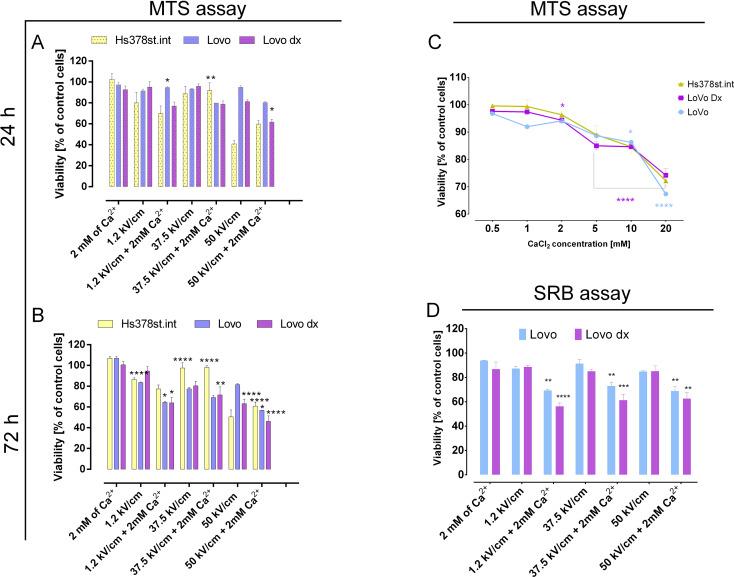
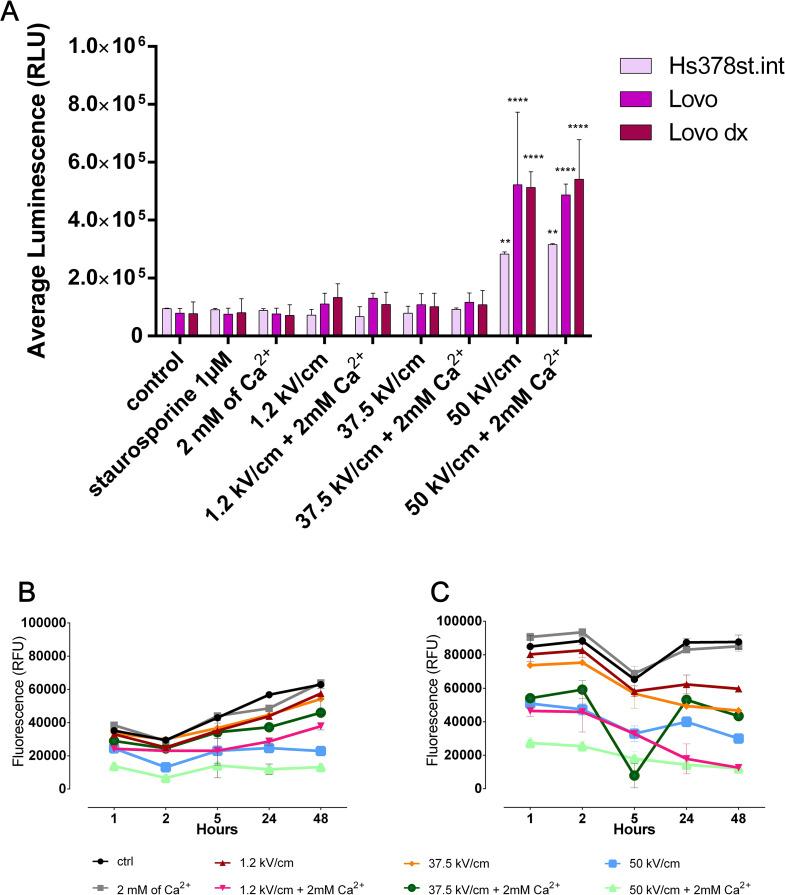
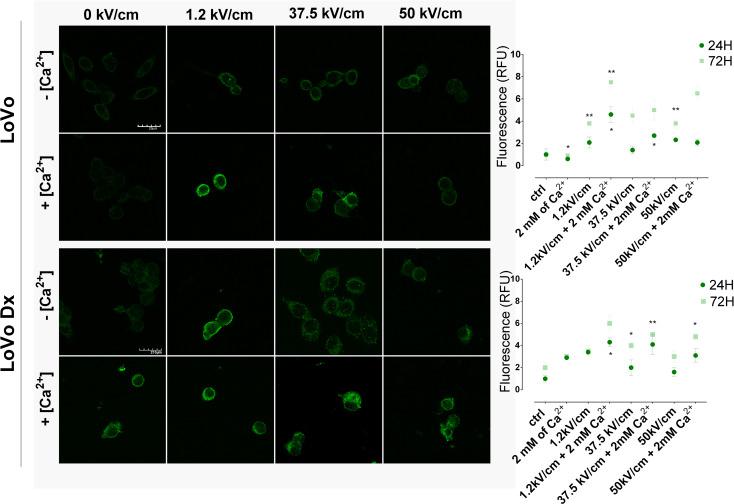
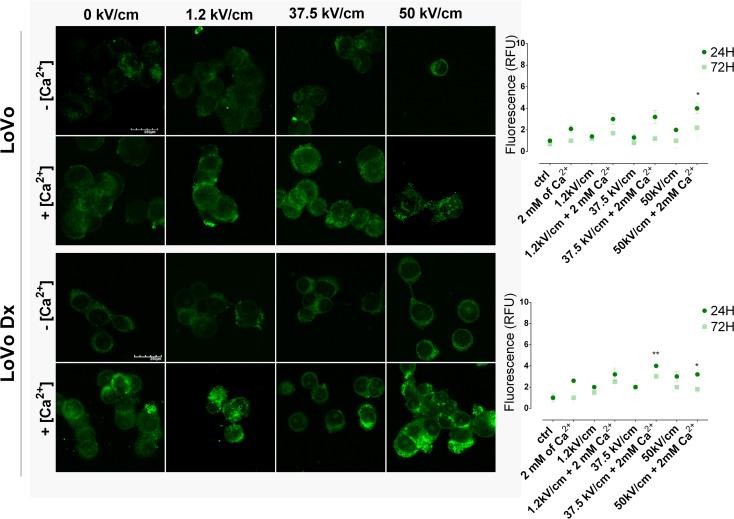
Both µsEP and nsEP, particularly when combined with Ca, significantly reduced the viability of cancer cells, with nsEP showing greater efficacy. Reactive oxygen species (ROS) levels increased 5-fold in malignant cells following nsEP, correlating with decreased ATP production and mitochondrial dysfunction. Nanosecond CaEP (nsCaEP) also induced significant expression of aspartate-β-hydroxylase (ASPH), a protein linked to calcium homeostasis and tumor progression. Moreover, nsEP led to heightened expression of heat shock proteins (HSP27/70), indicating potential immune activation. Interestingly, nsEP without calcium drastically reduced the expression of CD133, a marker for CSCs, while the addition of Ca preserved CD133 expression. The expression of death effector domain-containing DNA binding protein (DEDD), associated with apoptosis, was significantly elevated in treated cancer cells, especially in the nucleus after nsCaEP.
CONCLUSIONS
The study confirms that nsEP is more effective than µsEP in disrupting cancer cell viability, enhancing oxidative stress, and triggering immune responses, likely through HSP overexpression and ROS generation. nsEP also appears to reduce CSC viability, offering a promising therapeutic approach. However, preserving CD133 expression in the presence of calcium suggests complex interactions that require further investigation. These findings highlight the potential of nsCaEP as an innovative strategy for targeting both cancer cells and CSCs, potentially improving treatment outcomes in colorectal cancer. Further studies are needed to explore the exact cell death mechanisms and optimize protocols for clinical applications.
背景
电穿孔(EP)利用电脉冲使细胞膜通透性增加,从而在癌症治疗中实现如钙等治疗剂的递送。钙电穿孔(CaEP)会诱导钙离子快速内流,破坏细胞内钙稳态并触发细胞死亡途径。本研究旨在比较微秒级(µsEP)和纳秒级(nsEP)电穿孔之间的细胞反应,特别是在耐药(LoVo Dx)和非耐药(LoVo)结肠癌细胞系中的氧化应激、免疫反应激活和癌症干细胞(CSC)活力方面。
结果
µsEP和nsEP,特别是与钙联合使用时,均显著降低了癌细胞的活力,其中nsEP显示出更高的疗效。纳秒级电穿孔后,恶性细胞中的活性氧(ROS)水平增加了5倍,这与ATP生成减少和线粒体功能障碍相关。纳秒级钙电穿孔(nsCaEP)还诱导了天冬氨酸-β-羟化酶(ASPH)的显著表达,ASPH是一种与钙稳态和肿瘤进展相关的蛋白质。此外,nsEP导致热休克蛋白(HSP27/70)表达升高,表明有潜在的免疫激活。有趣的是,无钙的nsEP显著降低了CSC标志物CD133的表达,而添加钙则保留了CD133的表达。与细胞凋亡相关的含死亡效应结构域的DNA结合蛋白(DEDD)的表达在处理后的癌细胞中显著升高,尤其是在nsCaEP处理后的细胞核中。
结论
该研究证实,nsEP在破坏癌细胞活力、增强氧化应激和触发免疫反应方面比µsEP更有效,可能是通过热休克蛋白的过表达和ROS的产生。nsEP似乎还能降低CSC的活力,提供了一种有前景的治疗方法。然而,在有钙存在的情况下保留CD133表达表明存在复杂的相互作用,需要进一步研究。这些发现突出了nsCaEP作为一种靶向癌细胞和CSC的创新策略的潜力,可能改善结肠癌的治疗效果。需要进一步研究以探索确切的细胞死亡机制并优化临床应用方案。



 Zotero 插件