
功能失调的CD8 T细胞轴的持续补充与晚期乳腺癌对化疗免疫疗法的反应相关。
Continuous replenishment of the dysfunctional CD8 T cell axis is associated with response to chemoimmunotherapy in advanced breast cancer.
作者信息
Metoikidou Christina, Karnaukhov Vadim, Boeckx Bram, Timperi Eleonora, Bonté Pierre-Emmanuel, Wang Ling, Espenel Marion, Albaud Benoit, Loirat Delphine, Wang Xiaoxiao, Sotiriou Christos, Aftimos Philippe, Punie Kevin, Wildiers Hans, Labroska Viktorija, Wang Ming-Wei, Waterfall Joshua J, Piccart-Gebhart Martine, Mora Thierry, Walczak Aleksandra, Lantz Olivier, Buisseret Laurence, Lambrechts Diether, Amigorena Sebastian, Romano Emanuela
机构信息
Institut Curie, PSL University, Inserm U932, Immunity and Cancer, 75005 Paris, France; Division of Molecular Oncology and Immunology, The Netherlands Cancer Institute, Amsterdam, the Netherlands.
Institut Curie, PSL University, Inserm U932, Immunity and Cancer, 75005 Paris, France; Laboratoire de Physique de l'École Normale Supérieure, Paris Sciences & Lettres University, CNRS, Sorbonne Université and Université Paris Cité, 75005 Paris, France.
出版信息
Cell Rep Med. 2025 Mar 18;6(3):101973. doi: 10.1016/j.xcrm.2025.101973. Epub 2025 Feb 20.
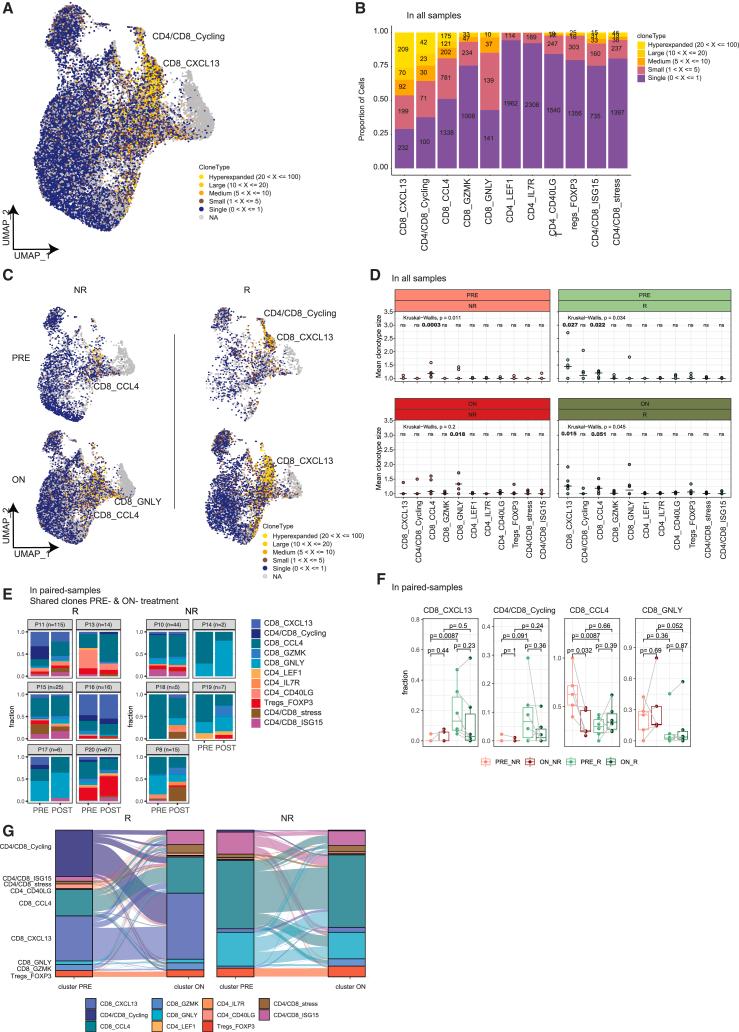
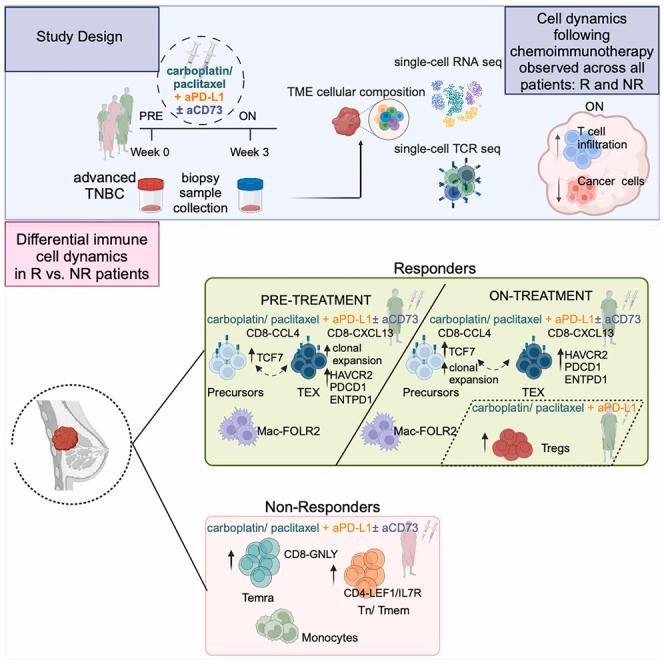
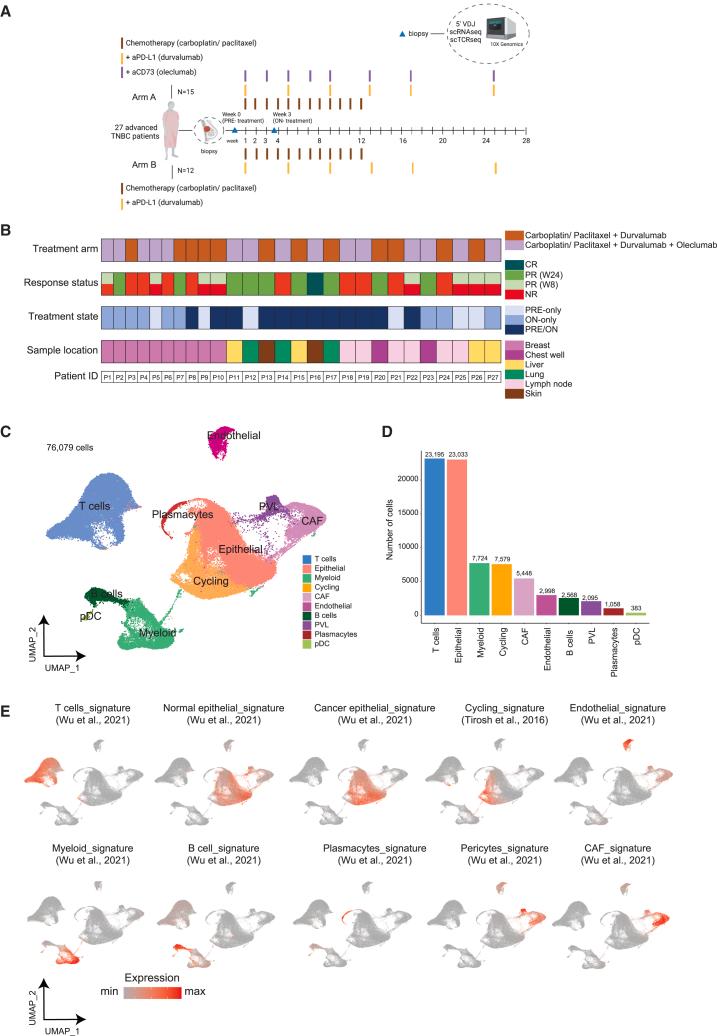
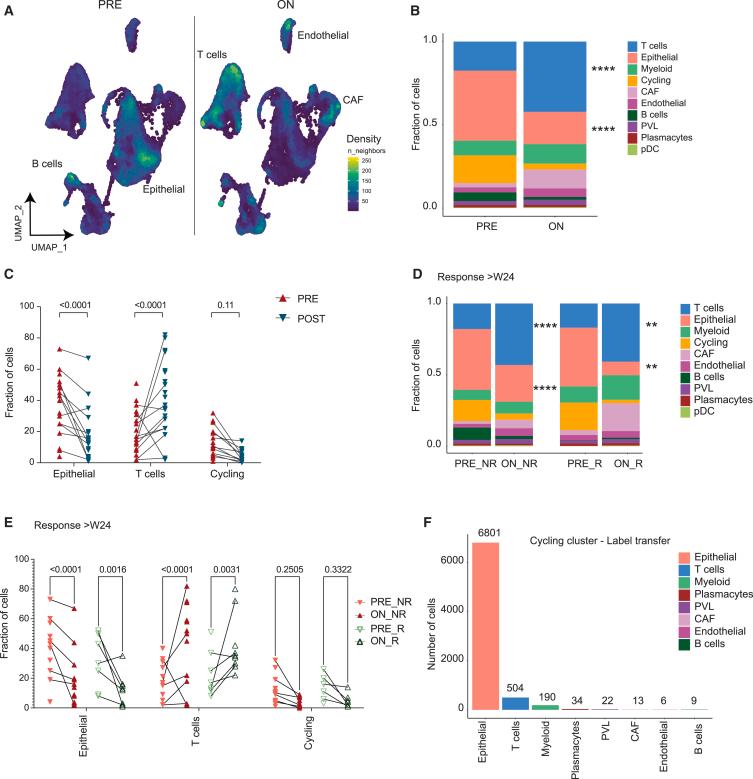
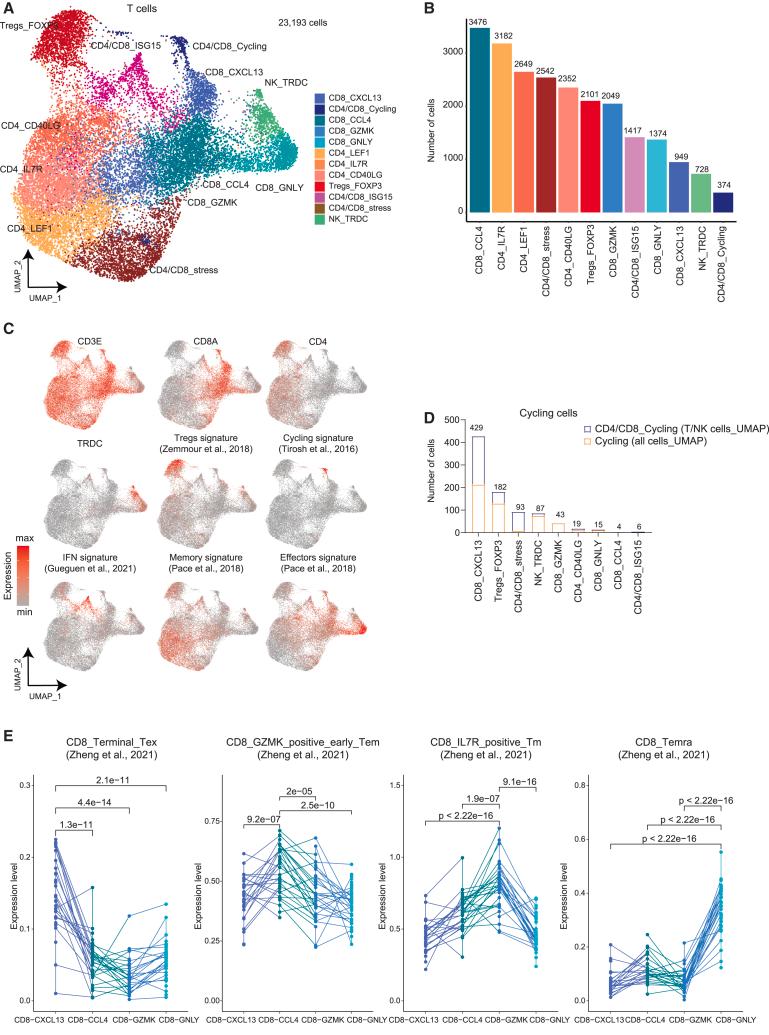
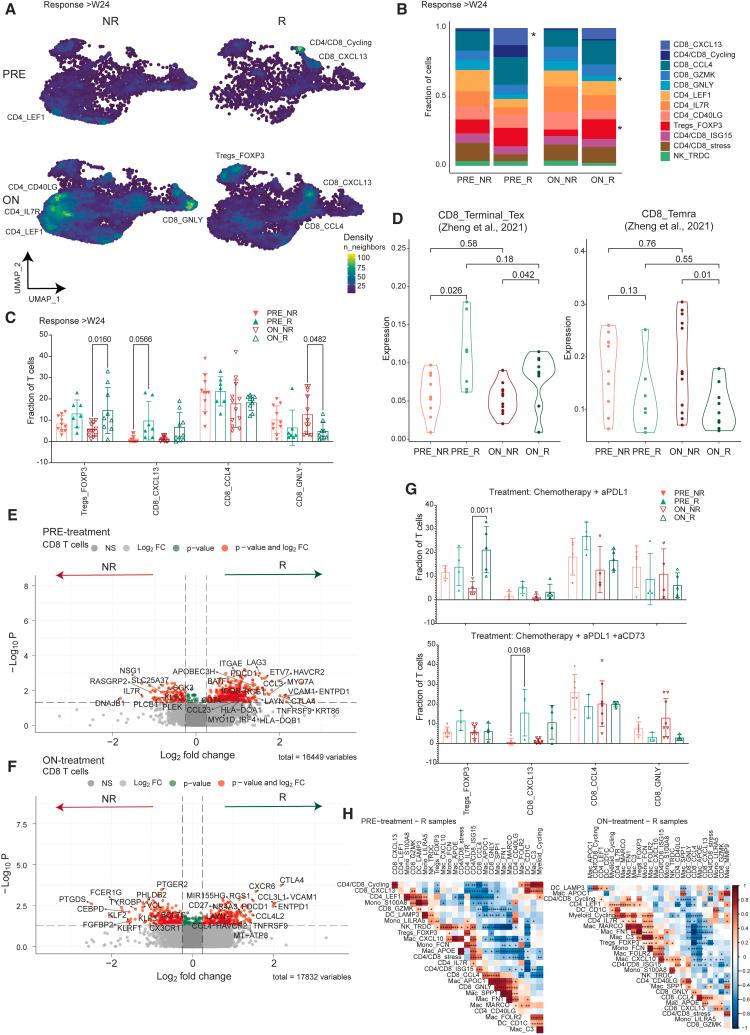
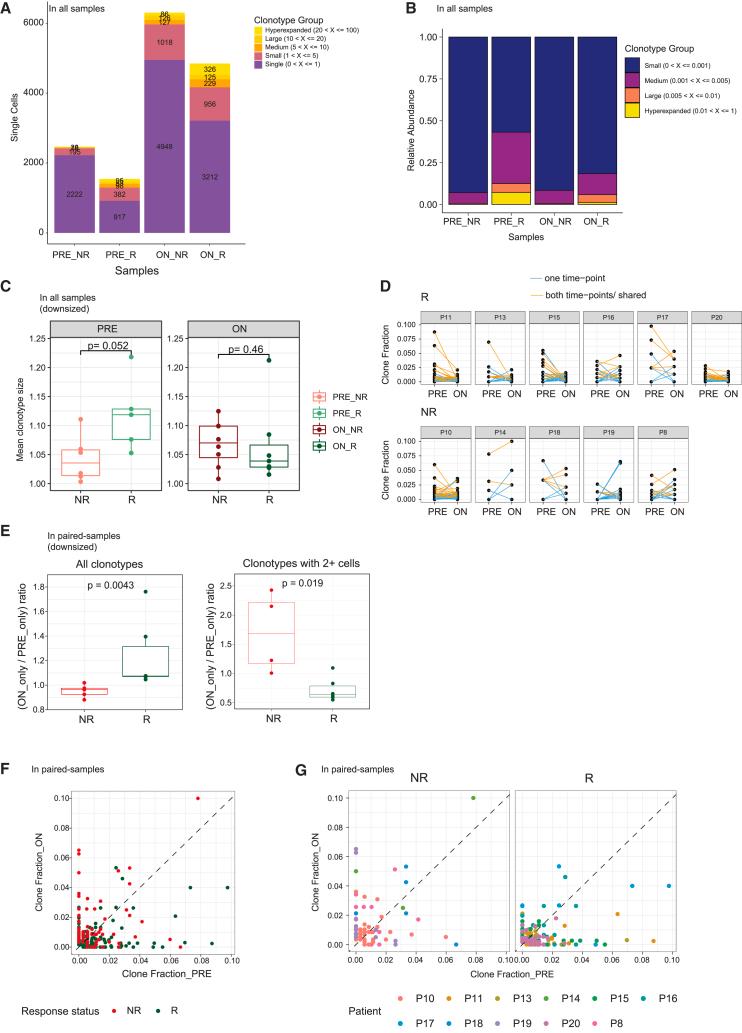
Chemotherapy combined with immune checkpoint blockade has shown clinical activity in breast cancer. Response, however, occurs in only a low proportion of patients. How the immune landscape of the tumor determines the immune and clinical responses to chemoimmunotherapy is not well understood. Here, using a combination of single-cell RNA sequencing (scRNA-seq) and single-cell T cell receptor sequencing (scTCR-seq), we profile 40 biopsies from 27 patients with metastatic triple-negative breast cancer (TNBC), receiving chemotherapy and anti-PD-L1 alone or in combination with anti-CD73, in a phase 2 randomized clinical trial. Our results show an enrichment of late-dysfunctional, clonally expanded CD8 T cells in responder (R) patients. On treatment, R display an influx of newly emerging clonotypes, as well as expansion of the CD8 precursors. Collectively, our data suggest that baseline clonal expansion could be a potential predictor of response and that both clonal reinvigoration of pre-existing tumor-reactive T cells and clonal replacement on-treatment are important for a protective response to chemoimmunotherapy.
化疗联合免疫检查点阻断疗法已在乳腺癌中显示出临床活性。然而,只有一小部分患者会产生反应。肿瘤的免疫格局如何决定对化疗免疫疗法的免疫和临床反应,目前尚不清楚。在此,在一项2期随机临床试验中,我们结合单细胞RNA测序(scRNA-seq)和单细胞T细胞受体测序(scTCR-seq),对27例转移性三阴性乳腺癌(TNBC)患者的40份活检样本进行了分析,这些患者单独接受化疗和抗PD-L1治疗,或与抗CD73联合使用。我们的结果显示,反应者(R)患者中晚期功能失调、克隆性扩增的CD8 T细胞有所富集。在治疗过程中,R患者表现出新出现的克隆型的流入,以及CD8前体细胞的扩增。总体而言,我们的数据表明,基线克隆性扩增可能是反应的潜在预测指标,并且既往存在的肿瘤反应性T细胞的克隆性重振和治疗期间的克隆性替代对于化疗免疫疗法的保护性反应都很重要。

 Zotero 插件