
交叉路口车辆一氧化碳排放和能源使用的预测方法。
Predictive methods for CO emissions and energy use in vehicles at intersections.
作者信息
Mądziel Maksymilian
机构信息
Faculty of Mechanical Engineering and Aeronautics, Rzeszow University of Technology, 35-959, Rzeszow, Poland.
出版信息
Sci Rep. 2025 Feb 22;15(1):6463. doi: 10.1038/s41598-025-91300-9.
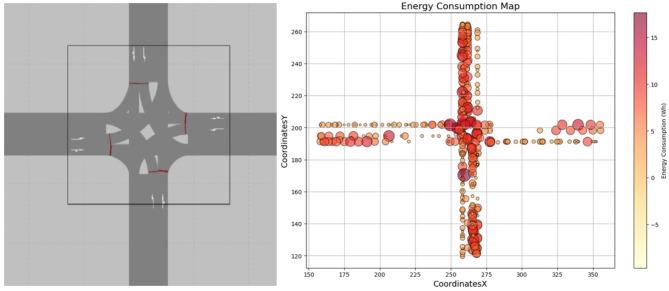
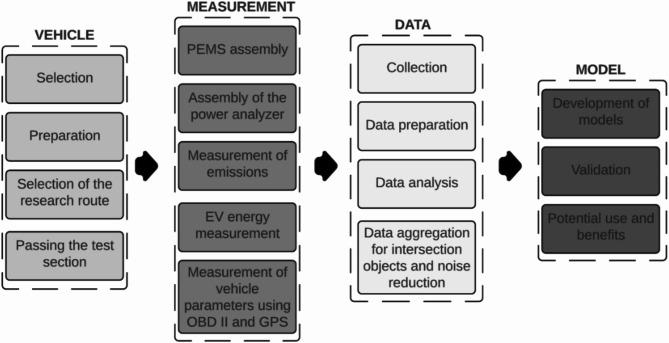
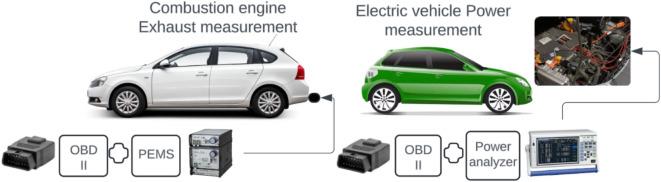
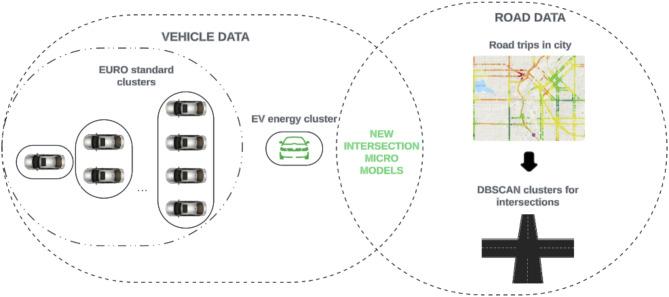
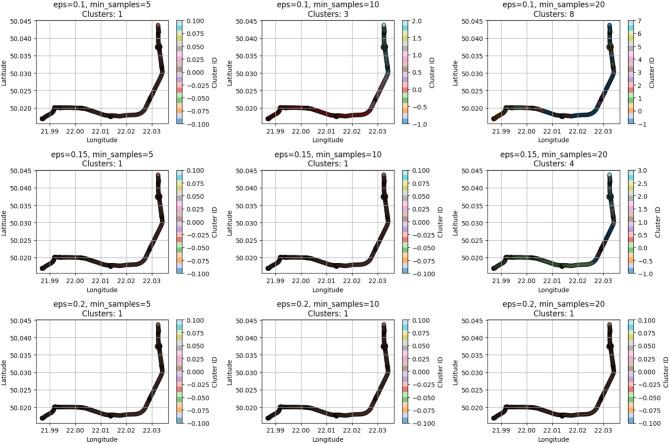
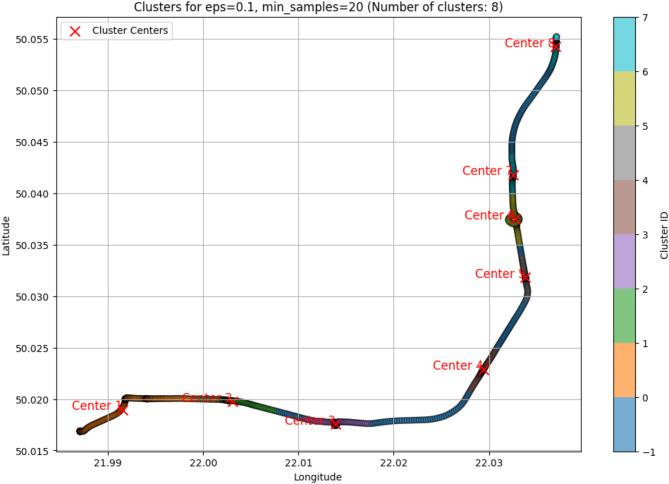
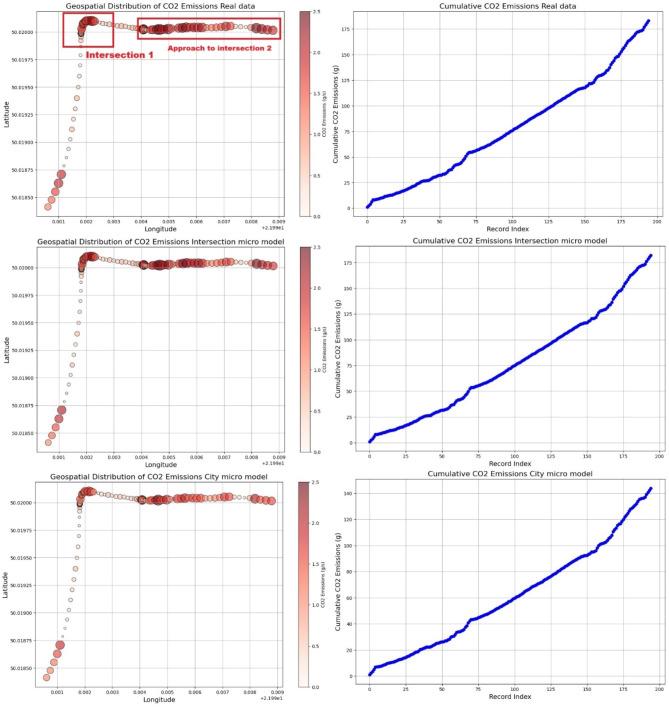
This study examines CO emissions and vehicle energy consumption at high-traffic intersections in urban areas. Existing emission models at the macro, meso, and microscales often fail to accurately represent real traffic conditions, especially at intersections with frequent stop-and-go maneuvers. New predictive models were developed using methods such as linear regression, least absolute shrinkage and selection operator (LASSO), Ridge regression, Random Forest, and Extreme Gradient Boosting (XGBoost), with XGBoost providing the highest accuracy. The density-based spatial clustering of applications with noise (DBSCAN) algorithm was used to group data specific to intersection areas, enabling targeted analysis. Real-world driving data were collected using portable emissions measurement systems and the Hioki 3390 power analyzer. The developed models were validated and applied in simulations, including Vissim software, to improve road infrastructure planning and traffic management. These methods offer a refined approach to reducing emissions and optimizing energy use in urban transportation networks.
本研究考察了城市地区高流量交叉路口的一氧化碳排放和车辆能源消耗情况。宏观、中观和微观尺度上现有的排放模型往往无法准确反映实际交通状况,尤其是在频繁启停的交叉路口。利用线性回归、最小绝对收缩和选择算子(LASSO)、岭回归、随机森林和极端梯度提升(XGBoost)等方法开发了新的预测模型,其中XGBoost的准确性最高。基于密度的带噪声应用空间聚类(DBSCAN)算法用于对交叉路口区域特定的数据进行分组,以便进行有针对性的分析。使用便携式排放测量系统和日置3390功率分析仪收集实际驾驶数据。所开发的模型在包括Vissim软件在内的模拟中得到验证和应用,以改善道路基础设施规划和交通管理。这些方法为减少城市交通网络中的排放和优化能源使用提供了一种精细的途径。

 Zotero 插件