
草酸钾与抗PD-1联合用于治疗结直肠癌。
Combination of potassium oxonate with anti-PD-1 for the treatment of colorectal cancer.
作者信息
Wang Yuanyuan, Hu Chenxi, Du Tianpeng, Li Jiawen, Hui Kaiyuan, Jiang Xiaodong
机构信息
Department of Oncology, The Affiliated Lianyungang Hospital of Xuzhou Medical University, Lianyungang, Jiangsu, China.
Department of Urology, The Second Affiliated Hospital of Nanjing Medical University, Nanjing, China.
出版信息
Front Oncol. 2025 Feb 7;15:1528004. doi: 10.3389/fonc.2025.1528004. eCollection 2025.
INTRODUCTION
Identification of effective therapies for colorectal cancer (CRC) remains an urgent medical need, especially for the microsatellite stable (MSS) phenotype. In our previous study, potassium oxonate (PO), a uricase inhibitor commonly used for elevating uric acid in mice, unexpectedly showed remarkable inhibition of tumor growth when combined with anti-programmed death-1 (PD-1). Further research demonstrated that the combination of potassium oxonate and anti-PD-1 could reprogram the immune microenvironment. This study aimed to explore the anti-tumor effect of PO combined with anti-PD-1, and investigate the impact on the immunosuppressive tumor microenvironment (TME).
METHODS
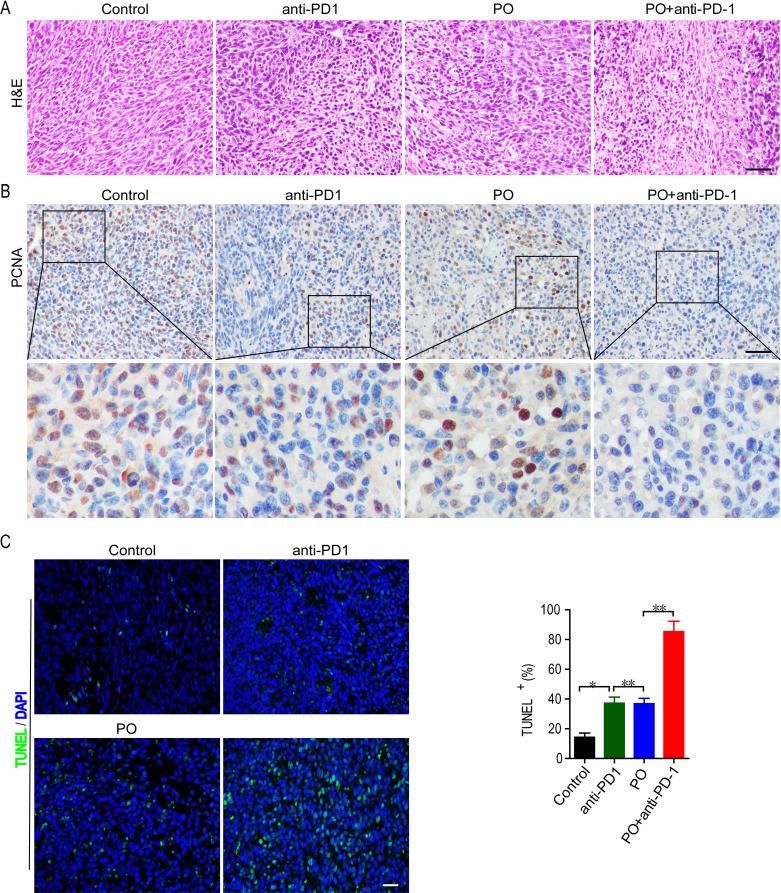
We established a syngeneic mouse model of CRC and divided into groups of control group, single drugs group of PO and anti-PD-1, and the combination group. Use the HE staining, immunohistochemistry (IHC) and TUNEL staining of tumor issues to verify the anti-neoplasm of each group. We also tested the changes of TME through flow cytometry of spleen of mice in each group, as well as the IHC of cytokines.
RESULTS
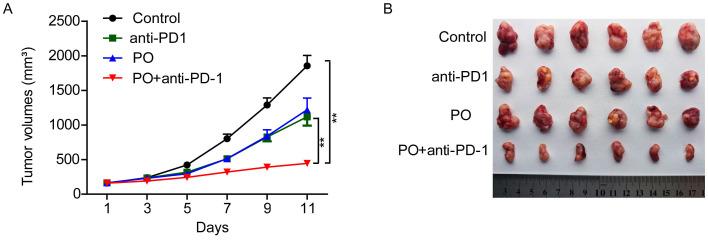
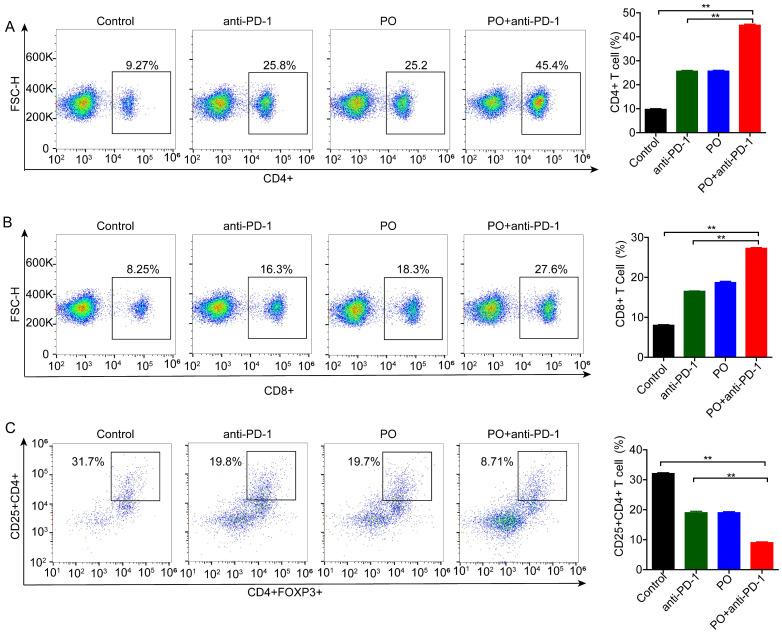
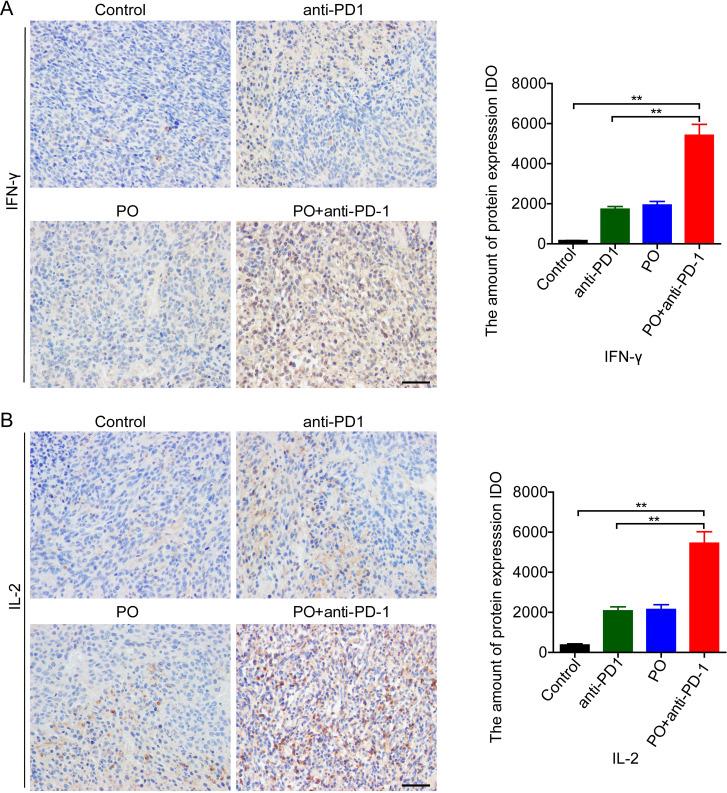
The co-therapy of PO and anti-PD-1 showed admirable anti-tumor effect compared with the control group and the single drug groups. The TME were tended to an environment beneficial for killing tumors by enhancing chemotactic factor release, increasing CD8+ T cell infiltration and activation, and decreasing the amount of regulatory T cells. Moreover, IFN-γ and IL-2 secretion were found to be enriched in the tumor TME.
CONCLUSION
Our study indicated that combination of PO and anti-PD-1 could synergistically suppress CRC progression and altered the tumor microenvironment in favor of antitumor immune responses.
引言
确定结直肠癌(CRC)的有效治疗方法仍然是一项迫切的医学需求,特别是对于微卫星稳定(MSS)表型。在我们之前的研究中,草酸钾(PO)是一种常用于提高小鼠尿酸水平的尿酸酶抑制剂,当与抗程序性死亡-1(PD-1)联合使用时,意外地显示出显著的肿瘤生长抑制作用。进一步研究表明,草酸钾和抗PD-1的联合使用可以重新编程免疫微环境。本研究旨在探讨PO联合抗PD-1的抗肿瘤作用,并研究其对免疫抑制性肿瘤微环境(TME)的影响。
方法
我们建立了CRC同基因小鼠模型,并分为对照组、PO单药组、抗PD-1单药组和联合用药组。通过对肿瘤组织进行苏木精-伊红(HE)染色、免疫组织化学(IHC)和TUNEL染色来验证每组的抗肿瘤作用。我们还通过对每组小鼠脾脏进行流式细胞术以及细胞因子的IHC检测来测试TME的变化。
结果
与对照组和单药组相比,PO和抗PD-1联合治疗显示出令人满意的抗肿瘤效果。通过增强趋化因子释放、增加CD8+T细胞浸润和活化以及减少调节性T细胞数量,TME倾向于形成有利于杀伤肿瘤的环境。此外,发现肿瘤TME中干扰素-γ(IFN-γ)和白细胞介素-2(IL-2)分泌增加。
结论
我们的研究表明,PO和抗PD-1联合使用可协同抑制CRC进展,并改变肿瘤微环境以利于抗肿瘤免疫反应。
 Zotero 插件