
1,4-萘醌-1,2,3-三唑杂化物作为具有多激酶抑制活性的新型抗癌剂的设计、合成及药理评价
Design, synthesis and pharmacological evaluation of 1,4-naphthoquinone- 1,2,3-triazole hybrids as new anticancer agents with multi-kinase inhibitory activity.
作者信息
Mardaneh Pegah, Pirhadi Somayeh, Mohabbati Maryam, Khoshneviszadeh Mehdi, Rezaei Zahra, Saso Luciano, Edraki Najmeh, Firuzi Omidreza
机构信息
Department of Medicinal Chemistry, School of Pharmacy, Shiraz University of Medical Sciences, Shiraz, Iran.
Medicinal and Natural Products Chemistry Research Center, Shiraz University of Medical Sciences, Shiraz, Iran.
出版信息
Sci Rep. 2025 Feb 24;15(1):6639. doi: 10.1038/s41598-025-87483-w.
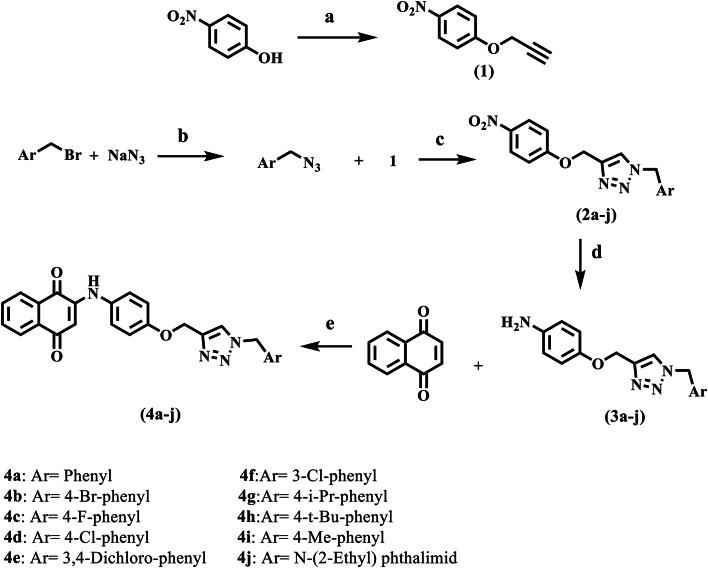
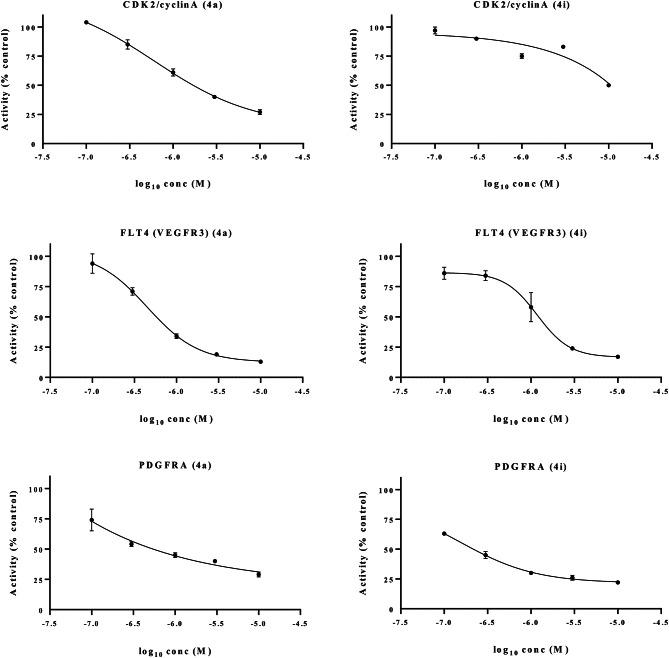
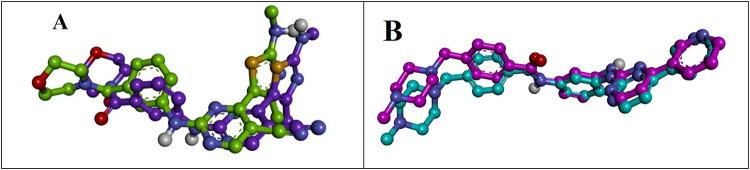
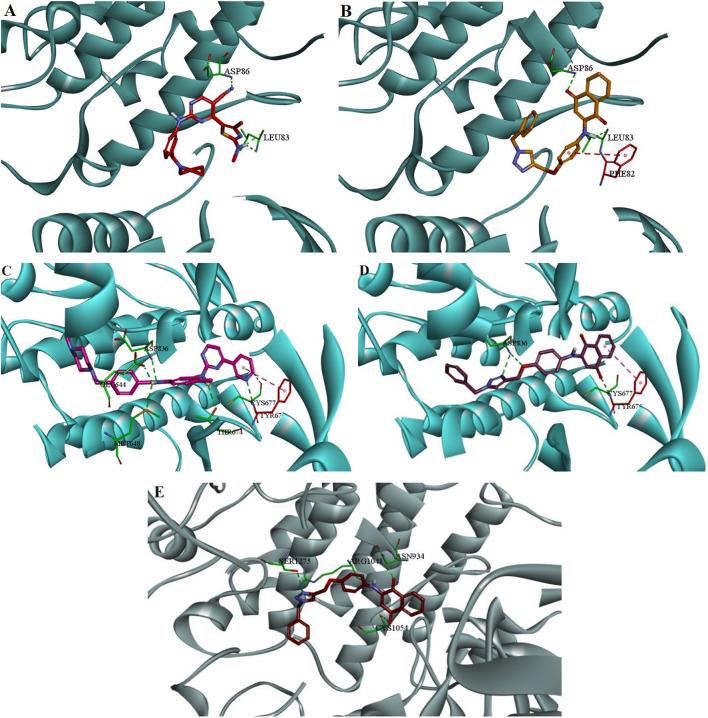
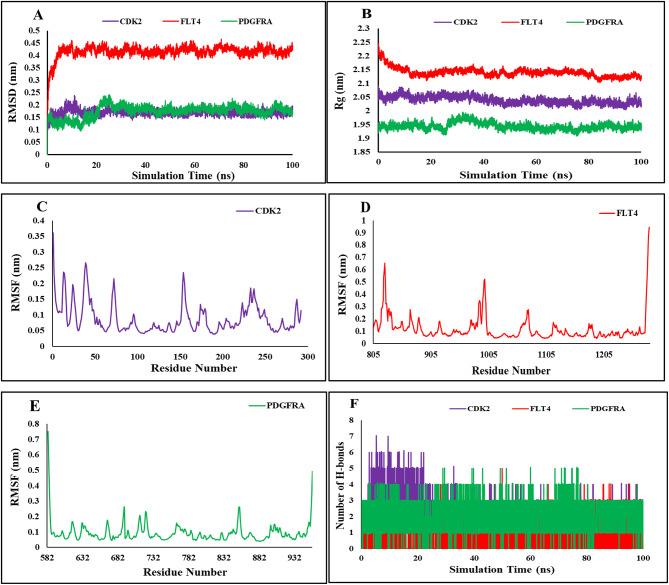
Targeting important oncogenic kinases that contribute to hallmarks of cancer has revolutionized cancer therapy. Ten 1,4-naphthoquinone derivatives linked to 1,2,3-triazole (4a-4j) were designed and synthesized as kinase inhibitors especially aimed at blocking CDK2, a validated and important cancer target. Assessment of the antiproliferative activity of the synthesized compounds against lung (EBC-1), pancreatic ductal adenocarcinoma (PDAC, AsPC-1 and Mia-Paca-2), colorectal (HT-29), and breast cancer (MCF-7) cells revealed that most of the derivatives possess considerable antiproliferative potential, with IC values as low as 0.3 µM. In contrast, the compounds relatively spared NIH3T3 non-cancer cell line. The kinase inhibitory effect of the best compounds was examined against a panel of 30 important oncogenic kinases. Derivatives 4a (bearing a benzyl ring) and 4i (bearing a p-methyl benzyl ring) inhibited CDK2, FLT4 (VEGFR3) and PDGFRA kinases with IC values in the range of 0.55-1.67 and 0.22-11.32 µM, respectively. These compounds also caused S phase arrest and induced characteristic features of apoptosis in PDAC cells. Molecular modeling simulation validated the binding interactions between the synthesized derivatives and the active sites of the 3 target kinases. Finally, the compounds also possessed drug-like features as examined by in silico studies. The results of this study indicate that 1,4-naphthoquinone derivatives could have promising anticancer potential as multi-kinase inhibitors.
靶向促成癌症特征的重要致癌激酶彻底改变了癌症治疗方式。设计并合成了十种与1,2,3 - 三唑相连的1,4 - 萘醌衍生物(4a - 4j)作为激酶抑制剂,特别旨在阻断细胞周期蛋白依赖性激酶2(CDK2),这是一个经过验证的重要癌症靶点。对合成化合物针对肺癌(EBC - 1)、胰腺导管腺癌(PDAC,AsPC - 1和Mia - Paca - 2)、结直肠癌(HT - 29)和乳腺癌(MCF - 7)细胞的抗增殖活性评估显示,大多数衍生物具有相当大的抗增殖潜力,IC值低至0.3 μM。相比之下,这些化合物对NIH3T3非癌细胞系的毒性相对较小。研究了最佳化合物对一组30种重要致癌激酶的激酶抑制作用。衍生物4a(带有苄基环)和4i(带有对甲基苄基环)分别以0.55 - 1.67 μM和0.22 - 11.32 μM的IC值抑制CDK2、FLT4(血管内皮生长因子受体3,VEGFR3)和血小板衍生生长因子受体α(PDGFRA)激酶。这些化合物还导致PDAC细胞出现S期阻滞并诱导凋亡的特征性表现。分子模拟验证了合成衍生物与3种靶激酶活性位点之间的结合相互作用。最后,计算机模拟研究表明这些化合物还具有类药物特性。本研究结果表明,1,4 - 萘醌衍生物作为多激酶抑制剂可能具有良好的抗癌潜力。




 Zotero 插件