
氧化石墨烯薄片尺寸对基于场效应晶体管(FET)的离子及PACAP 38检测生物传感器性能的影响
The Effect of GO Flake Size on Field-Effect Transistor (FET)-Based Biosensor Performance for Detection of Ions and PACAP 38.
作者信息
Lee Seungjun, Park Jongdeok, Song Jaeyoon, Lee Jae-Joon, Kim Jinsik
机构信息
Department of Medical Biotechnology, College of Life Science and Biotechnology, Dongguk University, Seoul 04620, Republic of Korea.
Research Center for Photoenergy Harvesting & Conversion Technology (phct), Department of Energy and Materials Engineering, Dongguk University, Seoul 04620, Republic of Korea.
出版信息
Biosensors (Basel). 2025 Feb 5;15(2):86. doi: 10.3390/bios15020086.
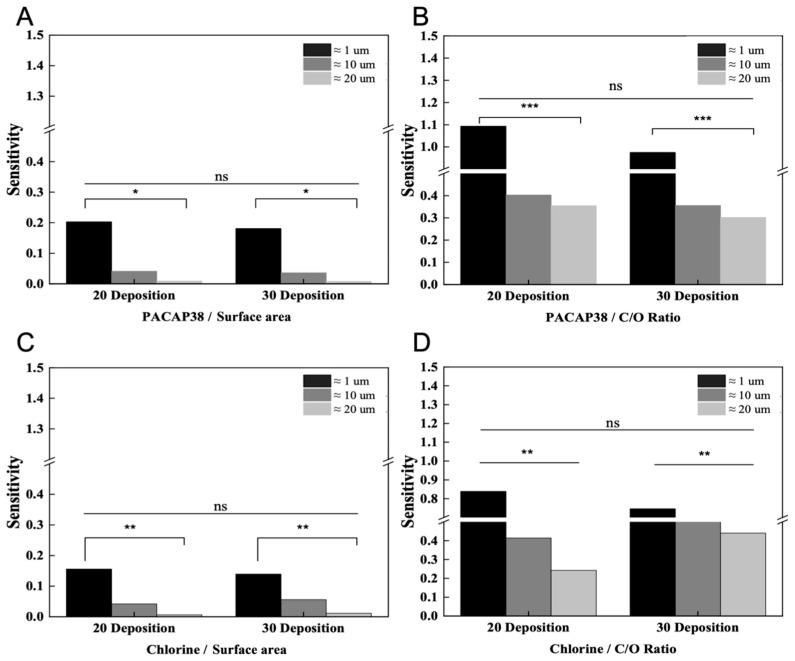
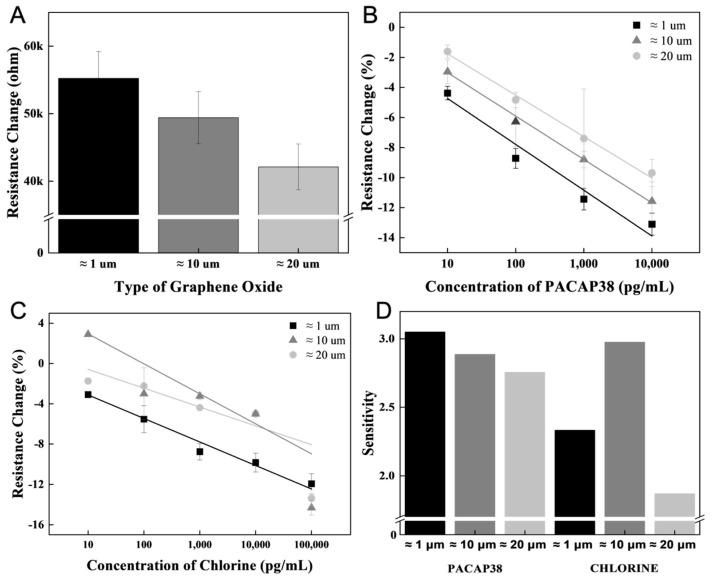
The performance development of rGO-FET biosensors by analyzing the influence of GO flake size on biosensing efficacy. GO flakes of varying sizes, from 1 µm to 20 µm, were prepared under controlled conditions, followed by characterization through SEM and XPS to evaluate their size, surface area, and C/O ratio. The biosensing performance was systematically assessed by rGO-FET biosensors, examining the effects of GO flake size, C/O ratio, and film thickness. PACAP38 was employed as a biomarker for receptor-mediated detection, while chlorine ions served as model analytes for receptor-free small molecule detection. The results indicate that decreasing the GO flake size enhanced the performance for both target biomolecules. These findings highlight the crucial importance of selecting GO flake sizes specific to target analytes and detection strategies, thereby optimizing biosensor efficiency.
通过分析氧化石墨烯薄片尺寸对生物传感效能的影响来研究还原氧化石墨烯场效应晶体管生物传感器的性能发展。在可控条件下制备了尺寸从1微米到20微米不等的氧化石墨烯薄片,随后通过扫描电子显微镜和X射线光电子能谱进行表征,以评估其尺寸、表面积和碳/氧比。利用还原氧化石墨烯场效应晶体管生物传感器系统地评估了生物传感性能,研究了氧化石墨烯薄片尺寸、碳/氧比和薄膜厚度的影响。垂体腺苷酸环化酶激活肽38(PACAP38)被用作受体介导检测的生物标志物,而氯离子则作为无受体小分子检测的模型分析物。结果表明,减小氧化石墨烯薄片尺寸可提高两种目标生物分子的检测性能。这些发现突出了针对目标分析物和检测策略选择特定氧化石墨烯薄片尺寸的至关重要性,从而优化生物传感器效率。




 Zotero 插件