
阻断STAT3/BCL-xL轴可导致岩藻黄质(一种海洋来源的类胡萝卜素)对人膀胱尿路上皮癌细胞产生细胞毒性和顺铂增敏作用。
Blockade of the STAT3/BCL-xL Axis Leads to the Cytotoxic and Cisplatin-Sensitizing Effects of Fucoxanthin, a Marine-Derived Carotenoid, on Human Bladder Urothelial Carcinoma Cells.
作者信息
Dai Wen-Chyi, Chen Tzu-Hsuan, Peng Tzu-Ching, He Yung-Ching, Hsu Chao-Yu, Chang Chia-Che
机构信息
Doctoral Program in Biotechnology Industrial Innovation and Management, National Chung Hsing University, Taichung 402202, Taiwan.
Department of Life Sciences, National Chung Hsing University, Taichung 402202, Taiwan.
出版信息
Mar Drugs. 2025 Jan 22;23(2):54. doi: 10.3390/md23020054.
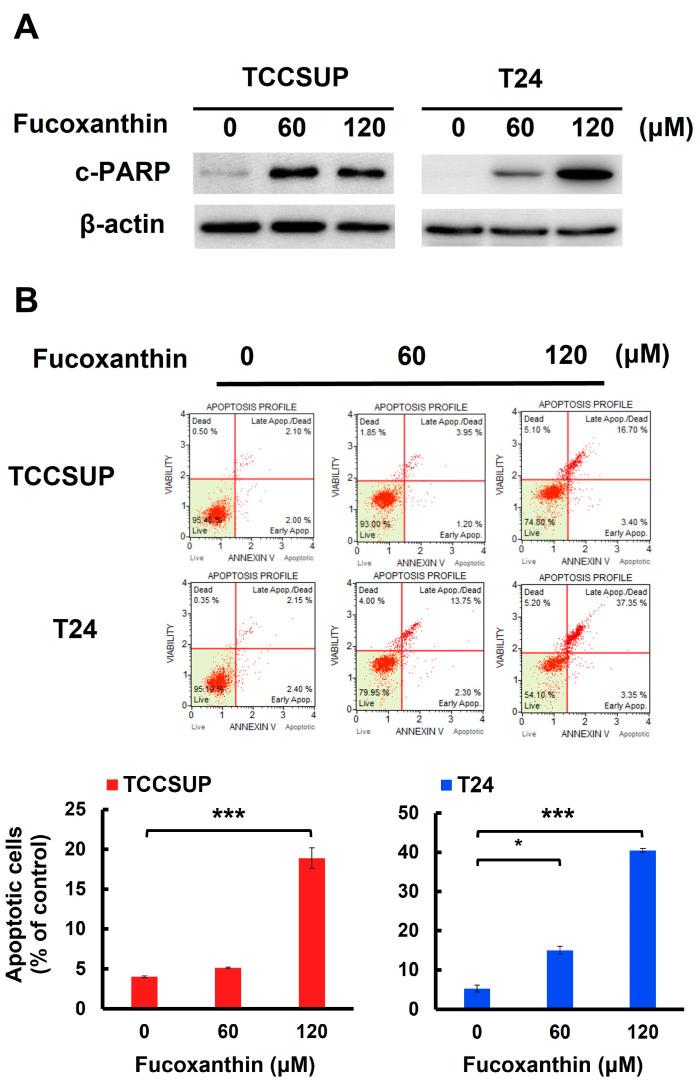
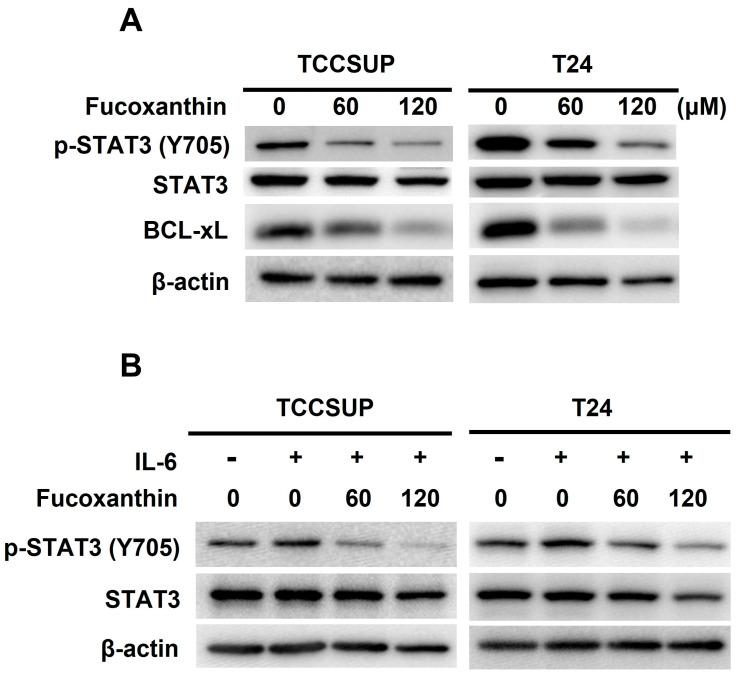
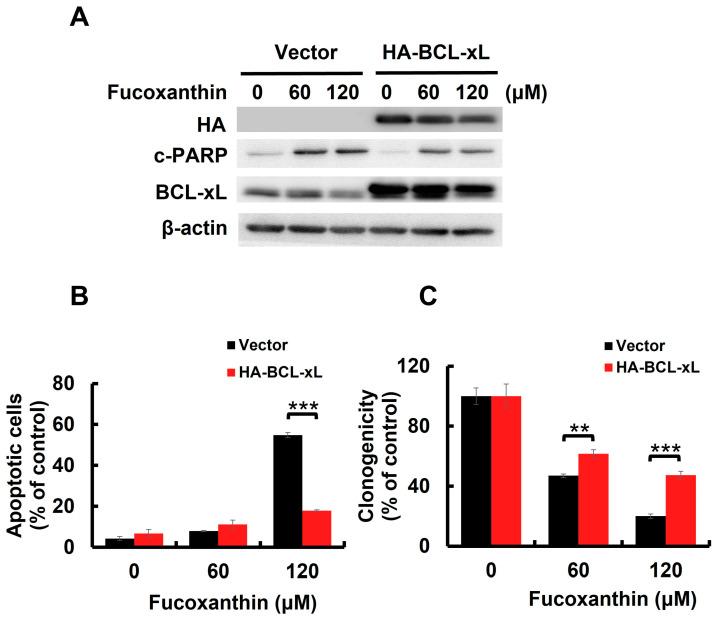
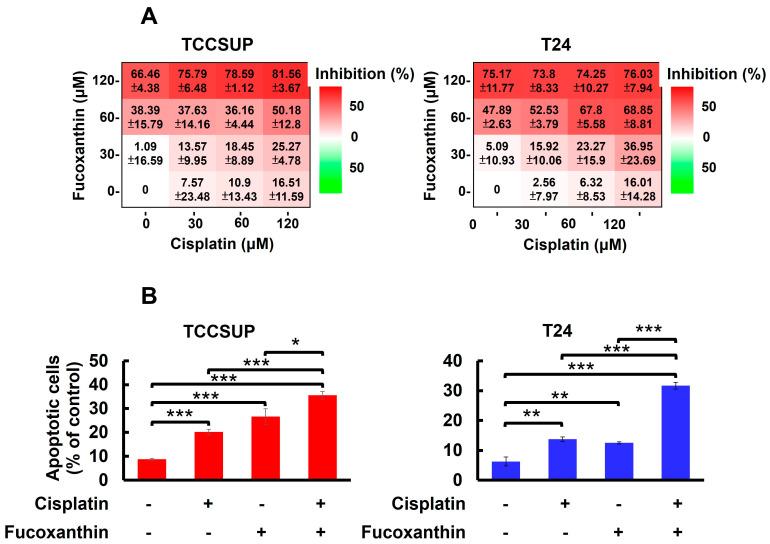
Bladder cancer is a globally prevalent urological malignancy, with transitional carcinoma (TCC) representing the majority of cases. Cisplatin is the primary drug for metastatic bladder cancer chemotherapy; however, its application is limited by nephrotoxicity and resistance. Signal Transducer and Activator of Transcription 3 (STAT3) is an oncogenic transcription factor often overactivated in various cancers, making it an appealing drug target. Fucoxanthin, a marine carotenoid, has significant anticancer properties. This study explored Fucoxanthin's cytotoxic effects and its potential to potentiate the efficacy of Cisplatin, along with the mechanisms underlying these effects, on human bladder TCC cells. We demonstrated that Fucoxanthin is cytotoxic to bladder TCC cells by inducing apoptosis, evidenced by z-VAD-fmk-mediated annulment of Fucoxanthin's cytotoxicity. Furthermore, Fucoxanthin reduced the levels of inherent or interleukin-6-induced tyrosine 705-phosphorylated STAT3 accompanied by downregulating BCL-xL, a well-established STAT3 target. Notably, ectopic expression of STAT3-C, a dominant-active STAT3 mutant, or BCL-xL thwarted Fucoxanthin's proapoptotic and cytotoxic actions. Moreover, Fucoxanthin at subtoxic dosages enhanced the susceptibility to Cisplatin-induced apoptosis of bladder TCC cells initially resistant to Cisplatin. Remarkably, this Cisplatin-sensitizing effect of Fucoxanthin was abrogated when cells ectopically expressed STAT3-C or BCL-xL. Overall, for the first time, we proved that the proapoptotic, cytotoxic, and Cisplatin-sensitizing effects of Fucoxanthin on human bladder TCC cells are attributed to the blockade of the STAT3/BCL-xL axis. Our findings highlight that targeting the STAT3/BCL-xL axis is a promising strategy to eliminate bladder TCC cells and facilitate Cisplatin sensitization, and further support the potential of incorporating Fucoxanthin into Cisplatin-based chemotherapy for treating bladder cancer.
膀胱癌是一种全球流行的泌尿系统恶性肿瘤,其中移行细胞癌(TCC)占大多数病例。顺铂是转移性膀胱癌化疗的主要药物;然而,其应用受到肾毒性和耐药性的限制。信号转导和转录激活因子3(STAT3)是一种致癌转录因子,在各种癌症中常被过度激活,使其成为一个有吸引力的药物靶点。岩藻黄质是一种海洋类胡萝卜素,具有显著的抗癌特性。本研究探讨了岩藻黄质对人膀胱TCC细胞的细胞毒性作用及其增强顺铂疗效的潜力,以及这些作用的潜在机制。我们证明,岩藻黄质通过诱导凋亡对膀胱TCC细胞具有细胞毒性,z-VAD-fmk介导的岩藻黄质细胞毒性的消除证明了这一点。此外,岩藻黄质降低了固有或白细胞介素-6诱导的酪氨酸705磷酸化STAT3的水平,同时下调了公认的STAT3靶标BCL-xL。值得注意的是,显性活性STAT3突变体STAT3-C或BCL-xL的异位表达阻碍了岩藻黄质的促凋亡和细胞毒性作用。此外,亚毒性剂量的岩藻黄质增强了最初对顺铂耐药的膀胱TCC细胞对顺铂诱导凋亡的敏感性。值得注意的是,当细胞异位表达STAT3-C或BCL-xL时,岩藻黄质的这种顺铂增敏作用被消除。总体而言,我们首次证明岩藻黄质对人膀胱TCC细胞的促凋亡、细胞毒性和顺铂增敏作用归因于对STAT3/BCL-xL轴 的阻断。我们的研究结果表明,靶向STAT3/BCL-xL轴是消除膀胱TCC细胞并促进顺铂增敏的一种有前景的策略,并进一步支持将岩藻黄质纳入基于顺铂的化疗方案治疗膀胱癌的潜力。


 Zotero 插件