
埃及健康和患牛呼吸道疾病(BRD)犊牛下呼吸道微生物群的比较评估。
Comparative evaluation of lower respiratory tract microbiota in healthy and BRD-affected calves in Egypt.
作者信息
Sabry Ibrahim, Zeineldin Mohamed, Kamal Mohamed, Hefnawy Abdelghany, El-Attar Hussam, Abdelraof Yasein, Ghanem Mohamed
机构信息
Department of Animal Medicine, Faculty of Veterinary Medicine, Banha University, Banha, 13511, Egypt.
Department of Veterinary Hygiene and Management, Faculty of Veterinary Medicine, Cairo University, Cairo, 12211, Egypt.
出版信息
Trop Anim Health Prod. 2025 Feb 25;57(2):78. doi: 10.1007/s11250-025-04322-w.
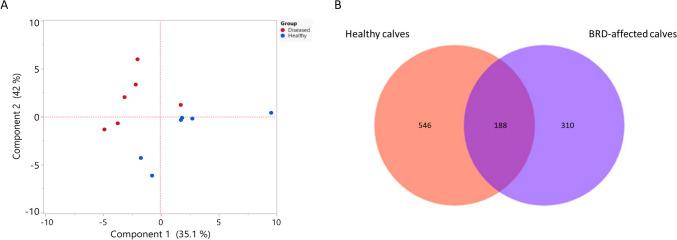
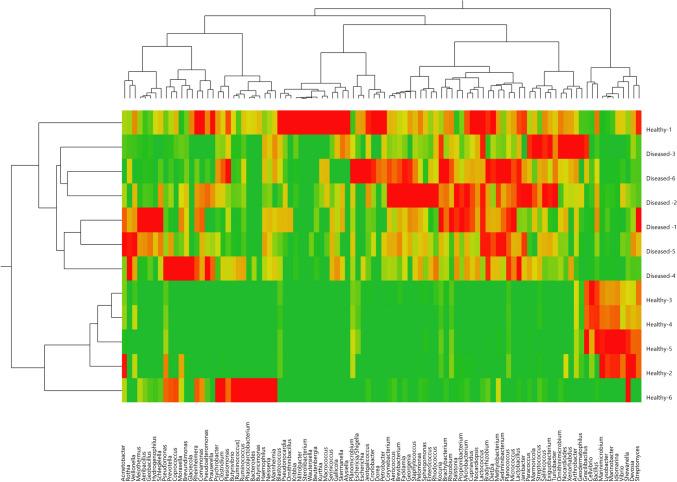
The advent of next-generation sequencing technologies has uncovered the importance of commensal microbial populations in the lower respiratory tract (LRT) for mucosal health and their role in the development of bovine respiratory disease (BRD). In this study, we aimed to characterize and compare the LRT microbiota in healthy and BRD-affected calves in Egypt. After assessing clinical respiratory scores in both groups, post-mortem lung samples from the cranial lobes of six clinically healthy calves and six calves affected by BRD were collected following slaughter. The most prevalent bacterial families in all samples were Moraxellaceae (11.06%), Enterobacteriaceae (8.23%), and Flavobacteriaceae (8.13%). The most common bacterial genera across all samples were Acinetobacter (13.1%), Gracilibacillus (7.9%), and Pseudomonas (5.0%). Notably, the overall microbial community structures differed significantly between healthy and BRD-affected calves. Alpha diversity analysis revealed significant differences in the Shannon (p = 0.0043) and Chao1 (p = 0.0001) indices between the two groups. This study highlights the substantial impact of BRD on the LRT microbiota of calves, highlighting the intricate relationship between host health and the LRT microbial ecosystem. Further investigations involving a larger sample size are necessary to establish the clinical significance of LRT microbiota in maintaining bovine respiratory health.
新一代测序技术的出现揭示了下呼吸道(LRT)共生微生物群对黏膜健康的重要性及其在牛呼吸道疾病(BRD)发生发展中的作用。在本研究中,我们旨在对埃及健康和患BRD犊牛的LRT微生物群进行表征和比较。在评估两组的临床呼吸评分后,屠宰后收集了6头临床健康犊牛和6头患BRD犊牛的颅叶肺组织样本。所有样本中最常见的细菌科为莫拉菌科(11.06%)、肠杆菌科(8.23%)和黄杆菌科(8.13%)。所有样本中最常见的细菌属为不动杆菌属(13.1%)、纤细芽孢杆菌属(7.9%)和假单胞菌属(5.0%)。值得注意的是,健康犊牛和患BRD犊牛的整体微生物群落结构存在显著差异。α多样性分析显示,两组之间的香农指数(p = 0.0043)和Chao1指数(p = 0.0001)存在显著差异。本研究强调了BRD对犊牛LRT微生物群的重大影响,突出了宿主健康与LRT微生物生态系统之间的复杂关系。需要进一步进行更大样本量的研究,以确定LRT微生物群在维持牛呼吸道健康方面的临床意义。


 Zotero 插件