
人类是面临睡眠危机还是迎来觉醒?大规模工业化社会呈现出长时间、高效的睡眠,但昼夜节律功能却很弱。
Are humans facing a sleep epidemic or enlightenment? Large-scale, industrial societies exhibit long, efficient sleep yet weak circadian function.
作者信息
Samson David Ryan, McKinnon Leela
机构信息
Department of Anthropology, University of Toronto Mississauga, Mississauga, Ontario L5L 1C6, Canada.
出版信息
Proc Biol Sci. 2025 Feb;292(2041):20242319. doi: 10.1098/rspb.2024.2319. Epub 2025 Feb 26.
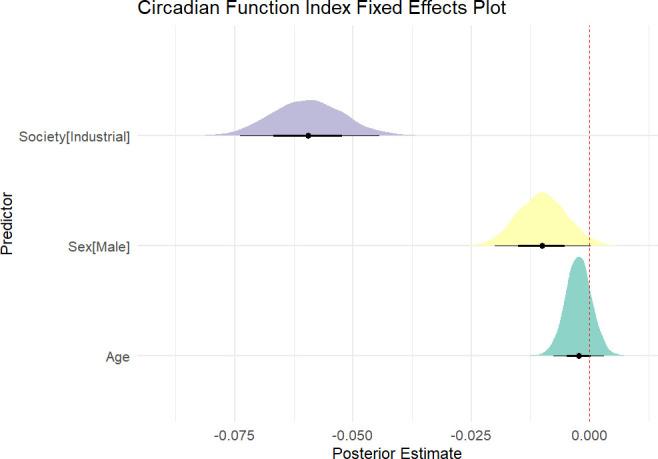
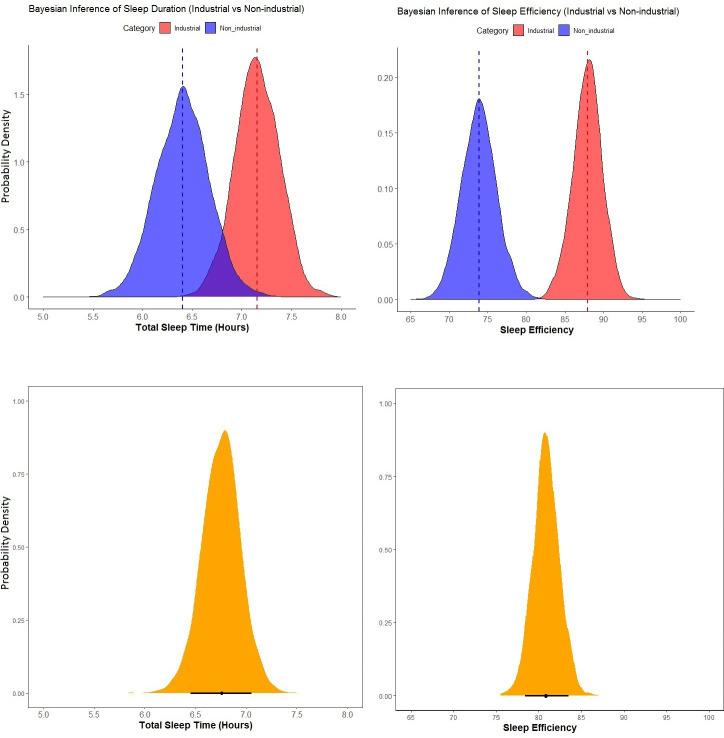
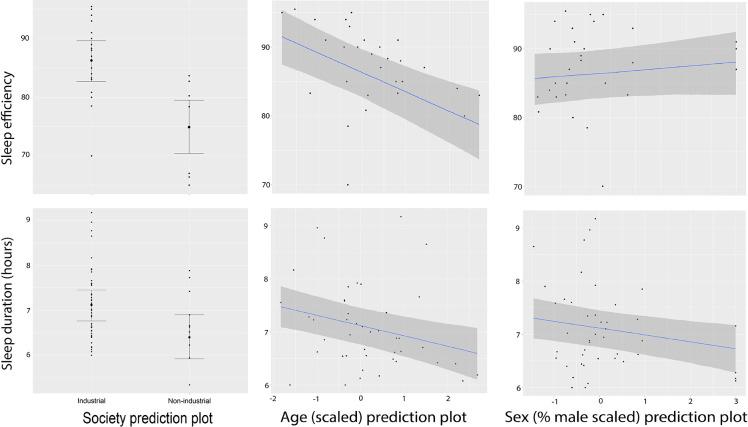
The Centers for Disease Control and Prevention declared sleep-related problems to be a public health epidemic. With the advent of biometric sleep tracking technology taking the sleep lab into the field, the study of human sleep is now global, and these new datasets show contrasting findings. Previous reports suggest sleep in small-scale, non-industrial societies to be short and fragmented yet characterized by greater circadian rhythmicity. However, the role of circadian rhythm indicators in understanding global variations in human sleep patterns remains unclear. We examine population-level sleep studies ( = 54) using polysomnography and actigraphy to test the sleep restriction epidemic hypothesis, which posits that labour demands and technological disruption in large-scale, industrial societies have reduced sleep duration. We used an actigraphy-generated circadian function index from both non-industrial and industrial societies ( = 866) to test the circadian mismatch hypothesis, which suggests that poor chronohygiene in regulated environments misaligns circadian rhythms in industrial societies. In rejection of the sleep restriction epidemic hypothesis, our results show that industrial societies experience the longest, most efficient sleep, whereas in support of the circadian mismatch hypothesis, sleepers in non-industrial societies are characterized by the greatest circadian function.
美国疾病控制与预防中心宣布,与睡眠相关的问题已成为一种公共卫生流行病。随着生物识别睡眠追踪技术的出现,睡眠实验室走进了现实生活,如今对人类睡眠的研究已遍布全球,而这些新数据集却显示出相互矛盾的结果。此前的报告表明,在小规模、非工业化社会中,人们的睡眠时间较短且碎片化,但昼夜节律性更强。然而,昼夜节律指标在理解人类睡眠模式的全球差异方面所起的作用仍不明确。我们使用多导睡眠图和活动记录仪对54项人群水平的睡眠研究进行了分析,以检验睡眠限制流行假说,该假说认为大规模工业化社会中的劳动需求和技术干扰减少了睡眠时间。我们使用从非工业化社会和工业化社会中抽取的866人的活动记录仪生成的昼夜节律功能指数,来检验昼夜节律失调假说,该假说认为在规律环境中不良的时间卫生习惯会使工业化社会中的昼夜节律失调。我们的结果否定了睡眠限制流行假说,表明工业化社会的人们睡眠时间最长、效率最高;而支持昼夜节律失调假说的是,非工业化社会的睡眠者昼夜节律功能最强。
 Zotero 插件