
G蛋白偶联受体(GPCR)在代谢中的信号传导与药理学:生理学、机制及治疗潜力
G-Protein-Coupled Receptor (GPCR) Signaling and Pharmacology in Metabolism: Physiology, Mechanisms, and Therapeutic Potential.
作者信息
Cho Yun Yeong, Kim Soyeon, Kim Pankyung, Jo Min Jeong, Park Song-E, Choi Yiju, Jung Su Myung, Kang Hye Jin
机构信息
Department of Biotechnology, College of Life Science and Biotechnology, Yonsei University, Seoul 03722, Republic of Korea.
Department of Biological Sciences, Sungkyunkwan University (SKKU), Suwon 16419, Republic of Korea.
出版信息
Biomolecules. 2025 Feb 15;15(2):291. doi: 10.3390/biom15020291.
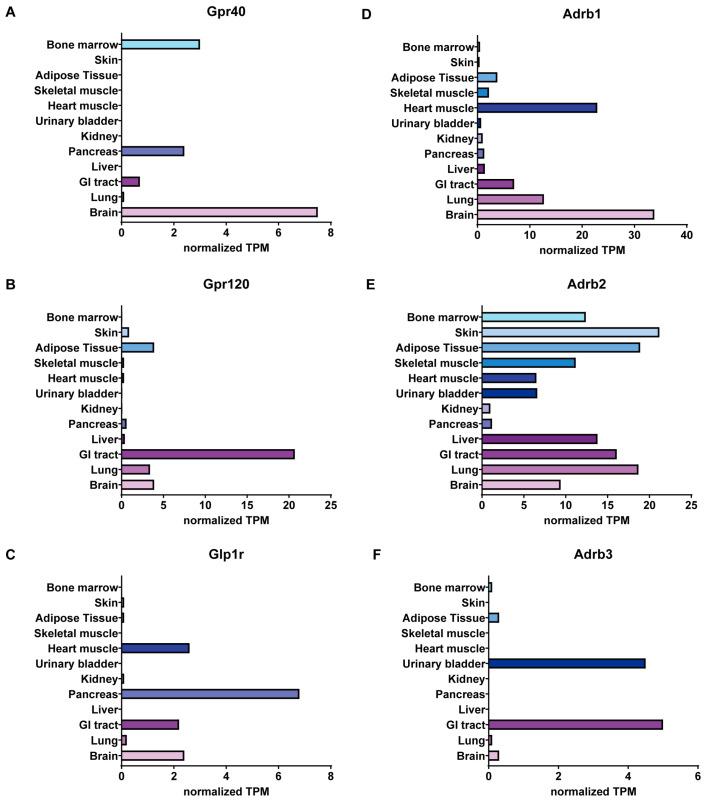
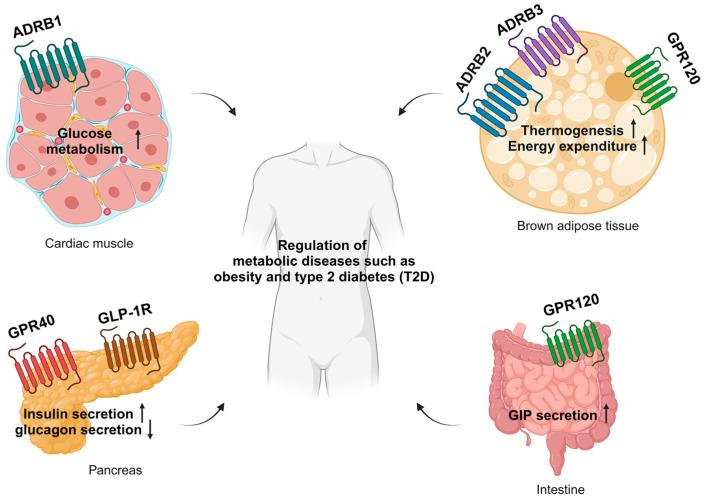
G-protein coupled receptors (GPCRs), the largest family of integral membrane proteins, enable cells to sense and appropriately respond to the environment through mediating extracellular signaling to intercellular messenger molecules. GPCRs' pairing with a diverse array of G protein subunits and related downstream secondary messengers, combined with their ligand versatility-from conventional peptide hormone to numerous bioactive metabolites, allow GPCRs to comprehensively regulate metabolism and physiology. Consequently, GPCRs have garnered significant attention for their therapeutic potential in metabolic diseases. This review focuses on six GPCRs, GPR40, GPR120, GLP-1R, and ß-adrenergic receptors (ADRB1, ADRB2, and ADRB3), with GLP-1R recognized as a prominent regulator of system-level metabolism, while the roles of GPR40, GPR120 and ß-adrenergic receptors in central carbon metabolism and energy homeostasis are increasingly appreciated. Here, we discuss their physiological functions in metabolism, the current pharmacological landscape, and the intricacies of their signaling pathways via G protein and ß-arrestin activation. Additionally, we discuss the limitations of existing GPCR-targeted strategies for treating metabolic diseases and offer insights into future perspectives for advancing GPCR pharmacology.
G蛋白偶联受体(GPCRs)是最大的整合膜蛋白家族,它通过介导细胞外信号传递给细胞内信使分子,使细胞能够感知并对环境做出适当反应。GPCRs与多种G蛋白亚基和相关下游二级信使配对,再加上它们配体的多样性——从传统肽激素到众多生物活性代谢物,使得GPCRs能够全面调节代谢和生理功能。因此,GPCRs因其在代谢性疾病中的治疗潜力而备受关注。本综述聚焦于六种GPCRs,即GPR40、GPR120、胰高血糖素样肽-1受体(GLP-1R)以及β-肾上腺素能受体(ADRB1、ADRB2和ADRB3),其中GLP-1R被认为是系统水平代谢的重要调节因子,而GPR40、GPR120和β-肾上腺素能受体在中心碳代谢和能量稳态中的作用也日益受到重视。在此,我们讨论它们在代谢中的生理功能、当前的药理学概况以及通过G蛋白和β-抑制蛋白激活的信号通路的复杂性。此外,我们还讨论了现有针对GPCRs治疗代谢性疾病策略的局限性,并对推进GPCR药理学的未来前景提出见解。
 Zotero 插件