
AIM2炎性小体在癌症中的作用:潜在治疗策略
Role of the AIM2 Inflammasome in Cancer: Potential Therapeutic Strategies.
作者信息
Colarusso Chiara, Terlizzi Michela, Di Caprio Simone, Falanga Anna, D'Andria Emmanuel, d'Emmanuele di Villa Bianca Roberta, Sorrentino Rosalinda
机构信息
Department of Pharmacy (DIFARMA), University of Salerno, 84084 Fisciano, SA, Italy.
Department of Pharmacy, University of Naples Federico II, 80131 Naples, NA, Italy.
出版信息
Biomedicines. 2025 Feb 6;13(2):395. doi: 10.3390/biomedicines13020395.
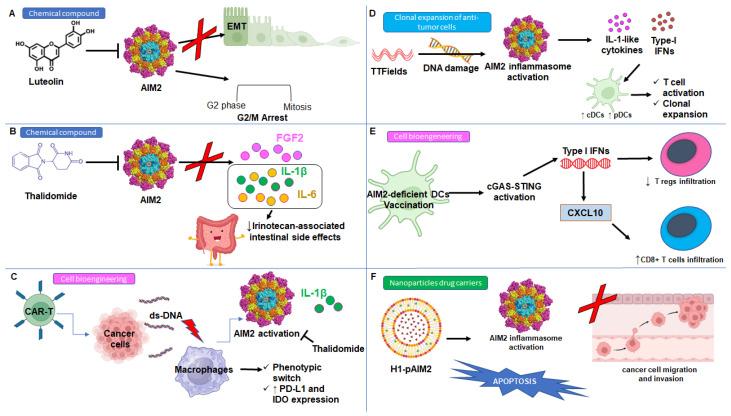
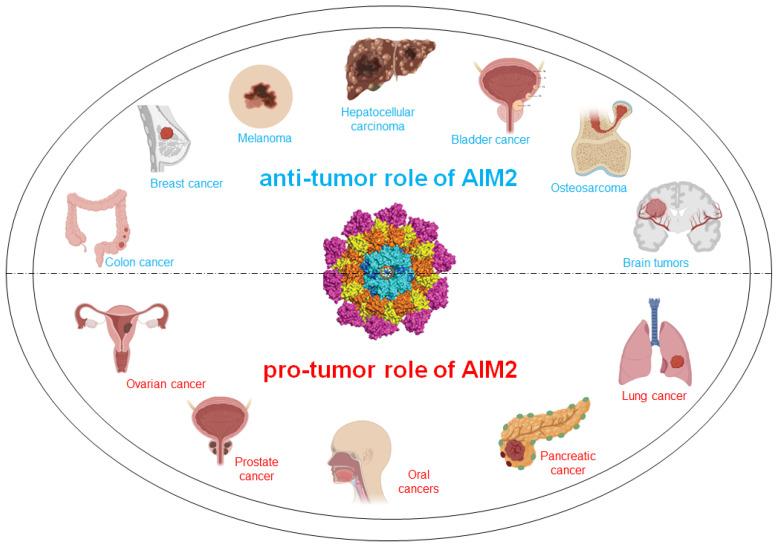
Absent in melanoma 2 (AIM2) is a member of the innate immune sensors that recognizes cytosolic nucleic acids, leading to inflammasome assembly. In recent years, several studies in the oncology field have highlighted the presence of cytoplasmic double-stranded DNA (dsDNA) following necrosis and/or genomic instability, which is typical of malignant transformation. The recognition of dsDNA by the AIM2 inflammasome either in cancer cells or in immune cells can further exacerbate inflammatory processes on the basis of cancer progression. In this context, the role of AIM2 in cancer is still controversial in that some authors assume that AIM2 activation has pro-tumor activities, while others define it as anti-tumor. This discrepancy may be due to the nature of the cells where AIM2 is expressed or the histology of the tumor. This review aims to provide an overview of the controversial role of AIM2 in cancer, taking into consideration the pharmacological tools currently available to modulate AIM2 activity in cancer.
黑色素瘤缺失因子2(AIM2)是一种识别胞质核酸的天然免疫传感器,可导致炎性小体组装。近年来,肿瘤学领域的多项研究强调了坏死和/或基因组不稳定后细胞质双链DNA(dsDNA)的存在,这是恶性转化的典型特征。AIM2炎性小体在癌细胞或免疫细胞中对dsDNA的识别可在癌症进展的基础上进一步加剧炎症过程。在此背景下,AIM2在癌症中的作用仍存在争议,因为一些作者认为AIM2激活具有促肿瘤活性,而另一些作者则将其定义为抗肿瘤活性。这种差异可能归因于AIM2表达细胞的性质或肿瘤的组织学类型。本综述旨在概述AIM2在癌症中存在争议的作用,同时考虑目前可用于调节癌症中AIM2活性的药理学工具。

 Zotero 插件