
mTOR信号通路:心脏病的关键调节因子和治疗靶点。
The mTOR Signaling Pathway: Key Regulator and Therapeutic Target for Heart Disease.
作者信息
Wang Jieyu, Huang Yuxuan, Wang Zhaoxia, Liu Jing, Liu Zhijian, Yang Jinfeng, He Zuping
机构信息
Department of Basic Medicine, School of Medicine, Hunan Normal University, Changsha 410013, China.
The Key Laboratory of Model Animal and Stem Cell Biology in Hunan Province, Hunan Normal University, Changsha 410013, China.
出版信息
Biomedicines. 2025 Feb 7;13(2):397. doi: 10.3390/biomedicines13020397.
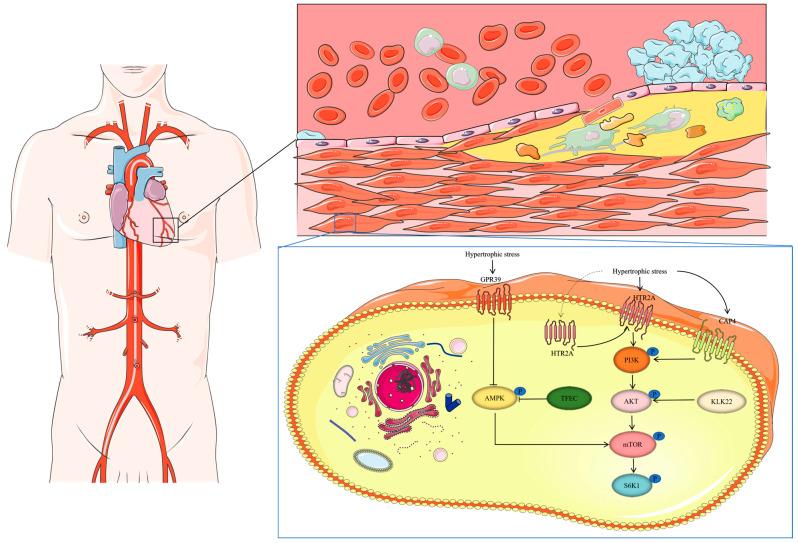
Heart disease, including myocardial infarction, heart failure, cardiac hypertrophy, and cardiomyopathy, remains a leading cause of mortality worldwide. The mammalian target of rapamycin (mTOR) is a centrally regulated kinase that governs key cellular processes, including growth, proliferation, metabolism, and survival. Notably, mTOR plays a pivotal role in cardiovascular health and disease, particularly in the onset and progression of cardiac conditions. In this review, we discuss mTOR's structure and function as well as the regulatory mechanisms of its associated signaling pathways. We focus on the molecular mechanisms by which mTOR signaling regulates cardiac diseases and the potential of mTOR inhibitors and related regulatory drugs in preventing these conditions. We conclude that the mTOR signaling pathway is a promising therapeutic target for heart disease.
心脏病,包括心肌梗死、心力衰竭、心脏肥大和心肌病,仍然是全球主要的死亡原因。雷帕霉素的哺乳动物靶点(mTOR)是一种受中枢调节的激酶,它控制着包括生长、增殖、代谢和存活在内的关键细胞过程。值得注意的是,mTOR在心血管健康和疾病中起着关键作用,尤其是在心脏疾病的发生和发展过程中。在这篇综述中,我们讨论了mTOR的结构和功能以及其相关信号通路的调节机制。我们重点关注mTOR信号传导调节心脏疾病的分子机制以及mTOR抑制剂和相关调节药物在预防这些疾病方面的潜力。我们得出结论,mTOR信号通路是心脏病一个有前景的治疗靶点。

 Zotero 插件