
与预防心血管疾病相关的L.果实和叶子生物学特性的比较研究。
A Comparative Study of the Biological Properties of L. Fruits and Leaves Related to the Prevention of Cardiovascular Diseases.
作者信息
Gonçalves Jéssica, Hontman Nance, Perestrelo Rosa, Câmara José S
机构信息
CQM-Centro de Química da Madeira, Universidade da Madeira, Campus da Penteada, 9020-105 Funchal, Portugal.
Departamento de Química, Faculdade de Ciências Exatas e Engenharia, Universidade da Madeira, Campus da Penteada, 9020-105 Funchal, Portugal.
出版信息
Life (Basel). 2025 Jan 22;15(2):147. doi: 10.3390/life15020147.
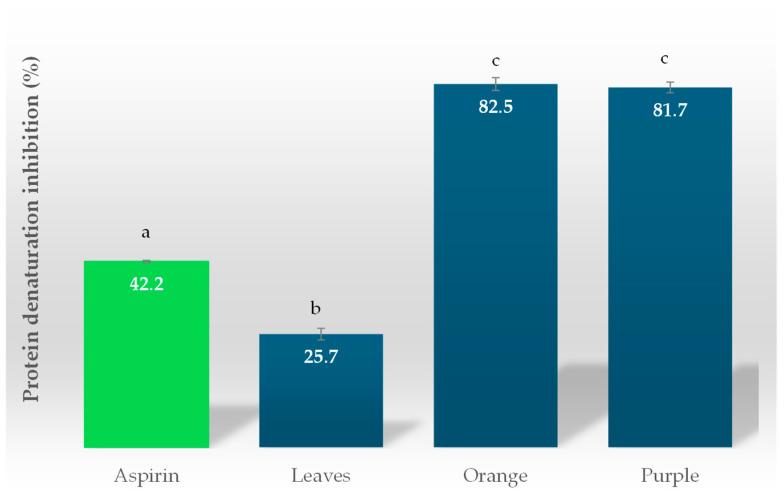
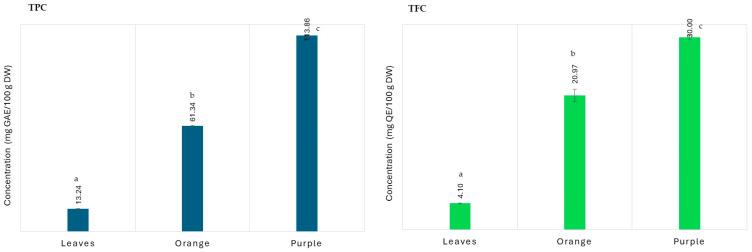
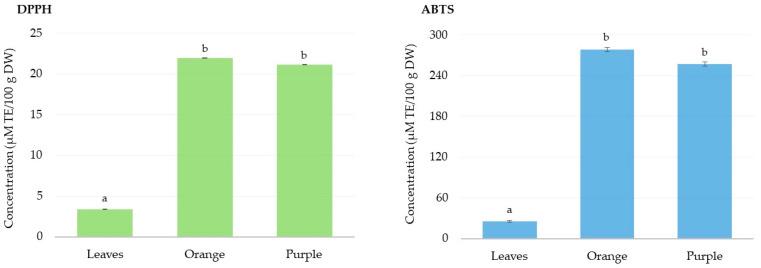
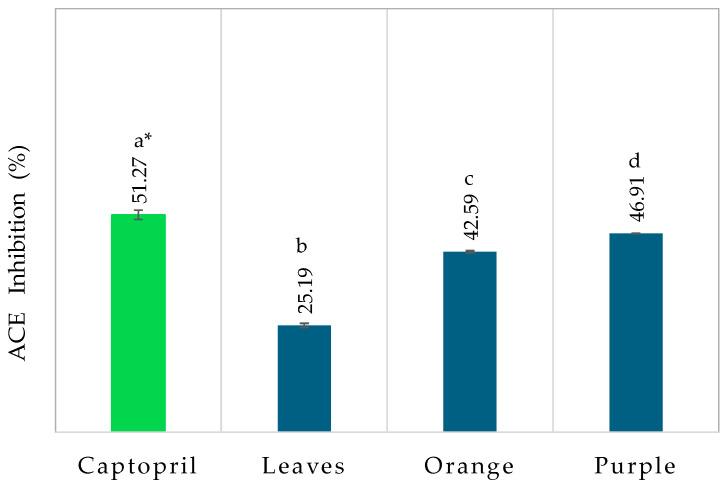
Cardiovascular diseases (CVDs) remain the leading cause of death globally, emphasizing the need for effective preventive strategies. Plant-based foods, rich in phytochemicals, offer a promising potential in CVD prevention. This study investigated the antioxidant, anti-inflammatory, and antihypertensive properties of two L. varieties (orange and purple pitanga) and their leaves. Their antioxidant activity was assessed using 2,2-diphenyl-1-picrylhydrazyl (DPPH) free radical scavenging and 2,2'-azino-bis(3-ethylbenzothiazoline-6-sulfonic acid) (ABTS) radical cation scavenging activity assays, while their antihypertensive activity was evaluated through angiotensin-converting enzyme (ACE) inhibition. Their anti-inflammatory potential was determined via protein denaturation inhibition. Both fruit varieties exhibited similar bioactivities, with the purple variety showing a slightly higher activity, except in the DPPH and ABTS assays. The leaves consistently demonstrated the lowest activities across all assays. Free polyphenols, dominated by gallic acid, were quantified using µ-QuEChERS followed by ultrahigh-performance liquid chromatography (UHPLC-PDA). The orange variety contained the highest concentration of gallic acid (13.1 mg/100 g DW). These findings highlight the potential of L. extracts as natural antioxidant, anti-inflammatory, and antihypertensive agents, suggesting their value in food, pharmaceutical, and cosmetic applications for promoting human health and preventing CVDs.
心血管疾病(CVDs)仍然是全球主要的死亡原因,这凸显了有效预防策略的必要性。富含植物化学物质的植物性食物在预防心血管疾病方面具有广阔的潜力。本研究调查了两种番樱桃品种(橙色和紫色)及其叶子的抗氧化、抗炎和降压特性。使用2,2-二苯基-1-苦基肼(DPPH)自由基清除和2,2'-联氮-双-(3-乙基苯并噻唑啉-6-磺酸)(ABTS)自由基阳离子清除活性测定来评估它们的抗氧化活性,同时通过血管紧张素转换酶(ACE)抑制来评估它们的降压活性。通过蛋白质变性抑制来确定它们的抗炎潜力。除了DPPH和ABTS测定外,两种水果品种都表现出相似的生物活性,紫色品种的活性略高。在所有测定中,叶子的活性始终最低。使用µ-快速、简便、廉价、有效、耐用和安全(µ-QuEChERS)方法结合超高效液相色谱(UHPLC-PDA)对以没食子酸为主的游离多酚进行定量。橙色品种的没食子酸浓度最高(13.1 mg/100 g干重)。这些发现突出了番樱桃提取物作为天然抗氧化、抗炎和降压剂的潜力,表明它们在促进人类健康和预防心血管疾病的食品应用、制药和化妆品应用中的价值。



 Zotero 插件