
效应细胞、调节细胞和Tγδ细胞之间的相互作用决定了对铬过敏或耐受的发展。
The Interaction Among Effector, Regulatory, and Tγδ Cells Determines the Development of Allergy or Tolerance to Chromium.
作者信息
Zemelka-Wiacek Magdalena
机构信息
Department of Clinical Immunology, Faculty of Medicine, Wroclaw Medical University, 50-367 Wrocław, Poland.
出版信息
J Clin Med. 2025 Feb 19;14(4):1370. doi: 10.3390/jcm14041370.
: Chromium, a common environmental and occupational sensitizer, frequently induces allergic contact dermatitis (ACD). This study investigates the role of CD4 (T helper), CD8 (T cytotoxic), regulatory (Tregs: CD4CD25 and CD8CD25), and gamma delta (Tγδ) T cells in chromium tolerance versus hypersensitivity. : Six chromium-allergic patients and six healthy controls were recruited, confirmed via patch testing. Peripheral blood mononuclear cells (PBMCs) were isolated and cultured, with chromium exposure and proliferation assays conducted. Specific T cell subtypes were isolated and analyzed for chromium-specific proliferative responses, cytokine production, and metabolic activity. : Chromium-allergic individuals exhibited broad proliferation across PBMC and T cell subsets, contrasting with restricted responses in controls. Treg cells in healthy subjects effectively suppressed T cell proliferation in response to chromium, while allergic individuals showed unmodulated T cell activity, indicative of impaired regulatory function. Cytokine analysis revealed elevated IL-2 and TNF-α but absent IL-10 in allergic patients. Metabolic assessments showed higher glycolytic activity in Tregs of healthy controls, suggesting enhanced regulatory potential. : These findings highlight the importance of balanced effector and regulatory T cell interactions for chromium tolerance. Dysregulated Treg and Tγδ cell functions in allergic individuals may contribute to hypersensitivity, with implications for targeted therapeutic strategies to restore immune balance and reduce allergic responses in chromium-sensitive patients.
铬是一种常见的环境和职业致敏原,经常诱发过敏性接触性皮炎(ACD)。本研究调查了CD4(辅助性T细胞)、CD8(细胞毒性T细胞)、调节性(Tregs:CD4CD25和CD8CD25)以及γδ(Tγδ)T细胞在铬耐受性与超敏反应中的作用。
招募了6名对铬过敏的患者和6名健康对照者,通过斑贴试验进行确认。分离并培养外周血单个核细胞(PBMC),进行铬暴露和增殖试验。分离特定的T细胞亚群,分析其对铬的特异性增殖反应、细胞因子产生和代谢活性。
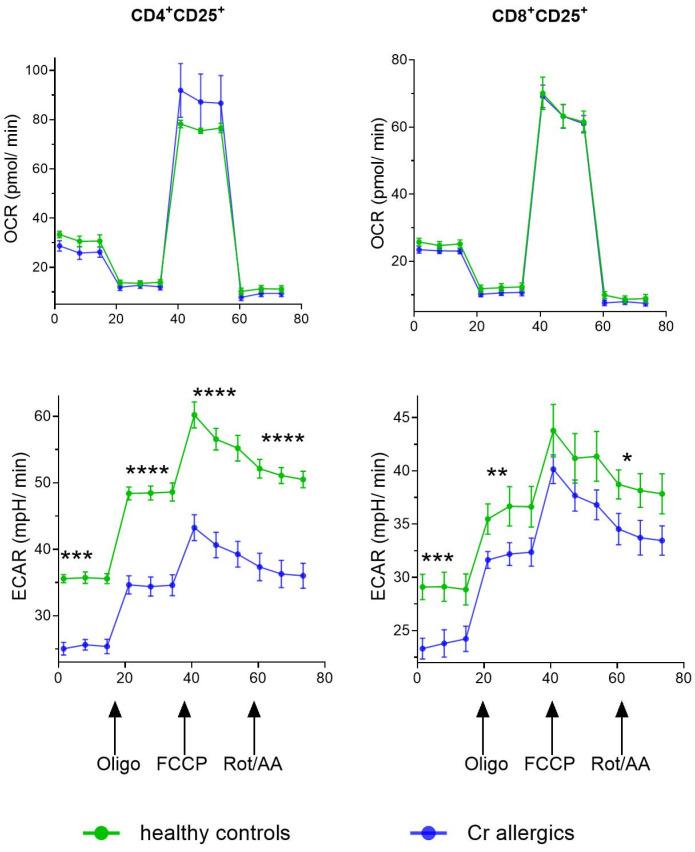
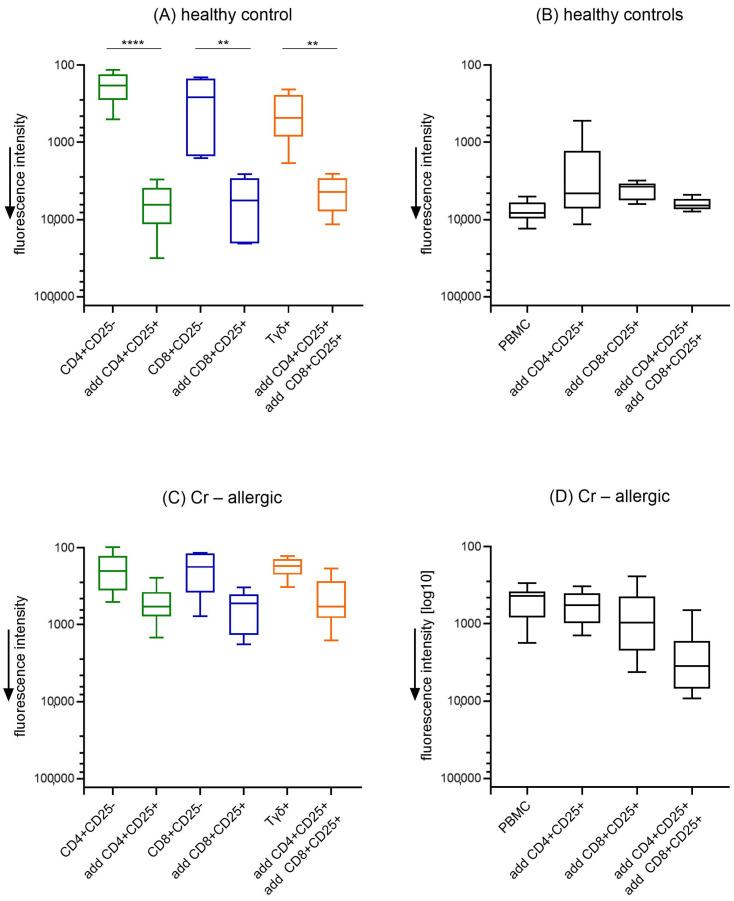
对铬过敏的个体在PBMC和T细胞亚群中表现出广泛的增殖,这与对照组有限的反应形成对比。健康受试者中的Treg细胞有效地抑制了T细胞对铬的增殖反应,而过敏个体则表现出未受调节的T细胞活性,表明调节功能受损。细胞因子分析显示,过敏患者的IL-2和TNF-α升高,但IL-10缺乏。代谢评估显示,健康对照者的Tregs糖酵解活性更高,表明调节潜力增强。
这些发现突出了效应性T细胞和调节性T细胞之间平衡相互作用对铬耐受性的重要性。过敏个体中Treg和Tγδ细胞功能失调可能导致超敏反应,这对恢复免疫平衡和减少铬敏感患者过敏反应的靶向治疗策略具有启示意义。


 Zotero 插件