
瑞舒伐他汀通过降低肿瘤坏死因子-α水平加速大鼠浅度烧伤创面的愈合过程。
Rosuvastatin accelerates the healing process of partial-thickness burn wounds in rats by reducing TNF-α levels.
作者信息
Marneri Alexandra, Mulita Francesk, Leivaditis Vasileios, Kotoulas Serafeim-Chrysovalantis, Gkoutziotis Ioannis, Kalliopi Stavrati, Tasios Konstantinos, Tchabashvili Levan, Michalopoulos Nikolaos, Mpallas Konstantinos
机构信息
ICU, Hippokration General Hospital, Aristotle University of Thessaloniki, Thessaloniki, Greece.
Department of Surgery, General University Hospital of Patras, Patras, Greece.
出版信息
Arch Med Sci Atheroscler Dis. 2024 Dec 31;9:e226-e240. doi: 10.5114/amsad/196825. eCollection 2024.
INTRODUCTION
Burn wound healing is a complex, dynamic process that involves a coordinated cascade of cellular responses and phases. Inflammation, proliferation and remodeling are the main phases of tissue repair, while tumor necrosis factor α (TNF-α) and procalcitonin (PCT) seem to be important mediators affecting the inflammatory state. Our aim was to assess the effect of rosuvastatin on tissue repair after partial thickness burn injury in healthy animals.
MATERIAL AND METHODS
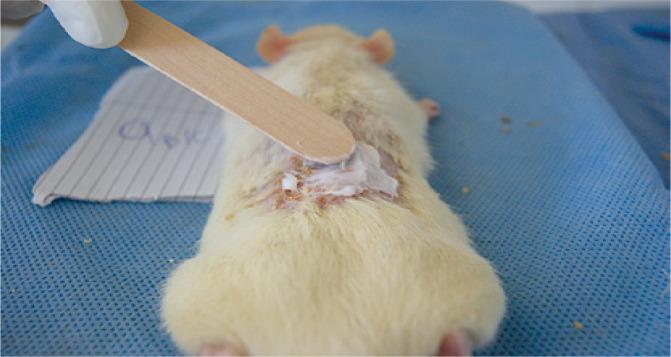
In this randomized prospective experimental study, 36 male rats were randomly divided into two groups: placebo-treated (PG) and topical rosuvastatin-treated (SG). Under anesthesia, a partial-thickness burn trauma was induced in the dorsal region of the rats using an iron seal. Tissue samples were collected for histopathological examination as well.
RESULTS
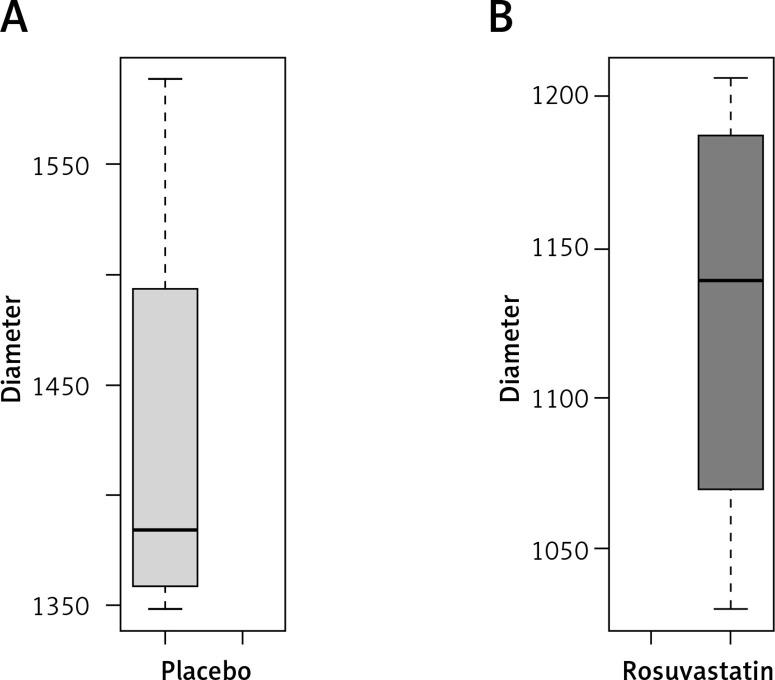
Variables of TNF-α, procalcitonin and macroscopic assessment were normally distributed between the two groups on all studied days. The expression of TNF-α was found to be lower in burn injuries treated with topical rosuvastatin in comparison with placebo-treated animals on days 3, 6 and 9. PCT values in rosuvastatin-treated subgroups were statistically significantly lower than in placebo subgroups. Upon macroscopic examination, a significantly smaller burnt area in the statin-treated group was detected compared to the non-statin group on all days, except for day 3. Histopathological examination demonstrated higher levels of mean neutrophil infiltration in the placebo group (day 3). Finally, fibroblast proliferation, angiogenesis and re-epithelization levels were noted to be higher after the topical application of rosuvastatin.
CONCLUSIONS
Rosuvastatin accelerated wound healing and down-regulated TNF-α and PCT levels.
引言
烧伤创面愈合是一个复杂的动态过程,涉及一系列协调的细胞反应和阶段。炎症、增殖和重塑是组织修复的主要阶段,而肿瘤坏死因子α(TNF-α)和降钙素原(PCT)似乎是影响炎症状态的重要介质。我们的目的是评估瑞舒伐他汀对健康动物浅Ⅱ度烧伤后组织修复的影响。
材料与方法
在这项随机前瞻性实验研究中,36只雄性大鼠被随机分为两组:安慰剂治疗组(PG)和局部应用瑞舒伐他汀治疗组(SG)。在麻醉下,使用烙铁在大鼠背部造成浅Ⅱ度烧伤创伤。还收集了组织样本进行组织病理学检查。
结果
在所有研究日,两组之间TNF-α、降钙素原的变量和宏观评估均呈正态分布。在第3、6和9天,与安慰剂治疗的动物相比,局部应用瑞舒伐他汀治疗的烧伤创面中TNF-α的表达较低。瑞舒伐他汀治疗亚组的PCT值在统计学上显著低于安慰剂亚组。在宏观检查中,除第3天外,在所有天数中,他汀治疗组的烧伤面积均显著小于非他汀组。组织病理学检查显示安慰剂组(第3天)的平均中性粒细胞浸润水平较高。最后,局部应用瑞舒伐他汀后,成纤维细胞增殖、血管生成和再上皮化水平较高。
结论
瑞舒伐他汀可加速伤口愈合,并下调TNF-α和PCT水平。




 Zotero 插件