
对工业场地附近农业土壤和地下水中重金属(HMs)污染及相关健康风险的综合评估。
Comprehensive assessment of heavy metal (HMs) contamination and associated health risks in agricultural soils and groundwater proximal to industrial sites.
作者信息
Sharafi Saeed, Salehi Fatemeh
机构信息
Department of Environment Science and Engineering, Arak University, Arak, Iran.
出版信息
Sci Rep. 2025 Mar 4;15(1):7518. doi: 10.1038/s41598-025-91453-7.
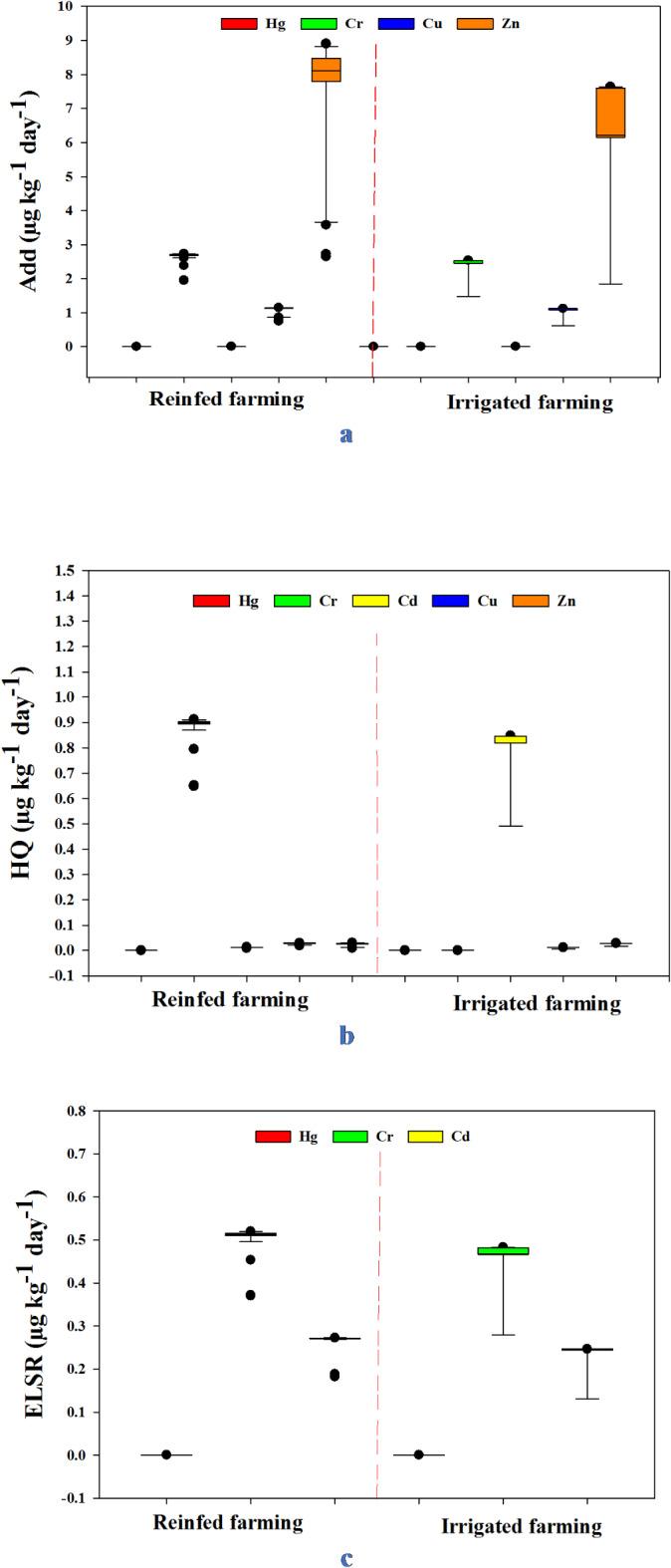
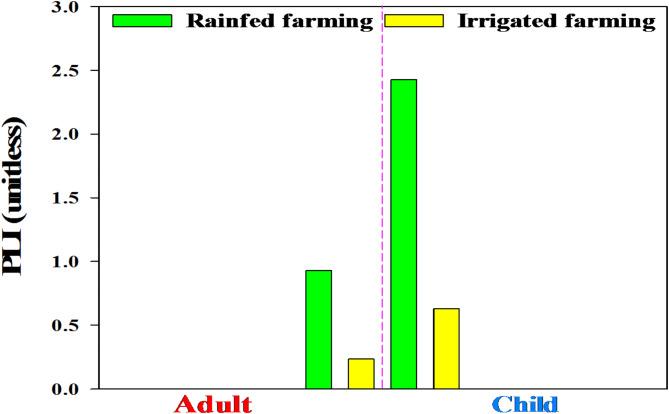
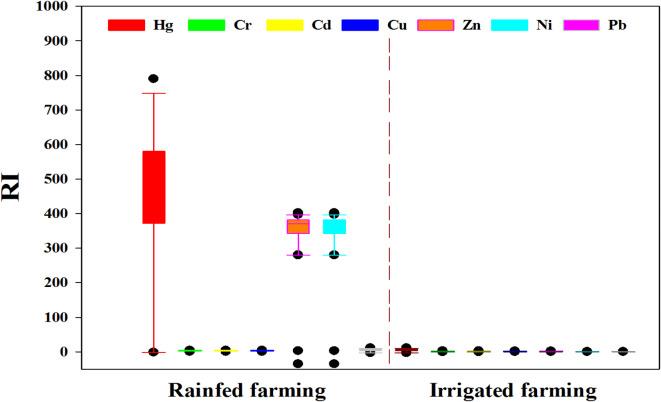
Industrial waste significantly impacts water and soil quality, restricting their suitability for agricultural and domestic use. This study investigates the distribution of heavy metals (HMs) in groundwater and soils across the Shazand plain under different irrigation methods and rainfed farming systems. It evaluates the Total Hazard Quotient (THQ) and Carcinogenic Risk (TCR) associated with HMs for both children and adults, considering exposure through ingestion, dermal contact, and inhalation. A total of 104 samples were collected, comprising water samples from wells and boreholes, and soil samples. Concentrations of Pb, Cd, Cr, Ni, Hg, Zn, and Cu were analyzed using atomic absorption spectrometry, and the data were assessed using descriptive and inferential statistics. The highest average concentrations of HMs in groundwater samples were observed for Cr (19 µg l) and Zn (22.8 µg l). In soil samples, Cr (35.28 µg g) and Zn (216.52 µg g) exhibited the highest values. The Total Hazard Index (HI) indicated a high risk across different age groups, ranging from moderate to very high in the study areas. The Soil Pollution Load Index (PLI) was 18.22 in rainfed farming and 71.17 in irrigated farming, indicating severe HM contamination across the site. Carcinogenic health risks from HMs exceeded acceptable levels, with children showing greater vulnerability compared to adults. This research underscores the urgent need for effective environmental management strategies to mitigate HM contamination, safeguard public health, and ensure sustainable agricultural practices in industrialized regions.
工业废物对水和土壤质量有重大影响,限制了它们在农业和家庭用水方面的适用性。本研究调查了不同灌溉方式和旱作农业系统下沙赞德平原地下水和土壤中重金属(HMs)的分布情况。研究评估了儿童和成人通过摄入、皮肤接触和吸入接触重金属所面临的总危害商数(THQ)和致癌风险(TCR)。共采集了104个样本,包括来自水井和钻孔的水样以及土壤样本。使用原子吸收光谱法分析了铅、镉、铬、镍、汞、锌和铜的浓度,并使用描述性和推断性统计方法对数据进行了评估。地下水样本中重金属平均浓度最高的是铬(19微克/升)和锌(22.8微克/升)。土壤样本中,铬(35.28微克/克)和锌(216.52微克/克)的含量最高。总危害指数(HI)表明不同年龄组均面临高风险,研究区域内风险程度从中度到非常高不等。旱作农业的土壤污染负荷指数(PLI)为18.22,灌溉农业为71.17,表明整个研究区域存在严重的重金属污染。重金属带来的致癌健康风险超过了可接受水平,儿童比成人更易受到影响。本研究强调迫切需要有效的环境管理策略,以减轻重金属污染,保障公众健康,并确保工业化地区的可持续农业实践。





 Zotero 插件