
心脏手术患者麻醉药物的最新进展综述。
A review of recent advances in anesthetic drugs for patients undergoing cardiac surgery.
作者信息
Sun Yutian, Sun Xiangyou, Wu Haibo, Xiao Zhaoyang, Luo Wei
机构信息
Department of Cardiac Surgery, The Second Hospital of Dalian Medical University, Dalian, Liaoning, China.
Department of Anesthesiology, The Second Hospital of Dalian Medical University, Dalian, Liaoning, China.
出版信息
Front Pharmacol. 2025 Feb 18;16:1533162. doi: 10.3389/fphar.2025.1533162. eCollection 2025.
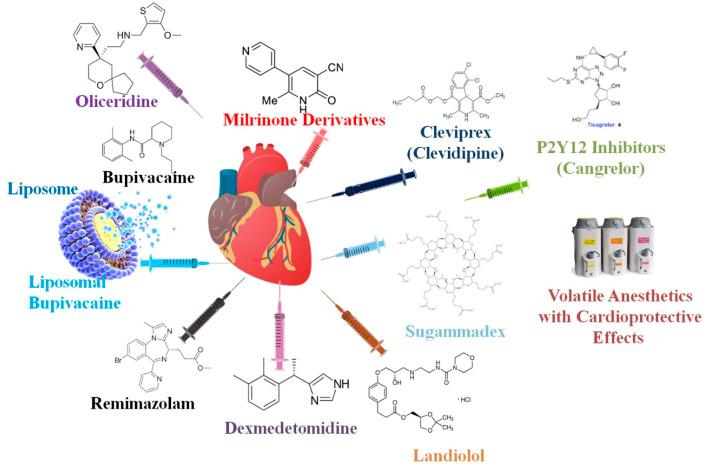
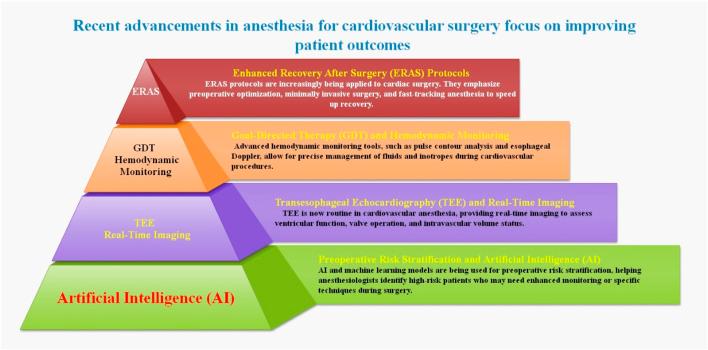
Inducing and maintaining general anesthesia requires a diverse set of medications. Currently, heart surgery anesthetic management does not adhere to any one standard protocol or set of drugs. To ensure steady circulatory function while providing sufficient sedation, anesthetic medications are carefully selected for cardiovascular operations. Among the opioids used most often in cardiac surgery are fentanyl, sufentanil, and remifentanil. As a cardiac anesthesiologist, your key responsibilities will be to maintain your patient's blood pressure (BP) and oxygen levels, reduce the frequency and intensity of ischemia events, and make it easy for them to get off of cardiopulmonary bypass (CPB) and supplemental oxygen fast. Additionally, new knowledge gaps have been identified as a result of developments in cardiac anesthetics, which must be addressed. The goal of the most recent developments in cardiac anesthesia has been to decrease risks and increase accuracy in patient outcomes during cardiac surgeries. Furthermore, new methods and tools are contributing to the evolution of cardiovascular anesthesia toward a more dynamic, patient-centered approach, with an eye on boosting safety, decreasing complications, and facilitating better recovery for patients. New medications and methods have emerged in the field of anesthetic pharmacology, aiming to improve anesthesia management, particularly for patients who have cardiovascular disease. Optimal cardiovascular stability, fewer side effects, and enhanced surgical recovery are achieved by use of these medications. We have reviewed all the different kinds of cardiac anesthetic techniques and medications in this research. We have also examined the many new anesthetic medicines that have been produced and used for individuals with cardiovascular issues. Next, we covered prospects in the realm of cardiovascular anesthesia and novel cardiac anesthetic drugs.
诱导和维持全身麻醉需要使用多种药物。目前,心脏手术的麻醉管理并不遵循任何一种标准方案或一组药物。为了在提供足够镇静的同时确保稳定的循环功能,会为心血管手术精心挑选麻醉药物。在心脏手术中最常用的阿片类药物包括芬太尼、舒芬太尼和瑞芬太尼。作为一名心脏麻醉医生,你的主要职责将是维持患者的血压(BP)和氧水平,减少缺血事件的频率和强度,并使他们易于快速脱离体外循环(CPB)和补充氧气。此外,心脏麻醉的发展还发现了一些新的知识空白,必须加以解决。心脏麻醉最新发展的目标是降低心脏手术期间的风险并提高患者预后的准确性。此外,新的方法和工具正在推动心血管麻醉向更动态、以患者为中心的方法发展,着眼于提高安全性、减少并发症并促进患者更好地康复。麻醉药理学领域出现了新的药物和方法,旨在改善麻醉管理,特别是对于患有心血管疾病的患者。通过使用这些药物可实现最佳的心血管稳定性、更少的副作用和更快的手术恢复。在本研究中,我们回顾了所有不同类型的心脏麻醉技术和药物。我们还研究了针对心血管问题患者生产和使用的许多新型麻醉药物。接下来,我们探讨了心血管麻醉领域的前景和新型心脏麻醉药物。

 Zotero 插件