
人工智能与小儿急性肾损伤:一篇综述及白皮书
Artificial intelligence and pediatric acute kidney injury: a mini-review and white paper.
作者信息
Hu Jieji, Raina Rupesh
机构信息
Department of Internal Medicine, Northeast Ohio Medical University, Rootstown, OH, United States.
Department of Nephrology, Cleveland Clinic Akron General Medical Center, Akron, OH, United States.
出版信息
Front Nephrol. 2025 Feb 18;5:1548776. doi: 10.3389/fneph.2025.1548776. eCollection 2025.
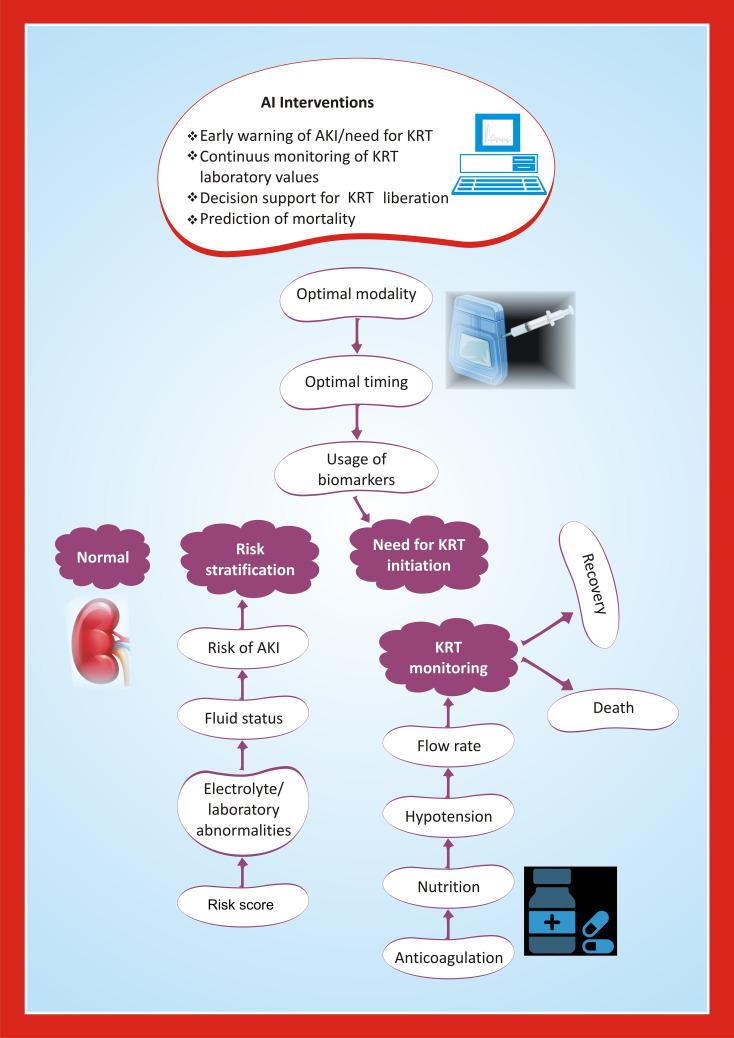
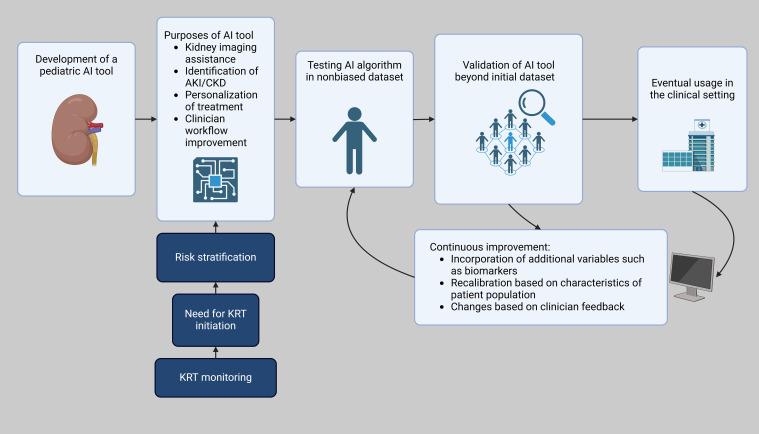
Acute kidney injury (AKI) in pediatric and neonatal populations poses significant diagnostic and management challenges, with delayed detection contributing to long-term complications such as hypertension and chronic kidney disease. Recent advancements in artificial intelligence (AI) offer new avenues for early detection, risk stratification, and personalized care. This paper explores the application of AI models, including supervised and unsupervised machine learning, in predicting AKI, improving clinical decision-making, and identifying subphenotypes that respond differently to interventions. It discusses the integration of AI with existing risk scores and biomarkers to enhance predictive accuracy and its potential to revolutionize pediatric nephrology. However, barriers such as data quality, algorithmic bias, and the need for transparent and ethical implementation are critical considerations. Future directions emphasize incorporating biomarkers, expanding external validation, and ensuring equitable access to optimize outcomes in pediatric AKI care.
儿科和新生儿群体中的急性肾损伤(AKI)带来了重大的诊断和管理挑战,检测延迟会导致高血压和慢性肾病等长期并发症。人工智能(AI)的最新进展为早期检测、风险分层和个性化护理提供了新途径。本文探讨了AI模型(包括监督式和无监督式机器学习)在预测AKI、改善临床决策以及识别对干预措施反应不同的亚表型方面的应用。它讨论了AI与现有风险评分和生物标志物的整合,以提高预测准确性及其彻底改变儿科肾脏病学的潜力。然而,数据质量、算法偏差以及透明和道德实施的必要性等障碍是关键考虑因素。未来的方向强调纳入生物标志物、扩大外部验证并确保公平获取,以优化儿科AKI护理的结果。
 Zotero 插件