
优化的脂质纳米颗粒可在树突状细胞中实现有效的CRISPR/Cas9介导的基因编辑,以增强免疫疗法。
Optimized lipid nanoparticles enable effective CRISPR/Cas9-mediated gene editing in dendritic cells for enhanced immunotherapy.
作者信息
Mao Kuirong, Tan Huizhu, Cong Xiuxiu, Liu Ji, Xin Yanbao, Wang Jialiang, Guan Meng, Li Jiaxuan, Zhu Ge, Meng Xiandi, Lin Guojiao, Wang Haorui, Han Jing, Wang Ming, Yang Yong-Guang, Sun Tianmeng
机构信息
Key Laboratory of Organ Regeneration and Transplantation of Ministry of Education, Institute of Immunology, The First Hospital, Jilin University, Changchun 130061, China.
International Center of Future Science, Jilin University, Changchun 130015, China.
出版信息
Acta Pharm Sin B. 2025 Jan;15(1):642-656. doi: 10.1016/j.apsb.2024.08.030. Epub 2024 Oct 11.
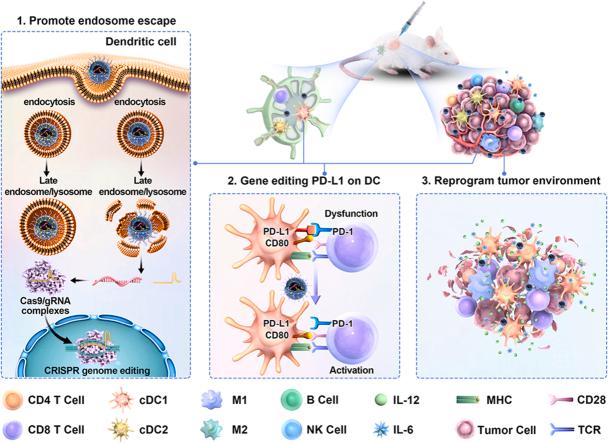
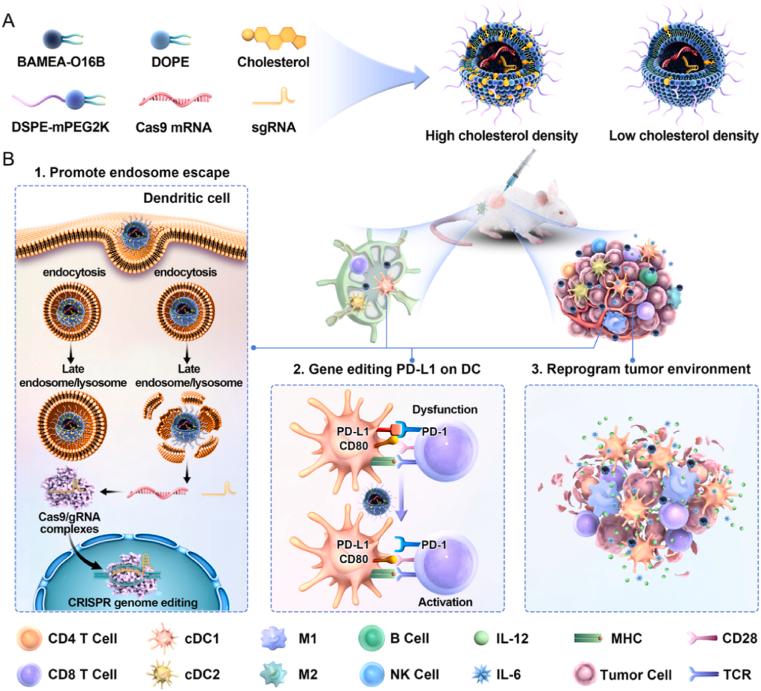
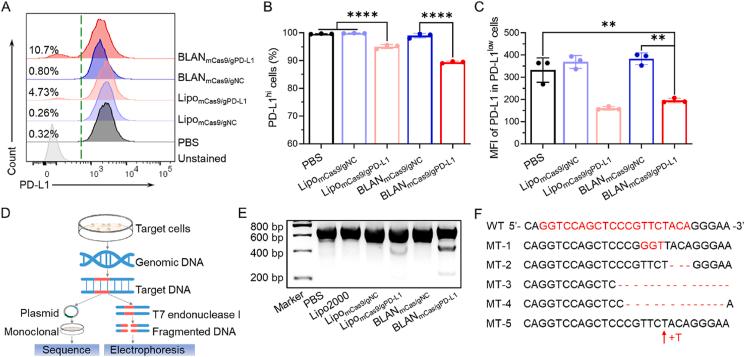
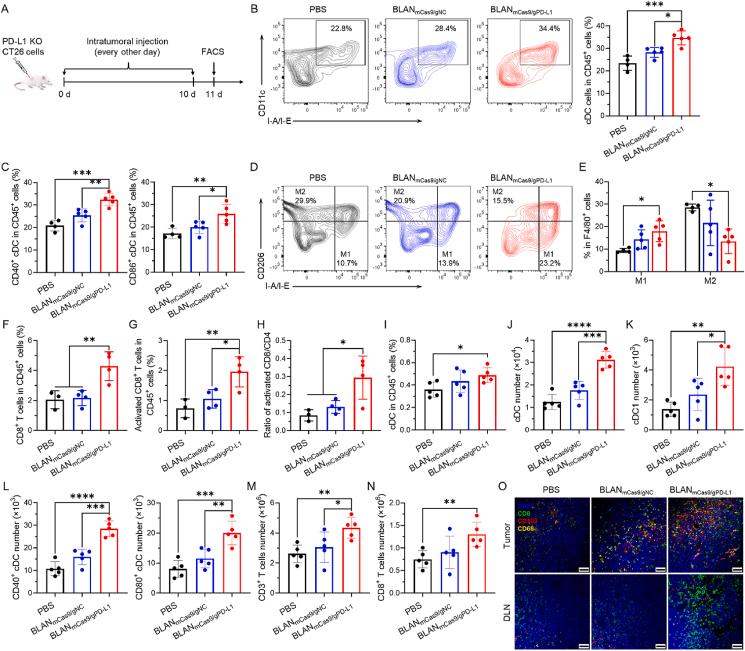
Immunotherapy has emerged as a revolutionary approach to treat immune-related diseases. Dendritic cells (DCs) play a pivotal role in orchestrating immune responses, making them an attractive target for immunotherapeutic interventions. Modulation of gene expression in DCs using genome editing techniques, such as the CRISPR-Cas system, is important for regulating DC functions. However, the precise delivery of CRISPR-based therapies to DCs has posed a significant challenge. While lipid nanoparticles (LNPs) have been extensively studied for gene editing in tumor cells, their potential application in DCs has remained relatively unexplored. This study investigates the important role of cholesterol in regulating the efficiency of BAMEA-O16B lipid-assisted nanoparticles (BLANs) as carriers of CRISPR/Cas9 for gene editing in DCs. Remarkably, BLANs with low cholesterol density exhibit exceptional mRNA uptake, improved endosomal escape, and efficient single-guide RNA release capabilities. Administration of BLAN results in substantial PD-L1 gene knockout in conventional dendritic cells (cDCs), accompanied by heightened cDC1 activation, T cell stimulation, and significant suppression of tumor growth. The study underscores the pivotal role of cholesterol density within LNPs, revealing potent influence on gene editing efficacy within DCs. This strategy holds immense promise for the field of cancer immunotherapy, offering a novel avenue for treating immune-related diseases.
免疫疗法已成为治疗免疫相关疾病的一种革命性方法。树突状细胞(DCs)在协调免疫反应中起着关键作用,使其成为免疫治疗干预的一个有吸引力的靶点。使用基因组编辑技术(如CRISPR-Cas系统)调节DCs中的基因表达对于调节DC功能很重要。然而,将基于CRISPR的疗法精确递送至DCs带来了重大挑战。虽然脂质纳米颗粒(LNPs)已被广泛研究用于肿瘤细胞中的基因编辑,但其在DCs中的潜在应用仍相对未被探索。本研究调查了胆固醇在调节BAMEA-O16B脂质辅助纳米颗粒(BLANs)作为CRISPR/Cas9载体用于DCs基因编辑效率方面的重要作用。值得注意的是,低胆固醇密度的BLANs表现出卓越的mRNA摄取、改善的内体逃逸和高效的单向导RNA释放能力。给予BLAN会导致常规树突状细胞(cDCs)中大量的PD-L1基因敲除,同时伴随着cDC1激活增强、T细胞刺激以及肿瘤生长的显著抑制。该研究强调了LNPs中胆固醇密度的关键作用,揭示了其对DCs内基因编辑功效的强大影响。这一策略在癌症免疫治疗领域具有巨大潜力,为治疗免疫相关疾病提供了一条新途径。



 Zotero 插件