
细胞外囊泡介导的肝脏与其他器官之间的双向通讯:机制探索与临床应用前景
Extracellular vesicle-mediated bidirectional communication between the liver and other organs: mechanistic exploration and prospects for clinical applications.
作者信息
Mo Wenhui, Peng Yunke, Zheng Yanyi, Zhao Shenglan, Deng Liling, Fan Xiaoli
机构信息
Department of Gastroenterology and Hepatology and Laboratory of Gastrointestinal Cancer and Liver Disease, West China Hospital, Sichuan University, Chengdu, 610041, China.
Department of Endocrinology and Metabolism, Chongqing Emergency Medical Centre, Chongqing University Central Hospital, Chongqing, 400014, China.
出版信息
J Nanobiotechnology. 2025 Mar 8;23(1):190. doi: 10.1186/s12951-025-03259-4.
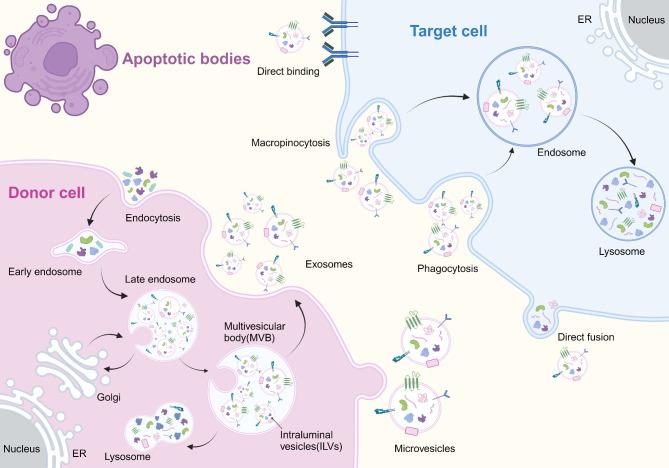
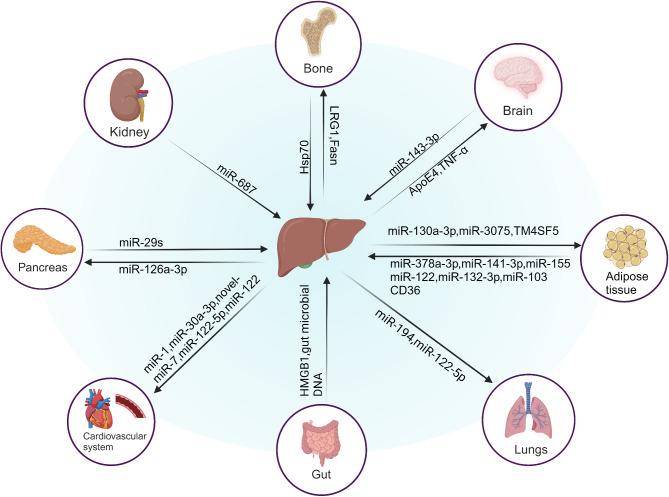
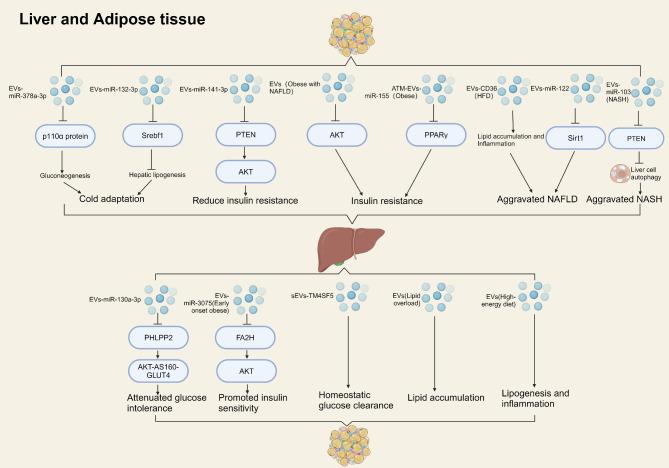
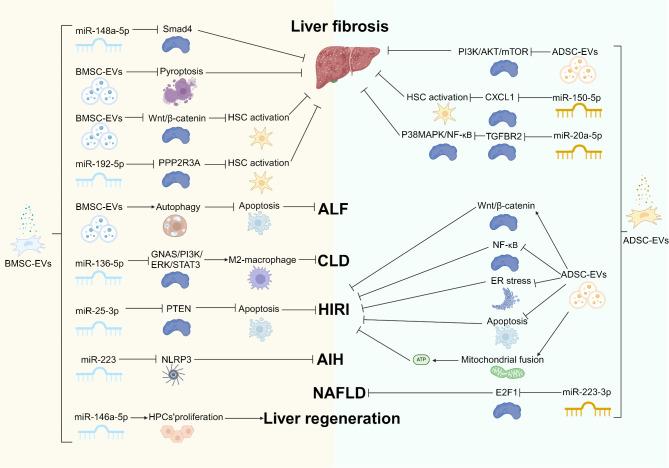
The liver, functioning as an endocrine organ, secretes a variety of substances that influence the activities of other body organs. Conversely, molecules generated by organs such as bone, the gut, and adipose tissue can also impact liver function. Accumulating evidence suggests bidirectional communication between the liver and other organs. However, research on how extracellular vesicles (EVs), which transport active molecular mediators, contribute to this interorgan communication is still in its nascent stages. EVs are capable of transporting functional molecules, including lipids, nucleic acids, and proteins, thereby affecting recipient cells across different organs at the biological level. This review examines the role of EVs in facilitating bidirectional communication between the liver and other organs such as bone, the cardiovascular system, the gut, the pancreas, the brain, the lungs, the kidneys, and adipose tissue. It explores their potential in disease treatment and highlights the challenges in understanding EV-mediated interorgan interactions. The contribution of mediator-carrying EVs to two-way communication between the liver and other organs remains an area of ongoing investigation. Future research will provide a more comprehensive theoretical foundation to clarify the precise mechanisms governing communication between the liver and other organs, pinpoint medical targets, and expand the application of EVs within the realm of precision medicine.
肝脏作为一个内分泌器官,分泌多种影响身体其他器官活动的物质。相反,骨骼、肠道和脂肪组织等器官产生的分子也会影响肝脏功能。越来越多的证据表明肝脏与其他器官之间存在双向交流。然而,关于运输活性分子介质的细胞外囊泡(EVs)如何促进这种器官间交流的研究仍处于起步阶段。EVs能够运输包括脂质、核酸和蛋白质在内的功能分子,从而在生物学水平上影响不同器官的受体细胞。这篇综述探讨了EVs在促进肝脏与骨骼、心血管系统、肠道、胰腺、大脑、肺、肾脏和脂肪组织等其他器官之间双向交流中的作用。研究了它们在疾病治疗中的潜力,并强调了理解EV介导的器官间相互作用所面临的挑战。携带介质的EVs对肝脏与其他器官之间双向交流的贡献仍是一个正在进行研究的领域。未来的研究将提供更全面的理论基础,以阐明肝脏与其他器官之间交流的精确机制,确定医学靶点,并扩大EVs在精准医学领域的应用。



 Zotero 插件