
揭示免疫系统在周围神经再生中的作用:通往增强愈合的途径。
Unraveling the immune system's role in peripheral nerve regeneration: a pathway to enhanced healing.
作者信息
Zhang Xu, Zhang Yanxian, Chen Yuqing, Ji Yuxiang, Lyu Yongmei, Miao Zengli, Duan Xuchu, Liu Xiaoyu
机构信息
Key Laboratory of Neuroregeneration of Jiangsu and Ministry of Education, Co-innovation Center of Neuroregeneration; Department of Pharmacy, Affiliated Hospital of Nantong University; School of Life Science, Nantong Laboratory of Development and Diseases; Medical School, Nantong University, Nantong, China.
Clinical Medical Research Center, Department of Neurosurgery, Affiliated Wuxi Clinical College of Nantong University, Wuxi No.2 Peolpe's Hospital, Jiangnan University Medical Center, Wuxi, China.
出版信息
Front Immunol. 2025 Feb 21;16:1540199. doi: 10.3389/fimmu.2025.1540199. eCollection 2025.
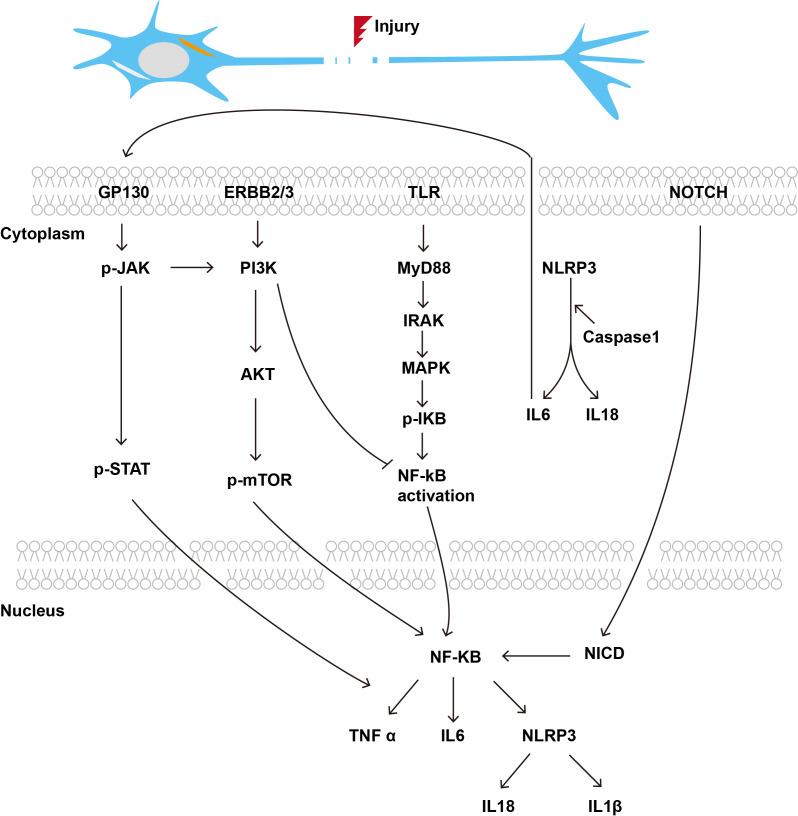
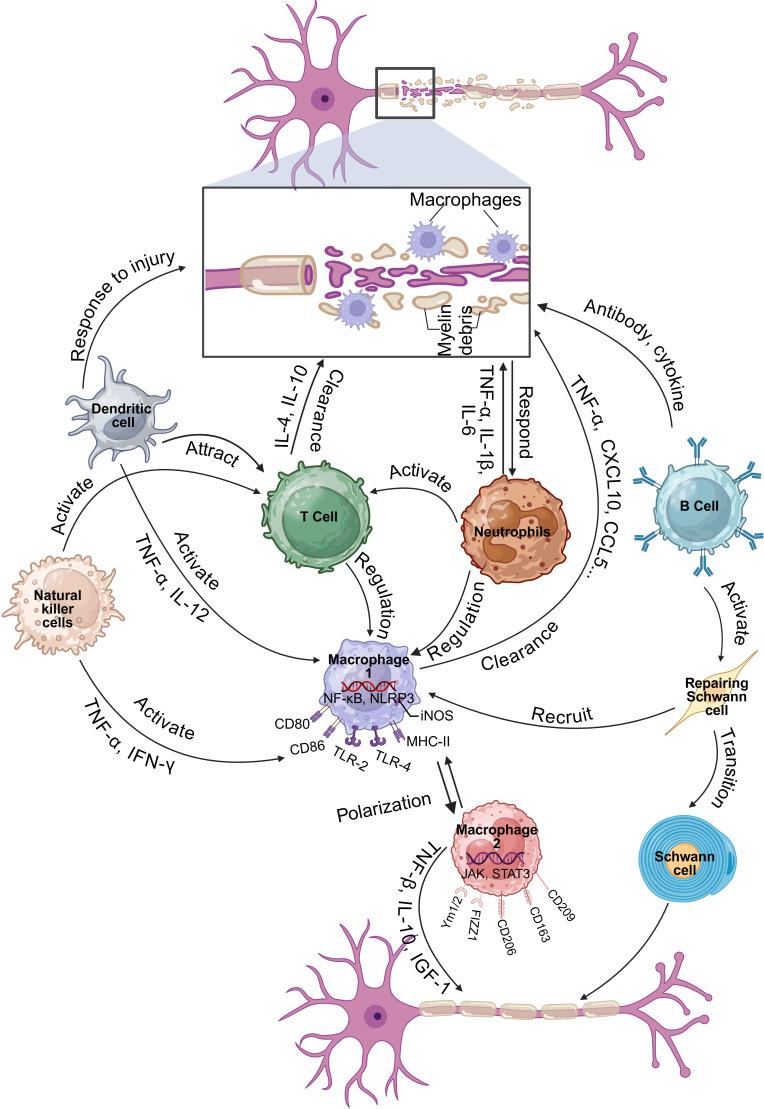
Peripheral nerve injury (PNI) represents a common challenge in clinical practice. In contrast to the central nervous system (CNS), the peripheral nervous system (PNS) in mature mammals possesses a limited regenerative capacity. Upon the occurrence of PNI, peripheral nerve regeneration (PNR) is initiated, facilitated by the activation of the immune microenvironment and the intrinsic growth potential of neurons. This regenerative process encompasses several key stages, including distal axon degeneration, myelin breakdown, clearance of myelin debris, inflammatory responses from non-neuronal cells, and subsequent axonal regeneration. The immune response, recognized for its role in clearing myelin debris and modulating the local inflammatory milieu, is crucial for initiating axonal regeneration at the proximal stump of nerves. Nevertheless, the precise mechanisms by which the immune response influences PNI and the strategies to harness this process to augment regeneration remain elusive. This article provides a comprehensive overview of the diverse roles and mechanisms of the immune system in PNR and presents insights into potential therapeutic strategies. Furthermore, the article examines immune-associated signaling pathways and their impact on PNR, underscoring the significance of immune modulation in enhancing patient outcomes with PNI. Ultimately, it encapsulates and forecasts the theoretical and practical directions of this field.
周围神经损伤(PNI)是临床实践中常见的挑战。与中枢神经系统(CNS)不同,成熟哺乳动物的周围神经系统(PNS)再生能力有限。PNI发生后,周围神经再生(PNR)启动,由免疫微环境的激活和神经元的内在生长潜力促进。这个再生过程包括几个关键阶段,包括远端轴突退化、髓鞘分解、髓鞘碎片清除、非神经元细胞的炎症反应以及随后的轴突再生。免疫反应因其在清除髓鞘碎片和调节局部炎症环境中的作用而被认可,对于启动神经近端残端的轴突再生至关重要。然而,免疫反应影响PNI的精确机制以及利用这一过程增强再生的策略仍然难以捉摸。本文全面概述了免疫系统在PNR中的多种作用和机制,并对潜在的治疗策略提出了见解。此外,本文研究了免疫相关信号通路及其对PNR的影响,强调了免疫调节在改善PNI患者预后方面的重要性。最终,它总结并预测了该领域的理论和实践方向。
 Zotero 插件