
脓毒症中真菌病原体的流行病学及危险因素:一项全国性前瞻性多中心队列研究
Epidemiology and risk factors of fungal pathogens in sepsis: a prospective nationwide multicenter cohort study.
作者信息
Lee Jeong Eun, Kang Da Hyun, Ju Hyekyeong, Oh Dong Kyu, Lee Su Yeon, Park Mi Hyeon, Lim Chae-Man, Lee Song I
机构信息
Division of Allergy, Pulmonary, and Critical Care Medicine, Department of Internal Medicine, Chungnam National University Hospital, Chungnam National University School of Medicine, Munhwaro 282, Daejeon, Jung Gu, 35015, Republic of Korea.
Department of Pulmonary and Critical Care Medicine, Dongkang Medical Center, Ulsan, Republic of Korea.
出版信息
BMC Infect Dis. 2025 Mar 10;25(1):331. doi: 10.1186/s12879-025-10722-y.
BACKGROUND
The incidence of sepsis with identified fungal pathogens is increasing and is associated with higher morbidity and mortality. Co-infection with fungal infections in COVID-19 patients is attracting clinical attention. This study examines the epidemiology, risk factors, and outcomes among sepsis patients with identified fungal pathogens.
METHODS
We conducted a nationwide cohort study of adult patients with sepsis from the Korean Sepsis Alliance Database in South Korea between September 2019 and December 2021. We identified 407 patients with documented fungal pathogens, categorized according to the presence of hemato-oncologic malignancies.
RESULTS
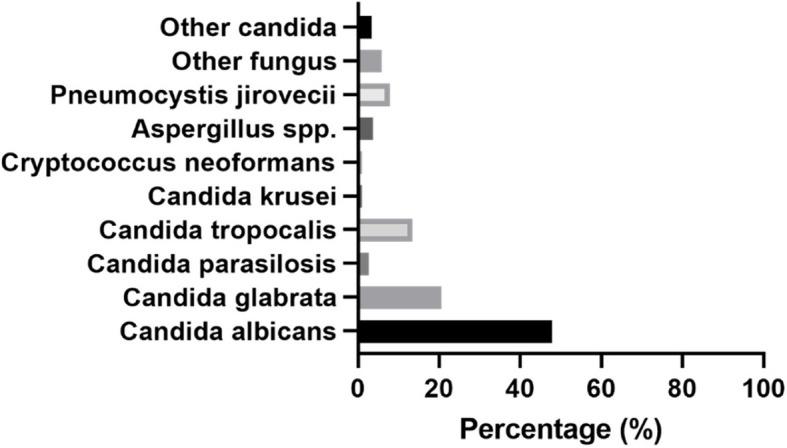
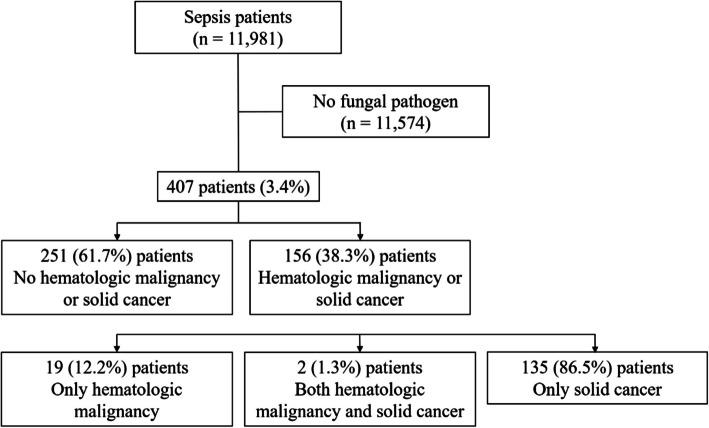
Of the 11,981 patients with sepsis, fungal pathogens were identified in 3.4% of cases. Among these patients, 38.3% had co-existing hematologic or solid organ cancer. Older age, higher clinical frailty scale scores, and underlying conditions, such as chronic kidney disease, cerebrovascular disease, and dementia, were more prevalent in patients without hemato-oncologic malignancies. The most common fungal pathogens were Candida albicans (47.9%), Candida glabrata (20.6%), and Candida tropicalis (13.5%). Only 6.6% of the patients with confirmed fungal pathogens received antifungal treatment. The presence of hemato-oncologic malignancies did not significantly affect patient outcomes. Factors associated with the presence of identified fungal pathogens included chronic kidney disease (Odds ratio [OR] 1.662; 95% confidence interval [CI] 1.216-2.273; p = 0.001), connective tissue disease (OR 1.885; 95% CI 1.058-3.358; p = 0.032), immunocompromised status (OR 2.284; 95% CI 2.186-3.753; p = 0.001), and invasive mechanical ventilation (OR 2.864; 95% CI 2.186-3.753; p < 0.001).
CONCLUSIONS
Sepsis identified fungal pathogen are associated with chronic kidney disease, immunocompromised status and other risk factors, demonstrating the need for early detection, targeted management and improved antifungal strategies to improve patient outcomes.
背景
已确定真菌病原体的脓毒症发病率正在上升,且与更高的发病率和死亡率相关。新型冠状病毒肺炎(COVID-19)患者合并真菌感染正引起临床关注。本研究调查了已确定真菌病原体的脓毒症患者的流行病学、危险因素及预后情况。
方法
我们对2019年9月至2021年12月期间韩国脓毒症联盟数据库中的成年脓毒症患者进行了一项全国性队列研究。我们确定了407例有真菌病原体记录的患者,并根据血液肿瘤恶性肿瘤的存在情况进行分类。
结果
在11981例脓毒症患者中,3.4%的病例发现了真菌病原体。在这些患者中,38.3%同时患有血液系统或实体器官癌症。年龄较大、临床衰弱量表评分较高以及存在慢性肾病、脑血管疾病和痴呆等基础疾病在无血液肿瘤恶性肿瘤的患者中更为普遍。最常见的真菌病原体是白色念珠菌(47.9%)、光滑念珠菌(20.6%)和热带念珠菌(13.5%)。确诊有真菌病原体的患者中只有6.6%接受了抗真菌治疗。血液肿瘤恶性肿瘤的存在对患者预后没有显著影响。与已确定真菌病原体存在相关的因素包括慢性肾病(比值比[OR]1.662;95%置信区间[CI]1.216 - 2.273;p = 0.001)、结缔组织病(OR 1.885;95% CI 1.058 - 3.358;p = 0.032)、免疫功能低下状态(OR 2.284;95% CI 2.186 - 3.753;p = 0.001)和有创机械通气(OR 2.864;95% CI 2.186 - 3.753;p < 0.001)。
结论
已确定真菌病原体的脓毒症与慢性肾病、免疫功能低下状态及其他危险因素相关,这表明需要早期检测、针对性管理及改进抗真菌策略以改善患者预后。
 Zotero 插件