
替代性sPD-1亚型的特征表明,胞外区sPD-1特征可预测有效的抗肿瘤反应。
Characterization of alternative sPD-1 isoforms reveals that ECD sPD-1 signature predicts an efficient antitumor response.
作者信息
Hou Ping, Hu Li, Zhang Junrong, Zhou Xiaoyan, Xiao Yonglei, Li Lijun, Wu Qiongwen, Liu Jing, Lin Yuhong, Chen Ling
机构信息
Institute of Immunotherapy, Fujian Medical University, 350102 Fuzhou, Fujian, China.
Department of General Surgery (Emergency Surgery), Fujian Medical University Union Hospital, 350001 Fuzhou, Fujian, China.
出版信息
Commun Biol. 2025 Mar 11;8(1):406. doi: 10.1038/s42003-025-07800-x.
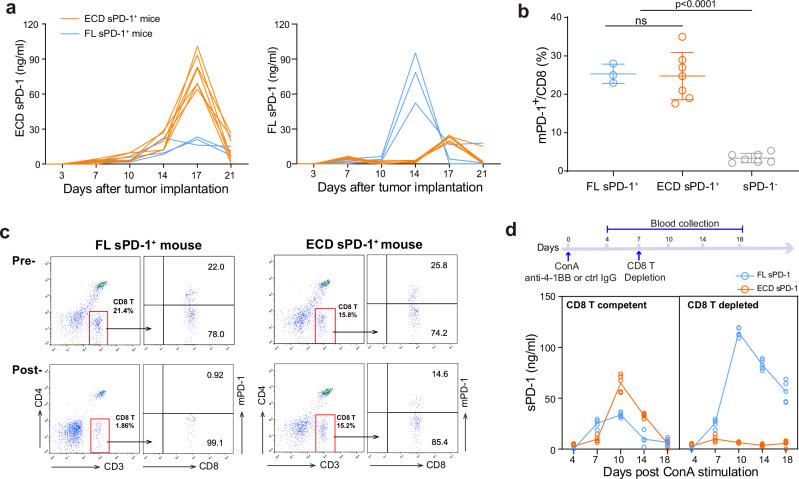
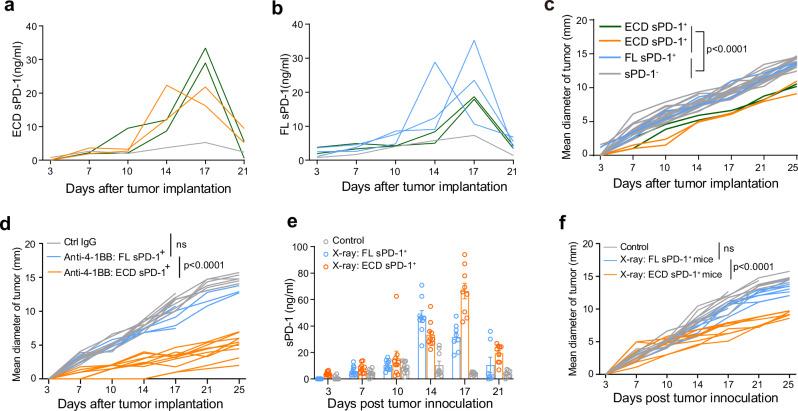
Soluble PD-1 is a dissociated form of membrane PD-1 broadly present in cancer, infections, or autoimmune diseases. However, the clinical significance of sPD-1 remains controversial due to the uncertainty of its isoforms, origin, and production mechanism. Here, using antibodies specifically binding to the intracellular domain of PD-1, we identified two sPD-1 isoforms in cancers at the protein level: FL sPD-1 containing both the extra- and intracellular domains of PD-1, and ECD sPD-1 containing only the extracellular fragment. Subsequently, we tracked their origin and found that in tumor models, both sPD-1 isoforms were generated by activated CD8 T cells highly expressing membrane PD-1. However, ECD sPD-1 was released from live PD-1T cells by matrix metalloproteinases, while FL sPD-1 production was accompanied by PD-1T cell death. Therefore, only ECD sPD-1 predicts effective immune response and better tumor outcome. Our study distinguished sPD-1 isoforms and highlighted ECD sPD-1 as a prognostic biomarker in cancer.
可溶性程序性死亡受体1(sPD-1)是膜性PD-1的一种解离形式,广泛存在于癌症、感染或自身免疫性疾病中。然而,由于其异构体、来源和产生机制的不确定性,sPD-1的临床意义仍存在争议。在此,我们使用特异性结合PD-1胞内结构域的抗体,在蛋白质水平上鉴定出癌症中的两种sPD-1异构体:包含PD-1胞外和胞内结构域的全长sPD-1(FL sPD-1),以及仅包含细胞外片段的胞外区sPD-1(ECD sPD-1)。随后,我们追踪了它们的来源,发现在肿瘤模型中,两种sPD-1异构体均由高表达膜性PD-1的活化CD8 T细胞产生。然而,ECD sPD-1是由基质金属蛋白酶从存活的PD-1阳性T细胞中释放出来的,而FL sPD-1的产生伴随着PD-1阳性T细胞的死亡。因此,只有ECD sPD-1能预测有效的免疫反应和更好的肿瘤预后。我们的研究区分了sPD-1异构体,并强调ECD sPD-1作为癌症预后生物标志物的作用。


 Zotero 插件