
黎巴嫩私立医院药剂师对药品短缺的认知、态度及经历:一项全国性横断面研究
Perceptions, attitudes and experiences of hospital pharmacists working in the private sector regarding drug shortage in Lebanon: a national cross-sectional study.
作者信息
Hallal Hadi, Hoteit Maha, Hallit Souheil, Hallal Mahmoud
机构信息
Faculty of Pharmacy, Beirut Arab University, Beirut, Lebanon.
Food Science Unit, National Council for Scientific Research of Lebanon (CNRS-Lebanon), Beirut, Lebanon.
出版信息
J Pharm Policy Pract. 2025 Mar 10;18(1):2464786. doi: 10.1080/20523211.2025.2464786. eCollection 2025.
INTRODUCTION
Our objective was to assess the perception, attitudes, and experiences of Lebanese hospital pharmacists in everyday practice regarding the drug shortage as well as to identify challenges and propose solutions.
METHODS
A cross-sectional survey was conducted between February and June 2021, enrolling 36 Lebanese hospital pharmacists.
RESULTS
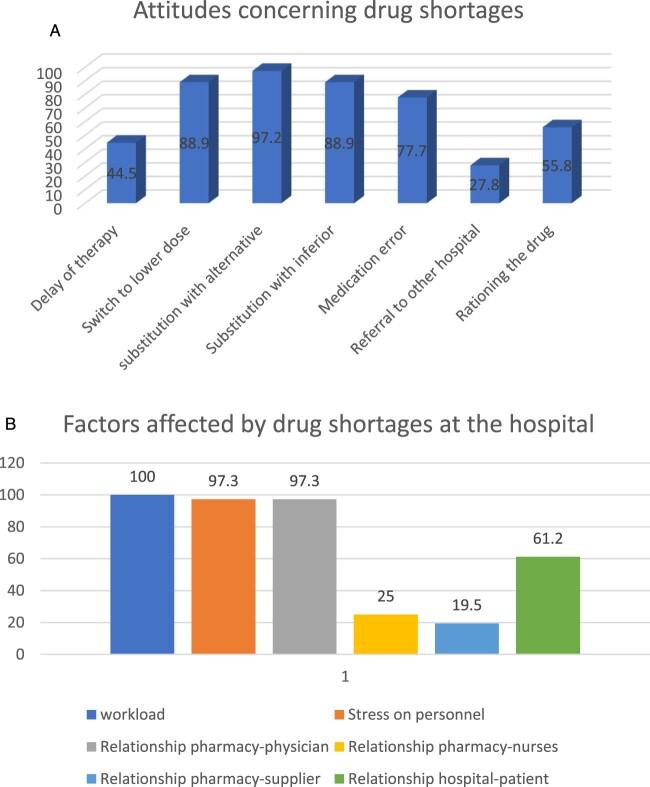
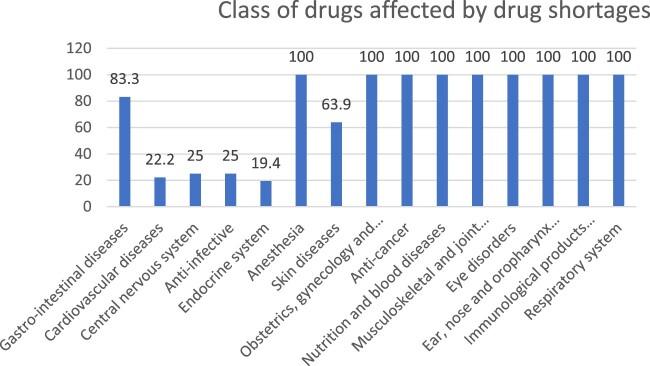
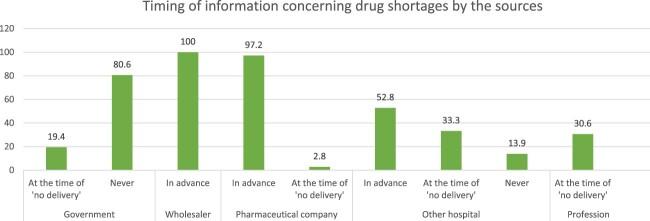
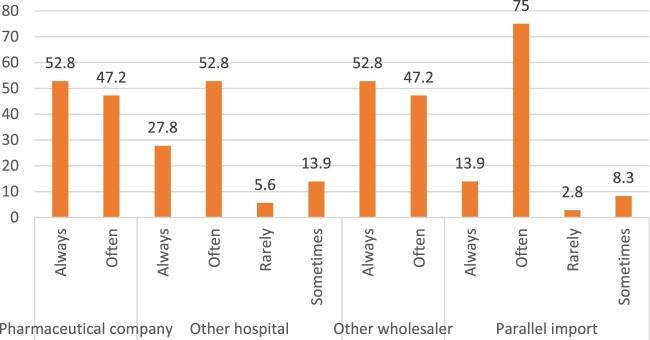
The economic crisis and issues with the quality of medicines were ranked as the top two causes of drug shortages in Lebanese hospitals; 88.9% of hospital pharmacists thought that switching to lower doses and using alternatives (97.2%) can be considered viable solutions. To address the issue of drug shortages, efforts made by manufacturers were 36.1%; the availability of alternative drugs in hospitals was 63.9%. All classes of drugs were shorted in hospitals. Hospital pharmacists spent less than 5 h/day to track medicine shortages (44.5%), identifying alternatives (97.3%), purchasing alternatives (91.7%), deliberating with physicians (91.7%). Pharamcists approached 'the parallel import' approach (75%) and contacted other hospitals (52.8%) to insure medicines alternatives.
DISCUSSION
Drug shortages in Lebanon are driven by various factors and have been increasing across governorates. Public health is the most impacted, especially for patients requiring intensive care, which consequently affects their quality of life.
引言
我们的目标是评估黎巴嫩医院药剂师在日常工作中对药品短缺的认知、态度和经历,同时识别挑战并提出解决方案。
方法
于2021年2月至6月进行了一项横断面调查,纳入了36名黎巴嫩医院药剂师。
结果
经济危机和药品质量问题被列为黎巴嫩医院药品短缺的前两大原因;88.9%的医院药剂师认为改用较低剂量和使用替代药品(97.2%)可被视为可行的解决方案。为解决药品短缺问题,制造商所做的努力占36.1%;医院替代药品的可获得性占63.9%。医院各类药品均出现短缺。医院药剂师每天花费不到5小时来追踪药品短缺情况(44.5%)、识别替代药品(97.3%)、采购替代药品(91.7%)、与医生商议(91.7%)。药剂师采用“平行进口”方式(75%)并联系其他医院(52.8%)以确保有替代药品。
讨论
黎巴嫩的药品短缺由多种因素导致,且在各省份不断加剧。公共卫生受到的影响最大,尤其是对需要重症监护的患者,这进而影响了他们的生活质量。





 Zotero 插件