
适应性深部脑刺激能否治疗帕金森病的步态冻结?
Could adaptive deep brain stimulation treat freezing of gait in Parkinson's disease?
作者信息
Klocke Philipp, Loeffler Moritz A, Lewis Simon J G, Gharabaghi Alireza, Weiss Daniel
机构信息
Centre for Neurology, Department of Neurodegenerative Diseases, and Hertie Institute for Clinical Brain Research, University of Tübingen, Hoppe-Seyler-Str. 3, 72076, Tübingen, Germany.
Parkinson's Disease Research Clinic, Macquarie Medical School, Macquarie University, 75 Talavera Road, Sydney, NSW, Australia.
出版信息
J Neurol. 2025 Mar 12;272(4):267. doi: 10.1007/s00415-025-13000-8.
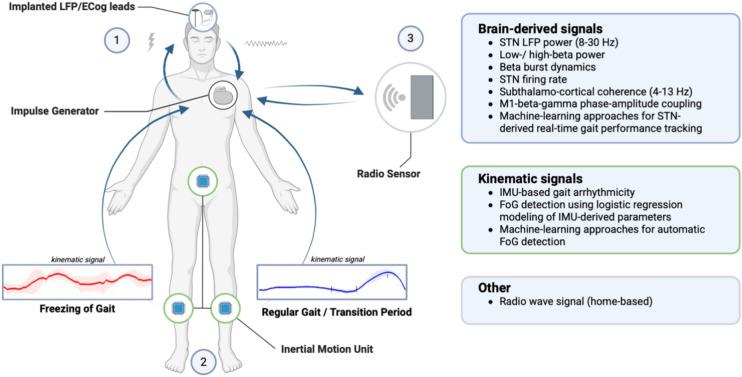
Next-generation neurostimulators capable of running closed-loop adaptive deep brain stimulation (aDBS) are about to enter the clinical landscape for the treatment of Parkinson's disease. Already promising results using aDBS have been achieved for symptoms such as bradykinesia, rigidity and motor fluctuations. However, the heterogeneity of freezing of gait (FoG) with its wide range of clinical presentations and its exacerbation with cognitive and emotional load make it more difficult to predict and treat. Currently, a successful aDBS strategy to ameliorate FoG lacks a robust oscillatory biomarker. Furthermore, the technical implementation of suppressing an upcoming FoG episode in real-time represents a significant technical challenge. This review describes the neurophysiological signals underpinning FoG and explains how aDBS is currently being implemented. Furthermore, we offer a discussion addressing both theoretical and practical areas that will need to be resolved if we are going to be able to unlock the full potential of aDBS to treat FoG.
能够运行闭环自适应深部脑刺激(aDBS)的下一代神经刺激器即将进入临床领域,用于治疗帕金森病。使用aDBS在诸如运动迟缓、僵硬和运动波动等症状方面已经取得了有前景的结果。然而,步态冻结(FoG)具有多种临床表现且会因认知和情绪负荷而加重,其异质性使得预测和治疗更加困难。目前,一种成功改善FoG的aDBS策略缺乏强大的振荡生物标志物。此外,实时抑制即将发生的FoG发作的技术实施是一项重大的技术挑战。这篇综述描述了支撑FoG的神经生理信号,并解释了目前aDBS是如何实施的。此外,如果我们要充分发挥aDBS治疗FoG的潜力,我们将讨论需要解决的理论和实践领域的问题。
 Zotero 插件