
家禽胸肌脂质变化及调控机制的多组学分析
Multi-Omics Profiling of Lipid Variation and Regulatory Mechanisms in Poultry Breast Muscles.
作者信息
Zhang Hongyuan, Dai Yaqi, Gu Jinxing, Li Hongtai, Wu Ran, Jia Jiyu, Shen Jingqi, Li Wanli, Han Ruili, Sun Guirong, Li Wenting, Liu Xiaojun, Zhao Yinli, Li Guoxi
机构信息
The Shennong Laboratory, Henan Agricultural University, Zhengzhou 450046, China.
Institute of Animal Science, Henan Academy of Agricultural Sciences, Zhengzhou 450002, China.
出版信息
Animals (Basel). 2025 Feb 27;15(5):694. doi: 10.3390/ani15050694.
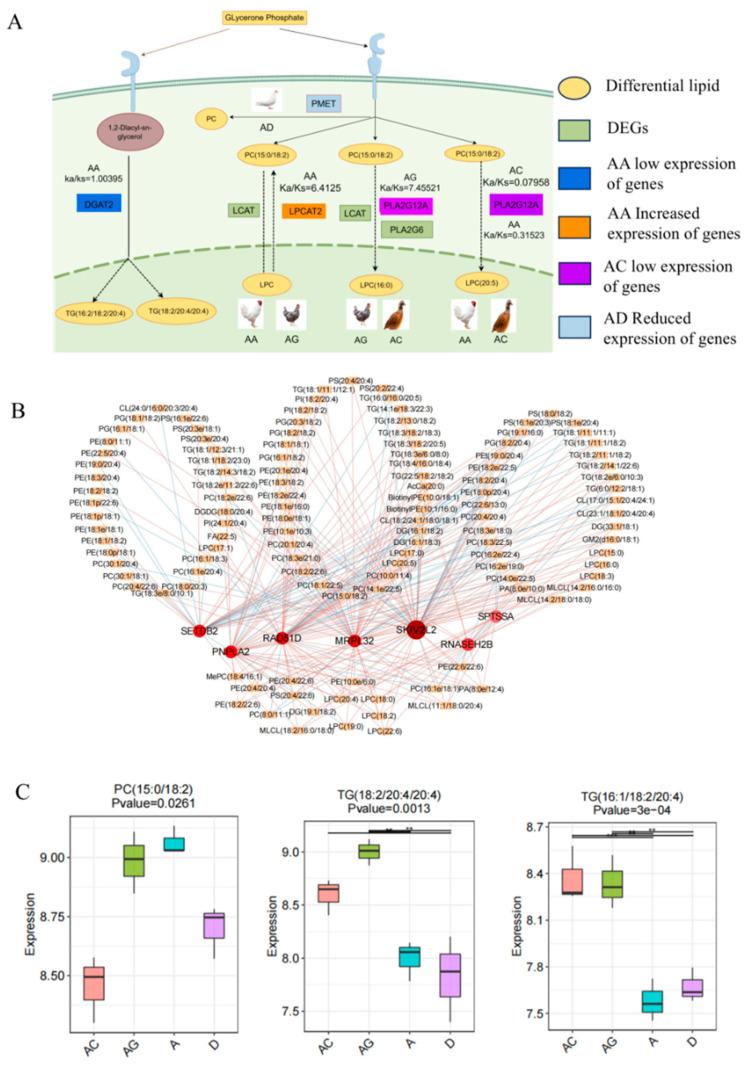
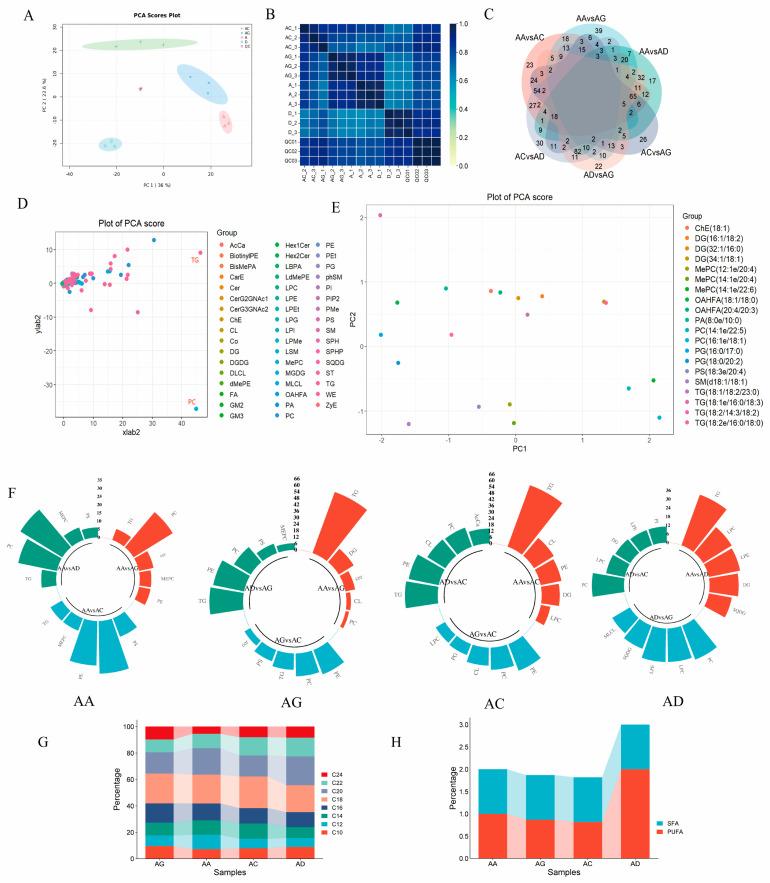
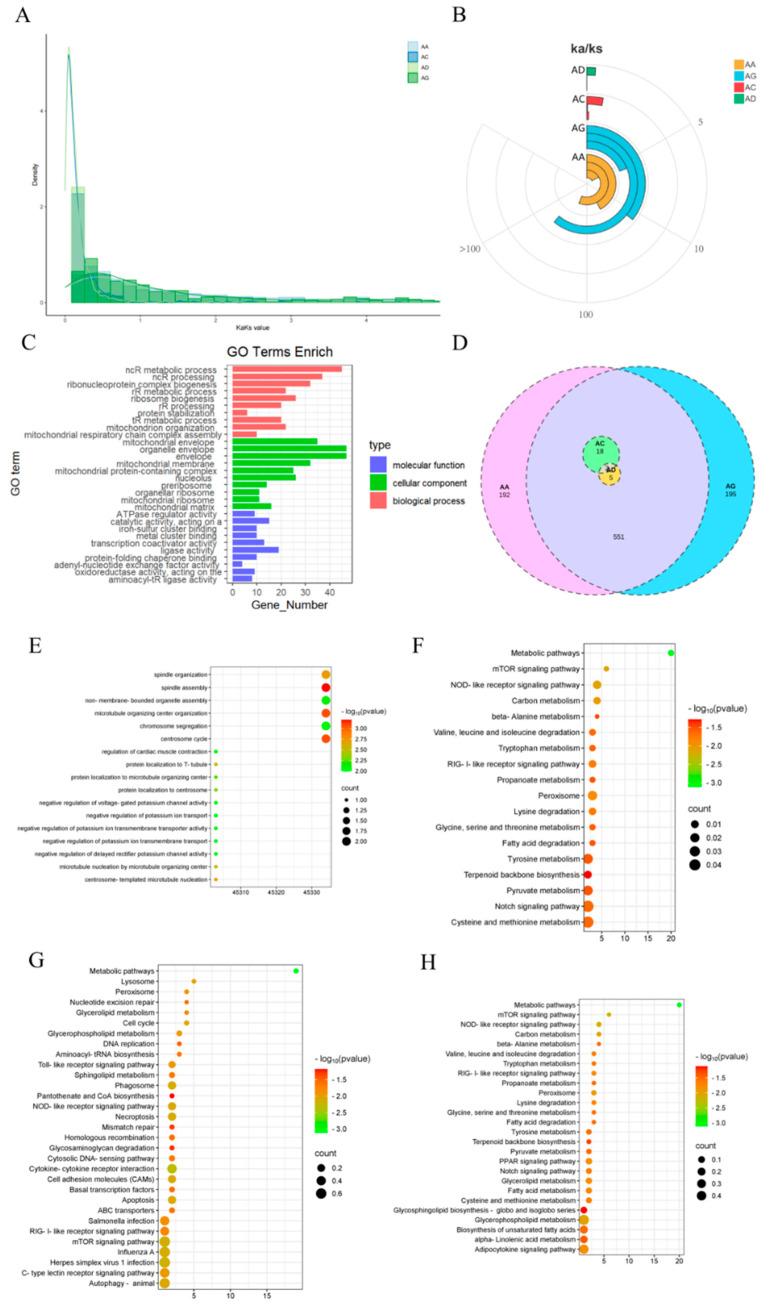
This study aimed to elucidate the genetic basis of lipid composition in the breast muscles of poultry, including AA broilers, dwarf guinea fowl, quails, and pigeons, and the impact of artificial selection on lipid traits. By employing lipidomics and transcriptomic sequencing, the research analyzed the chest muscle tissues of these four poultry. A total of 1542 lipid molecules were identified, with 711 showing significant differences among species. These lipids primarily belonged to subclasses such as TG, PC, Phosphatidylethanolamine (PE), Ceramides (Cer), and Diglyceride (DG), with each species demonstrating distinct profiles in these subclasses. Additionally, 5790 orthologous genes were identified, with 763, 767, 24, and 8 genes in AA broilers, dwarf guinea fowl, quails, and pigeons, respectively, exhibiting positive selection ( > 1). Notably, 114 genes related to lipid metabolism displayed significant differential expression, particularly between AA broilers and dwarf guinea fowl. The findings revealed that the metabolic pathways of PC and LPC lipid molecules in the glycerophospholipid pathway, as well as TG lipid molecules in the glycerolipid pathway, exhibited marked interspecies differences, potentially contributing to variations in breast muscle lipid composition. These results provide a solid foundation for understanding the lipid composition and molecular regulatory mechanisms in diverse poultry, offering valuable insights for further research in poultry lipid metabolism and artificial breeding programs.
本研究旨在阐明家禽胸肌中脂质组成的遗传基础,包括爱拔益加肉鸡、矮脚珍珠鸡、鹌鹑和鸽子,以及人工选择对脂质性状的影响。通过脂质组学和转录组测序,该研究分析了这四种家禽的胸肌组织。共鉴定出1542种脂质分子,其中711种在物种间存在显著差异。这些脂质主要属于甘油三酯(TG)、磷脂酰胆碱(PC)、磷脂酰乙醇胺(PE)、神经酰胺(Cer)和甘油二酯(DG)等亚类,每个物种在这些亚类中表现出不同的特征。此外,鉴定出5790个直系同源基因,其中爱拔益加肉鸡、矮脚珍珠鸡、鹌鹑和鸽子分别有763、767、24和8个基因表现出正选择(>1)。值得注意的是,114个与脂质代谢相关的基因表现出显著的差异表达,特别是在爱拔益加肉鸡和矮脚珍珠鸡之间。研究结果表明,甘油磷脂途径中的PC和溶血磷脂酰胆碱(LPC)脂质分子以及甘油脂途径中的TG脂质分子的代谢途径存在明显的种间差异,这可能导致胸肌脂质组成的变化。这些结果为理解不同家禽的脂质组成和分子调控机制提供了坚实的基础,为家禽脂质代谢和人工育种计划的进一步研究提供了有价值的见解。



 Zotero 插件