
线粒体自噬与自闭症谱系障碍的交叉点:一项系统综述。
The Intersection of Mitophagy and Autism Spectrum Disorder: A Systematic Review.
作者信息
Kovacheva Eleonora, Gevezova Maria, Mehterov Nikolay, Kazakova Maria, Sarafian Victoria
机构信息
Department of Medical Biology, Faculty of Medicine, Medical University-Plovdiv, 4000 Plovdiv, Bulgaria.
Research Institute, Medical University-Plovdiv, 4000 Plovdiv, Bulgaria.
出版信息
Int J Mol Sci. 2025 Feb 28;26(5):2217. doi: 10.3390/ijms26052217.
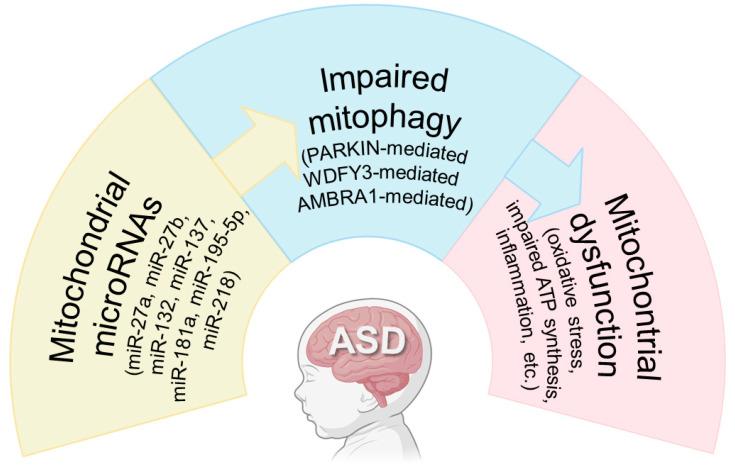
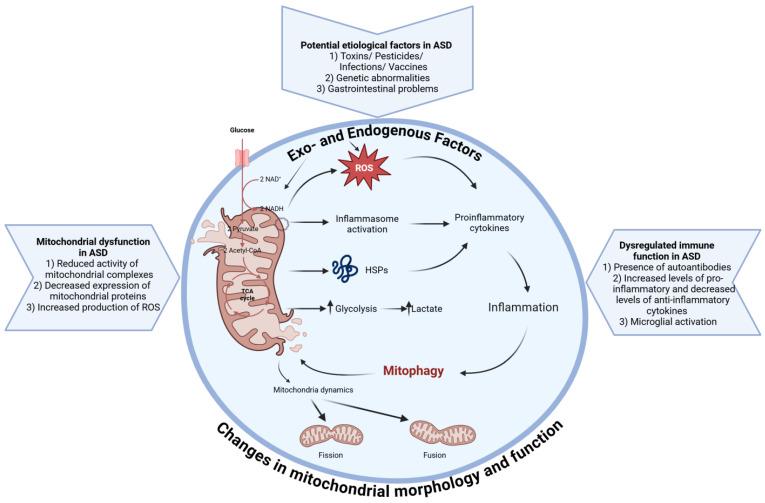
Autism spectrum disorder (ASD) is a group of neurodevelopmental and biobehavioral conditions that arises from complex interactions between environmental factors and physiological development in genetically predisposed individuals. Among the most frequently observed metabolic abnormalities in ASD is mitochondrial dysfunction. Mitochondria respond to cellular stress by altering their dynamics or initiating mitophagy. In neurons, the buildup of dysfunctional mitochondria and reactive oxygen species (ROS) poses a significant risk, as these cells cannot regenerate through division. To safeguard mitochondrial health, cells rely on an efficient "clean-up mechanism" to remove compromised organelles. Mitophagy, a specific form of autophagy, is responsible for regulating the turnover of flawed and non-functional mitochondria. Impairments in this process result in the accumulation of defective mitochondria in neurons, a characteristic of several neurodegenerative disorders associated with behavioral abnormalities. This systematic review offers an in-depth summary of the present knowledge of mitophagy and underscores its pivotal role in the pathogenesis of ASD.
自闭症谱系障碍(ASD)是一组神经发育和生物行为疾病,由环境因素与基因易感性个体的生理发育之间的复杂相互作用引起。ASD中最常观察到的代谢异常之一是线粒体功能障碍。线粒体通过改变其动态变化或启动线粒体自噬来应对细胞应激。在神经元中,功能失调的线粒体和活性氧(ROS)的积累构成了重大风险,因为这些细胞无法通过分裂再生。为了维护线粒体健康,细胞依靠一种有效的“清理机制”来清除受损的细胞器。线粒体自噬是自噬的一种特殊形式,负责调节有缺陷和无功能的线粒体的更新。这一过程的损害会导致神经元中缺陷线粒体的积累,这是几种与行为异常相关的神经退行性疾病的特征。本系统综述深入总结了目前关于线粒体自噬的知识,并强调了其在ASD发病机制中的关键作用。

 Zotero 插件