
山茶属的九个完整叶绿体基因组为进化关系和物种分化提供了见解。
Nine complete chloroplast genomes of the Camellia genus provide insights into evolutionary relationships and species differentiation.
作者信息
Cai Yanfei, Tian Min, Yang Yingjie, Shi Ziming, Zhao Peifei, Wang Jihua
机构信息
Flower Research Institute of Yunnan Academy of Agricultural Sciences, Kunming, 650000, Yunnan, China.
Yunnan Flower Technology Innovation Center, Kunming, 650000, Yunnan, China.
出版信息
Sci Rep. 2025 Mar 13;15(1):8783. doi: 10.1038/s41598-025-87764-4.
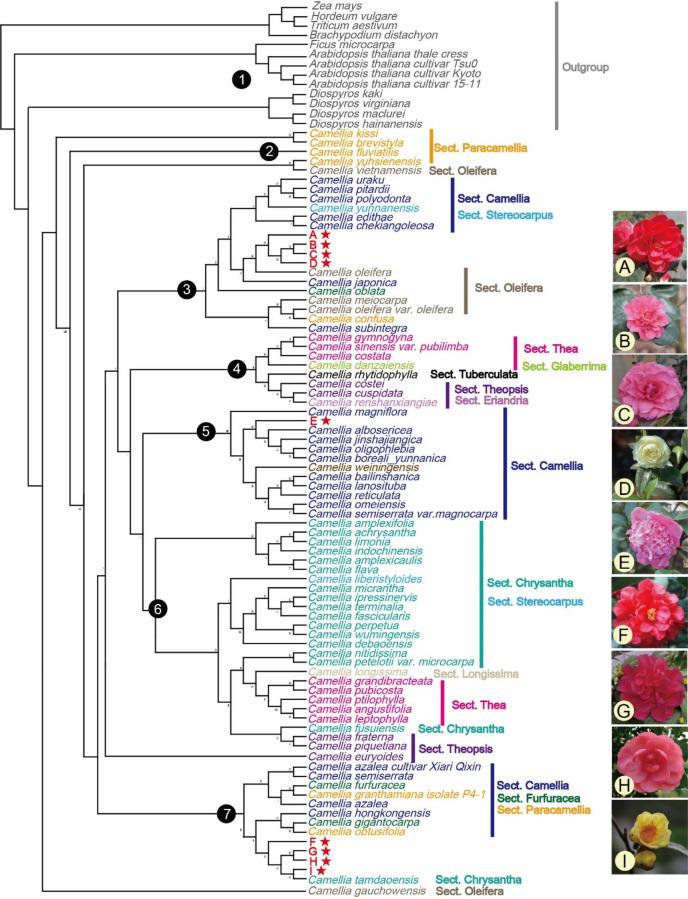
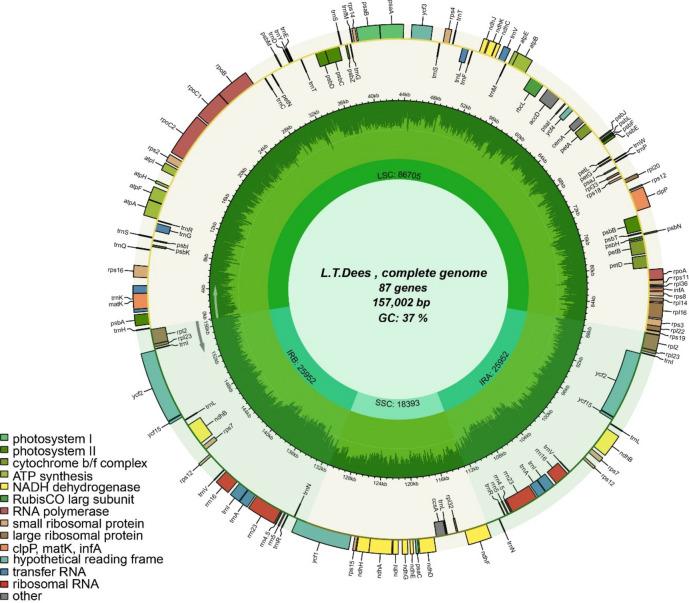
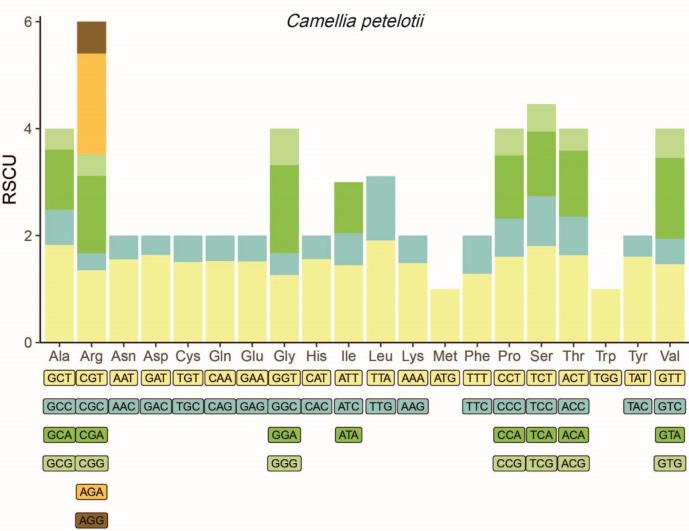
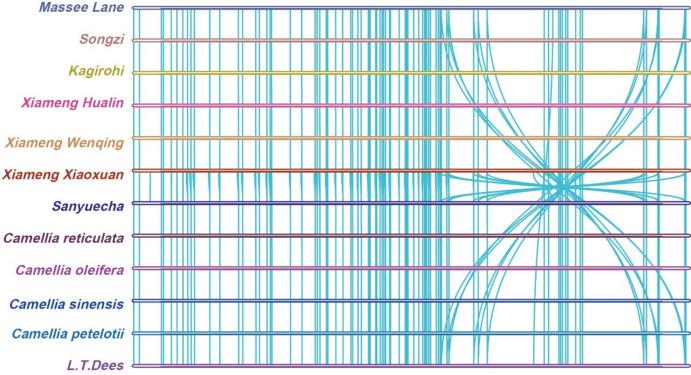
The genus Camellia, known for species such as Camellia japonica, is of significant agricultural and ecological importance. However, the genetic diversity and evolutionary relationships among Camellia species remain insufficiently explored. In this study, we successfully sequenced and assembled the complete chloroplast (cp) genomes of nine Camellia accessions, including the species Camellia petelotii, and eight varieties of C. Japonica (C. Japonica 'Massee Lane', C. Japonica 'L.T.Dees', C. Japonica 'Songzi', C. Japonica 'Kagirohi', C. Japonica 'Sanyuecha', C. Japonica 'Xiameng Hualin', C. Japonica 'Xiameng Wenqing', and C. Japonica 'Xiameng Xiaoxuan'). These genomes exhibited conserved lengths (~ 156,580-157,002 bp), indicating minimal variation in genome size. They consistently predicted 87 protein-coding genes, although variations were observed in the rRNA and tRNA genes. Structural and evolutionary analyses revealed the highly conserved nature of these cp genomes, with no significant inversions or gene rearrangements detected. Consistent codon usage patterns were observed across these accessions. Five hypervariable regions (rpsbK, psbM, ndhJ, ndhF, and ndhD) were identified as potential molecular markers for species differentiation. Phylogenetic analysis of 82 accessions from the Camellia genus, along with outgroup accessions revealed close genetic relationships among certain C. japonica varieties, including Songzi, Sanyuecha, L.T.Dees, and Kagirohi, which formed sister groups. Massee Lane was located within Sect. Camellia. Moreover, Xiameng Hualin, Xiameng Wenqing, Xiameng Xiaoxuan, and C. petelotii demonstrated a strong genetic affinity. These findings provide valuable insights into the structural and evolutionary dynamics of Camellia cp genomes, contributing to species identification and conservation.
以日本山茶等物种而闻名的山茶属,具有重要的农业和生态意义。然而,山茶属物种之间的遗传多样性和进化关系仍未得到充分探索。在本研究中,我们成功测序并组装了9个山茶种质的完整叶绿体(cp)基因组,包括毛瓣金花茶物种以及8个日本山茶品种(日本山茶‘马斯莱恩’、日本山茶‘L.T.迪斯’、日本山茶‘松子’、日本山茶‘卡吉罗希’、日本山茶‘三月茶’、日本山茶‘厦萌华林’、日本山茶‘厦萌文清’和日本山茶‘厦萌小萱’)。这些基因组长度保守(约156,580 - 157,002 bp),表明基因组大小变化极小。它们一致预测有87个蛋白质编码基因,尽管在rRNA和tRNA基因中观察到了变异。结构和进化分析揭示了这些cp基因组的高度保守性,未检测到明显的倒位或基因重排。在这些种质中观察到了一致的密码子使用模式。五个高变区(rpsbK、psbM、ndhJ、ndhF和ndhD)被确定为物种区分的潜在分子标记。对来自山茶属的82个种质以及外类群种质的系统发育分析表明,某些日本山茶品种之间存在密切的遗传关系,包括松子、三月茶、L.T.迪斯和卡吉罗希,它们形成了姐妹群。马斯莱恩位于山茶组内。此外,厦萌华林、厦萌文清、厦萌小萱和毛瓣金花茶表现出很强的遗传亲和力。这些发现为山茶cp基因组的结构和进化动态提供了有价值的见解,有助于物种鉴定和保护。



 Zotero 插件