
2023年埃塞俄比亚西北部综合专科医院成年糖尿病患者糖尿病性黄斑水肿负担及其相关因素:一项多中心横断面研究
Burden of diabetic macular oedema and its associated factors among adult patients with diabetes attending comprehensive specialised hospitals in Northwest Ethiopia, 2023: a multicentre cross-sectional study.
作者信息
Shumye Abebech Fikade, Tegegne Mebratu Mulusew, Bekele Matiyas Mamo, Woredekal Asamere Tsegaw, Eticha Biruk Lelisa
机构信息
Department of Optometry, College of Medicine and Health Sciences, Comprehensive Specialized Hospital, University of Gondar, Gondar, Ethiopia
Department of Optometry, College of Medicine and Health Sciences, Comprehensive Specialized Hospital, University of Gondar, Gondar, Ethiopia.
出版信息
BMJ Open. 2025 Mar 15;15(3):e088507. doi: 10.1136/bmjopen-2024-088507.
OBJECTIVE
This study aimed to assess the prevalence of diabetic macular oedema and its associated factors among adult patients with diabetes attending comprehensive specialised hospitals in Northwest Ethiopia in 2023.
DESIGN
An institution-based, cross-sectional study.
SETTING
The study was conducted at the University of Gondar, Felege Hiwot and Debre Markos comprehensive specialised hospitals in Northwest Ethiopia from 8 May to 15 June 2023.
PARTICIPANTS
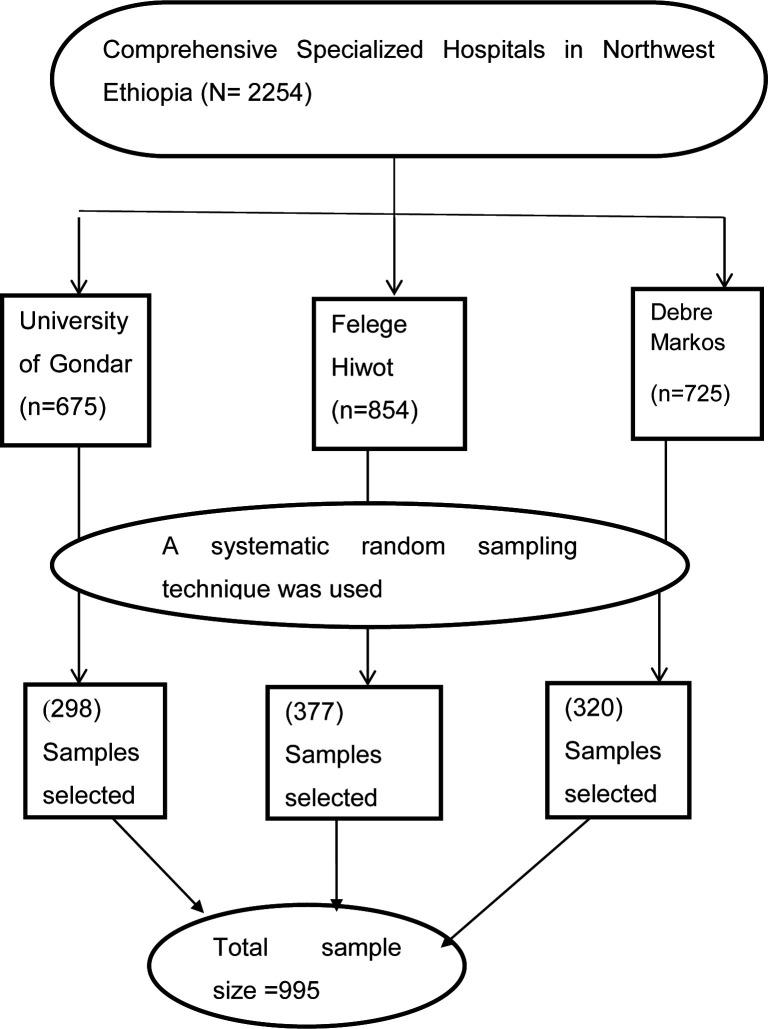
This study was conducted on 890 adult patients with diabetes selected using a systematic random sampling technique.
OUTCOME MEASURES
Participants with diabetic macular oedema were assessed using slit lamp biomicroscopy with a +90 dioptre Volk lens. Blood glucose levels were measured by fasting blood sugar tests. Data were collected through physical examination, review of medical records and face-to-face interview.
RESULTS
Among a total of 890 study participants, the prevalence of diabetic macular oedema was 25.8% (95% CI 23.1 to 28.8). Peripheral neuropathy (adjusted OR (AOR)=3.02, 95% CI 1.76 to 5.29), hypertension (AOR=1.98, 95% CI 1.24 to 3.17), poor blood glucose control (AOR=5.06, 95% CI 2.95 to 8.67), obesity (AOR=5.03, 95% CI 2.50 to 10.13), longer duration of diabetes mellitus (AOR=3.78, 95% CI 2.21 to 6.24) and poor adherence to diabetic medication (AOR=2.06, 95% CI 1.32 to 3.28) were significantly associated with diabetic macular oedema.
CONCLUSION
In Northwest Ethiopia, a quarter of patients with diabetes were found to have diabetic macular oedema. Factors such as peripheral neuropathy, hypertension, poor blood glucose levels, obesity, long duration of diabetes mellitus and poor adherence to diabetic medications were significantly associated with diabetic macular oedema. Improvement of glucose control and exercise for optimal body weight maintenance are recommended to prevent the development of diabetic macular oedema.
目的
本研究旨在评估2023年埃塞俄比亚西北部综合专科医院成年糖尿病患者中糖尿病性黄斑水肿的患病率及其相关因素。
设计
一项基于机构的横断面研究。
地点
该研究于2023年5月8日至6月15日在埃塞俄比亚西北部的贡德尔大学、费莱格希沃特和德布雷马尔科斯综合专科医院进行。
参与者
本研究对890名采用系统随机抽样技术选取的成年糖尿病患者进行。
观察指标
使用带+90屈光度 Volk 镜片的裂隙灯生物显微镜对糖尿病性黄斑水肿患者进行评估。通过空腹血糖测试测量血糖水平。通过体格检查、病历审查和面对面访谈收集数据。
结果
在总共890名研究参与者中,糖尿病性黄斑水肿的患病率为25.8%(95%可信区间23.1至28.8)。周围神经病变(调整后比值比(AOR)=3.02,95%可信区间1.76至5.29)、高血压(AOR=1.98,95%可信区间1.24至3.17)、血糖控制不佳(AOR=5.06,95%可信区间2.95至8.67)、肥胖(AOR=5.03,95%可信区间2.50至10.13)、糖尿病病程较长(AOR=3.78,95%可信区间2.21至6.24)以及糖尿病药物依从性差(AOR=2.06,95%可信区间1.32至3.28)与糖尿病性黄斑水肿显著相关。
结论
在埃塞俄比亚西北部,发现四分之一的糖尿病患者患有糖尿病性黄斑水肿。周围神经病变、高血压、血糖水平不佳、肥胖、糖尿病病程长以及糖尿病药物依从性差等因素与糖尿病性黄斑水肿显著相关。建议改善血糖控制并进行运动以维持最佳体重,以预防糖尿病性黄斑水肿的发生。
 Zotero 插件