
用于同时检测铜离子和汞离子的多功能化学传感器:在试纸制备、加标研究和逻辑门构建中的应用
Multifunctional Chemosensors for the Simultaneous Detection of Copper and Mercury Ions: Applications in Test Strip Fabrication, Spiking Studies, and Logic Gate Formulation.
作者信息
Dhawale Annasaheb, Trivedi Darshak R
机构信息
Supramolecular Chemistry Laboratory, National Institute of Technology Karnataka (NITK), Srinivasnagar, Surathkal 575025, India.
出版信息
ACS Omega. 2025 Feb 25;10(9):9527-9536. doi: 10.1021/acsomega.4c10692. eCollection 2025 Mar 11.
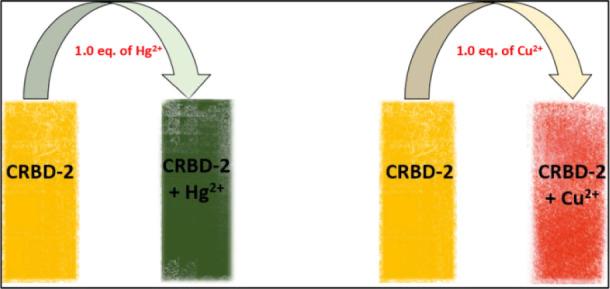
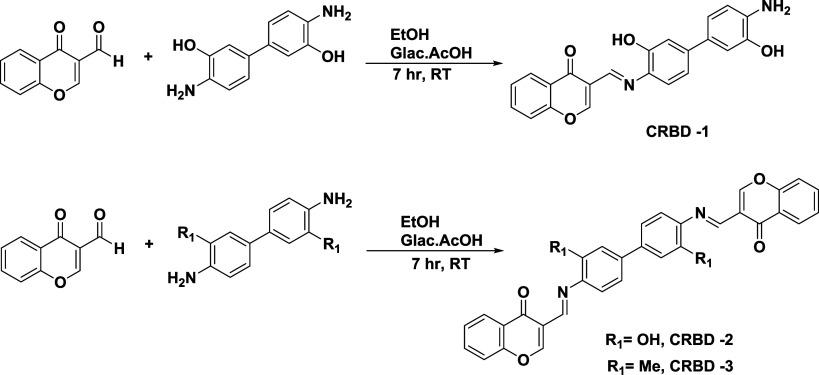
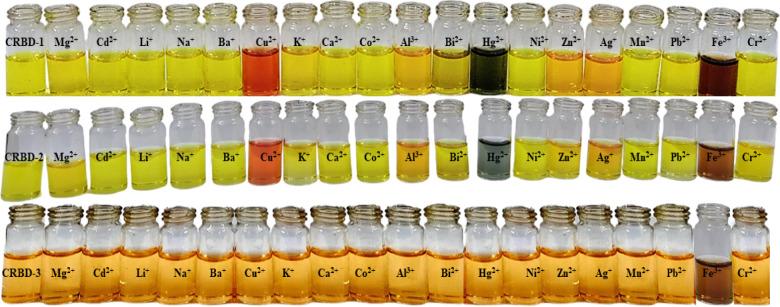
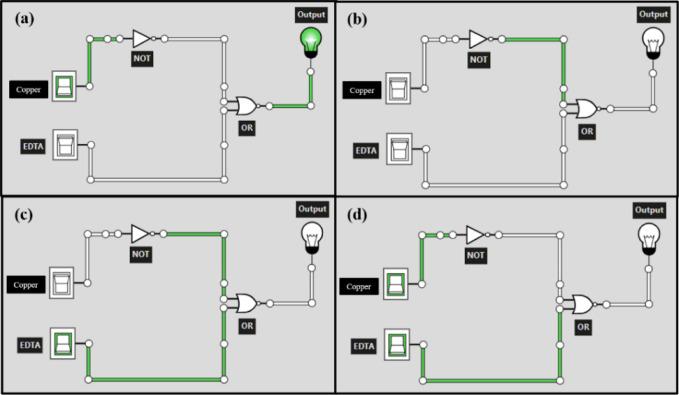
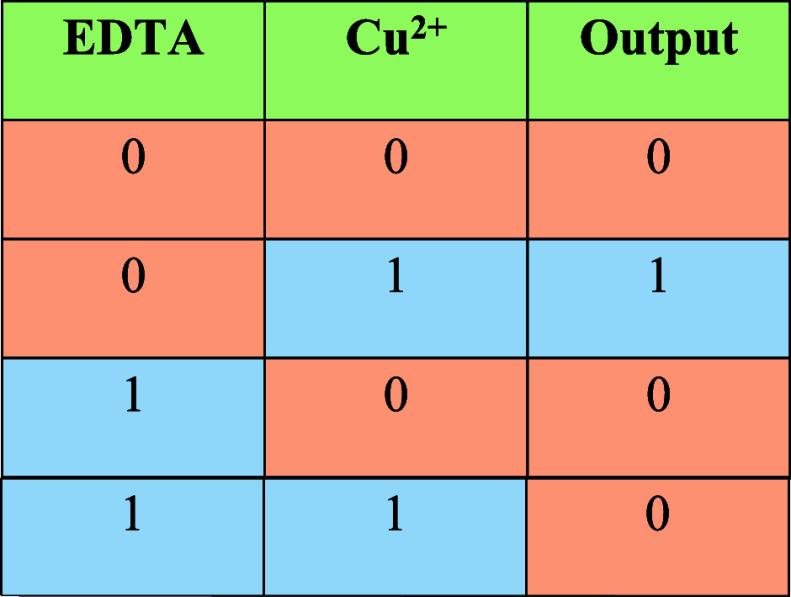
This study reports the successful synthesis of three new benzidine-based chemosensors (CRBD-1, CRBD-2, and CRBD-3). Among these, CRBD-1 and CRBD-2 exhibited exceptional selectivity and ultrafast response toward Cu and Hg ions, evident by a distinct naked-eye color change. The sensors demonstrated remarkable stability across a broad pH range and achieved low detection limits in the ppm range. CRBD-1 displayed a high binding constant for Cu (2.42 × 10) and Hg (1.45 × 10). Notably, the limit of detection (LOD) for Cu (0.953 ppm) and Hg (0.003 ppm) was significantly lower than the established safety thresholds set by WHO and ESEPA. The mechanism of Cu sensing, involving intramolecular charge transfer (ICT), was thoroughly validated using UV-vis spectroscopy, H NMR, cyclic voltammetry, DFT, and Job's plot analysis. Furthermore, reversibility studies enabled the development of logic gate operations for potential future applications. The functionality of the sensors was successfully evaluated in real-world samples like vegetable juice and water, as well as the potential of CRBD-2 as test strips for convenient, rapid, qualitative, quantitative, and naked-eye colorimetric detection of Cu and Hg in aqueous environments.
本研究报告了三种新型联苯胺基化学传感器(CRBD - 1、CRBD - 2和CRBD - 3)的成功合成。其中,CRBD - 1和CRBD - 2对铜离子和汞离子表现出卓越的选择性和超快响应,肉眼可明显观察到颜色变化。这些传感器在很宽的pH范围内表现出显著的稳定性,并且在ppm范围内实现了低检测限。CRBD - 1对铜(2.42×10)和汞(1.45×10)显示出高结合常数。值得注意的是,铜(0.953 ppm)和汞(0.003 ppm)的检测限显著低于世界卫生组织(WHO)和欧洲食品安全局(ESEPA)设定的既定安全阈值。利用紫外 - 可见光谱、核磁共振氢谱、循环伏安法、密度泛函理论(DFT)和Job曲线分析,对涉及分子内电荷转移(ICT)的铜传感机制进行了充分验证。此外,可逆性研究为未来潜在应用开发了逻辑门操作。这些传感器的功能在蔬菜汁和水等实际样品中得到了成功评估,以及CRBD - 2作为测试条在水环境中方便、快速、定性、定量和肉眼比色检测铜和汞的潜力。


 Zotero 插件