
用于牙周炎治疗中靶向成熟生物膜的先进生物材料。
Advanced biomaterials for targeting mature biofilms in periodontitis therapy.
作者信息
Tao Jiawen, Sun Yirong, Wang Guoliang, Sun Jingru, Dong Shujun, Ding Jianxun
机构信息
The First Outpatient Department, Jilin Provincial Key Laboratory of Tooth Development and Bone Remodeling, School and Hospital of Stomatology, Jilin University, 6822 Jinhu Road, Changchun, 130021, PR China.
Key Laboratory of Polymer Ecomaterials, Changchun Institute of Applied Chemistry, Chinese Academy of Sciences, 5625 Renmin Street, Changchun, 130022, PR China.
出版信息
Bioact Mater. 2025 Feb 27;48:474-492. doi: 10.1016/j.bioactmat.2025.02.026. eCollection 2025 Jun.
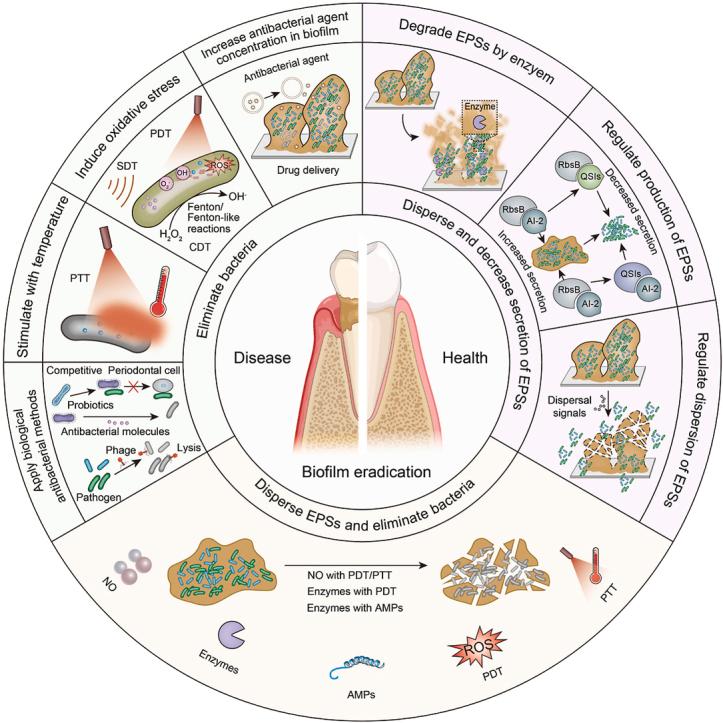
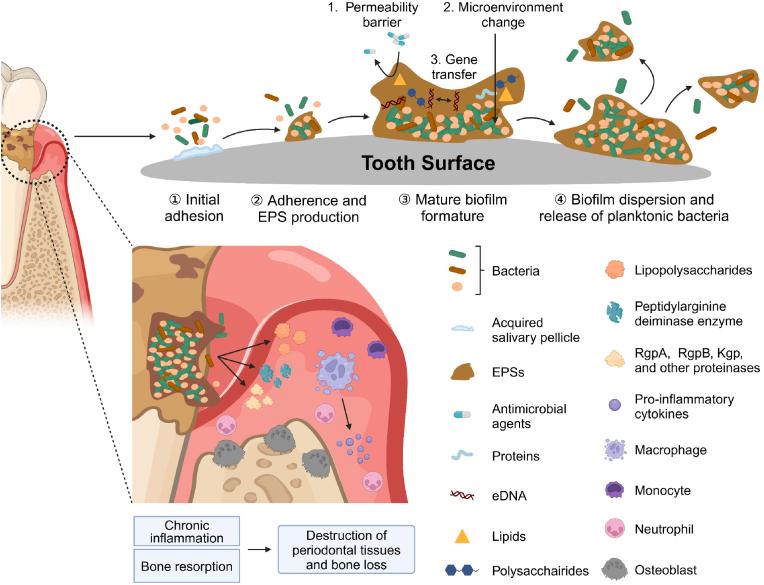
Periodontitis is a chronic inflammatory disease primarily caused by bacteria, leading to inflamed and bleeding gums, periodontal pocket formation, and bone loss. Affecting 70%-90% of adults over 65, periodontitis is a leading cause of tooth loss and significantly impacts quality of life. Standard treatments, including subgingival scraping and antibiotics, have limitations, and antibiotic resistance among periodontal pathogens is an increasing concern. Biofilms are barriers to drugs and immune responses, contributing to bacterial resistance and reducing antibiotic effectiveness. Due to their adjustable physicochemical properties, bioactive materials potentially eliminate bacterial biofilms, presenting a promising alternative for periodontitis therapy. In this review, the recent innovations in biomaterials for removing mature biofilms in periodontitis are examined, and their broader potential is discussed. Additionally, the compositions of bacterial biofilms, formation pathways, and intrinsic drug resistance mechanisms are discussed. Finally, the strategies for optimizing subgingival biofilm removal in periodontitis are highlighted, such as targeting biofilms-embedded bacteria, disrupting the extracellular polymeric substances, and utilizing combined approaches. A comprehensive understanding of the properties of biomaterials guides the rational design of highly targeted and effective therapies for periodontitis.
牙周炎是一种主要由细菌引起的慢性炎症性疾病,会导致牙龈发炎、出血、牙周袋形成和骨质流失。牙周炎影响着70%-90%的65岁以上成年人,是牙齿脱落的主要原因,对生活质量有重大影响。包括龈下刮治和使用抗生素在内的标准治疗方法存在局限性,而且牙周病原体的抗生素耐药性问题日益受到关注。生物膜是药物和免疫反应的屏障,会导致细菌产生耐药性并降低抗生素的有效性。由于其可调节的物理化学性质,生物活性材料有可能消除细菌生物膜,为牙周炎治疗提供了一种有前景的替代方法。在这篇综述中,研究了用于去除牙周炎中成熟生物膜的生物材料的最新创新,并讨论了它们更广泛的潜力。此外,还讨论了细菌生物膜的组成、形成途径和内在耐药机制。最后,强调了优化牙周炎龈下生物膜清除的策略,如靶向嵌入生物膜的细菌、破坏细胞外聚合物以及采用联合方法。全面了解生物材料的特性有助于指导合理设计针对牙周炎的高靶向性和有效治疗方法。




 Zotero 插件