
可持续性研究中知识共同生产的新兴制度化。
The emerging institutionalisation of knowledge co-production in sustainability research.
作者信息
Käyhkö Janina, Hildén Mikael, Hyttinen Ia, Korhonen-Kurki Kaisa
机构信息
Ecosystems and Environment Research Program, University of Helsinki, Helsinki, Finland.
The Finnish Environment Institute (Syke), Helsinki, Finland.
出版信息
Ambio. 2025 Aug;54(8):1372-1385. doi: 10.1007/s13280-025-02161-5. Epub 2025 Mar 18.
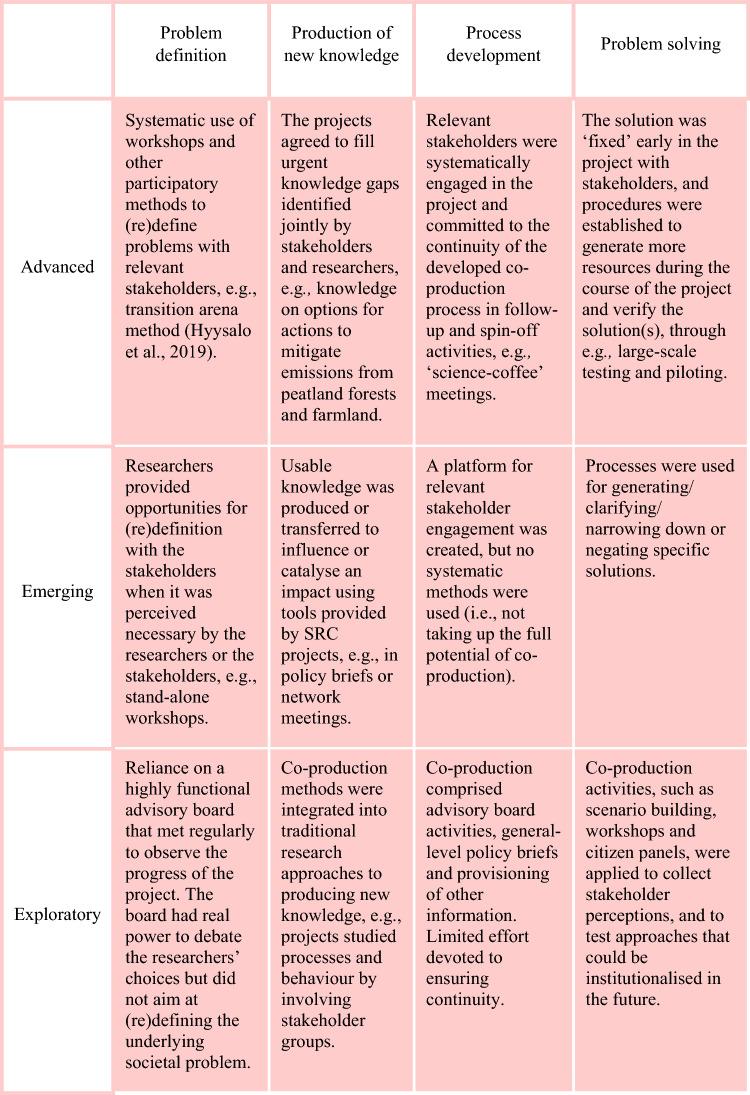
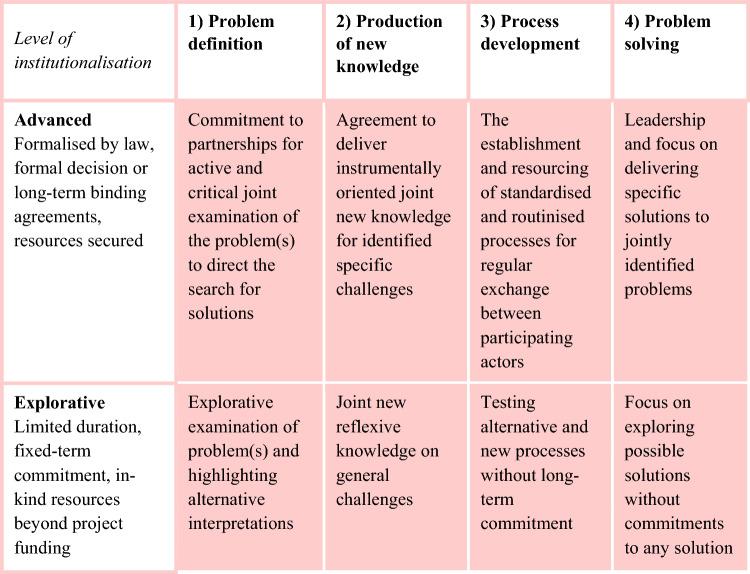
Co-production of knowledge in science-policy interfaces has received increased attention as a way of addressing grand societal challenges with the hope that it will create a base for enacting transformative change. We explore the development and outputs of projects funded by the Strategic Research Council of Finland, which has had the aim of generating strategic knowledge through interactions with stakeholders. We examine how producers and users of knowledge understand co-production as revealed by a researcher survey and stakeholder interviews in relation to different domains in the institutionalisation process. Our results show advanced, emerging and explorative levels of institutionalisation of knowledge co-production practices and highlight the differences between needs-based and transformative approaches to co-production. We conclude that to succeed, efforts to institutionalise knowledge co-production should recognise several societal domains from governance to resources and culture. Advanced institutionalisation for the co-production of transformative knowledge can significantly strengthen the potential of sustainability research.
科学政策界面中的知识共同生产作为应对重大社会挑战的一种方式受到了越来越多的关注,人们希望它将为实现变革性变化奠定基础。我们探讨了由芬兰战略研究委员会资助的项目的发展和成果,该委员会旨在通过与利益相关者的互动来生成战略知识。我们研究了知识生产者和使用者如何理解共同生产,这是通过在制度化过程中与不同领域相关的研究人员调查和利益相关者访谈揭示的。我们的结果显示了知识共同生产实践的先进、新兴和探索性制度化水平,并突出了基于需求的共同生产方法和变革性共同生产方法之间的差异。我们得出结论,为了取得成功,将知识共同生产制度化的努力应该认识到从治理到资源和文化的几个社会领域。变革性知识共同生产的先进制度化可以显著增强可持续性研究的潜力。
 Zotero 插件