
通过营养保健品和/或体育活动调节幼鼠注意力缺陷/多动障碍(ADHD)样行为中的多种分子轨迹
Modulating Multiple Molecular Trajectories by Nutraceuticals and/or Physical Activity in Attention-Deficit/Hyperactivity Disorder (ADHD)-Like Behaviors in Rat Pups.
作者信息
Abu-Elfotuh Karema, Kamel Gellan Alaa Mohamed, Najm Mazin A A, Hamdan Ahmed M E, Koullah Mona T, Fahmy Rasha K E, Aboelsoud Heba Abdelnaser, Alghusn Manar A, Albalawi Budor R, Atwa Ahmed M, Abdelhakim Khaled R, Elsharkawy Abdou M A, Mohamed Ehsan K, Abdou Nada S, Almotairi Reema, Salem Hoda A, Gowifel Ayah M H
机构信息
Department of Clinical Pharmacy, Faculty of Pharmacy, Al-Azhar University, Cairo, 11884, Egypt.
College of Pharmacy, Al-Ayen Iraqi University, An Nasiriyah, AUIQ, Iraq.
出版信息
J Neuroimmune Pharmacol. 2025 Mar 18;20(1):27. doi: 10.1007/s11481-025-10188-4.
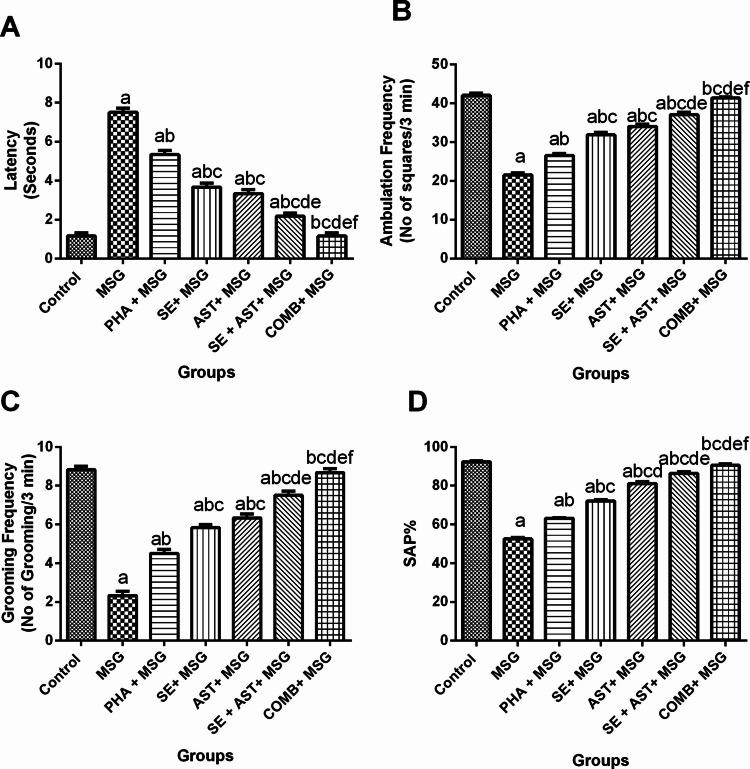
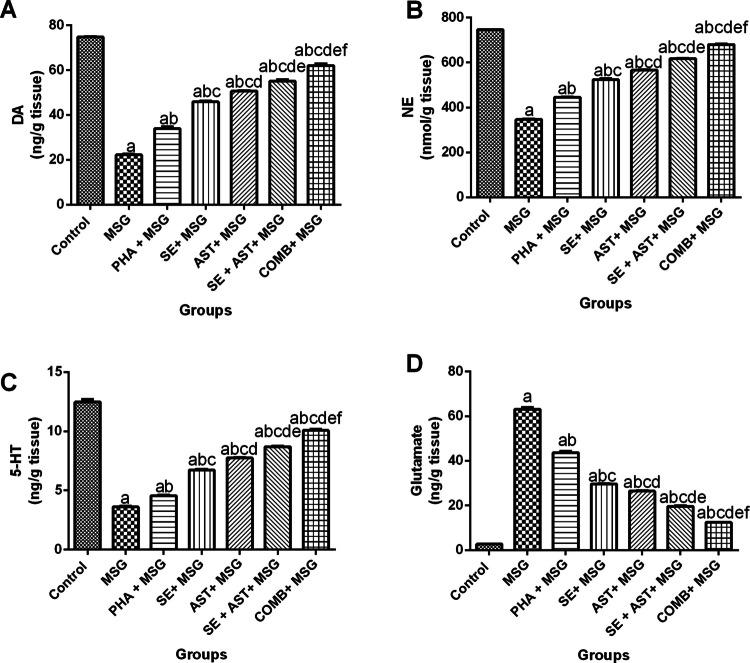
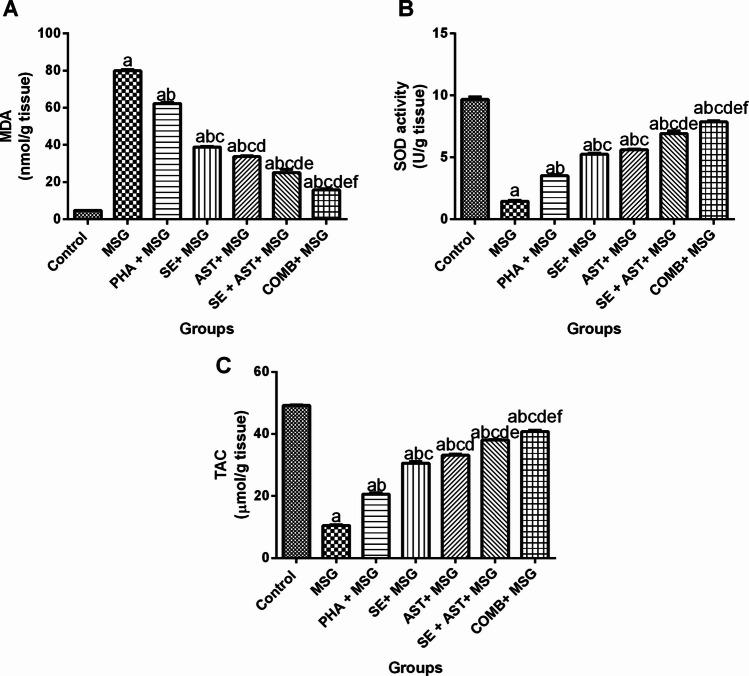
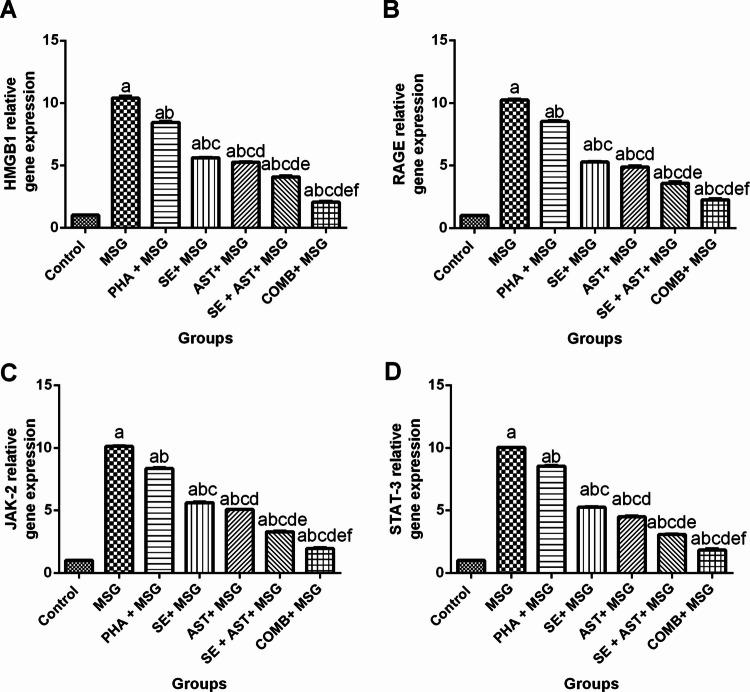
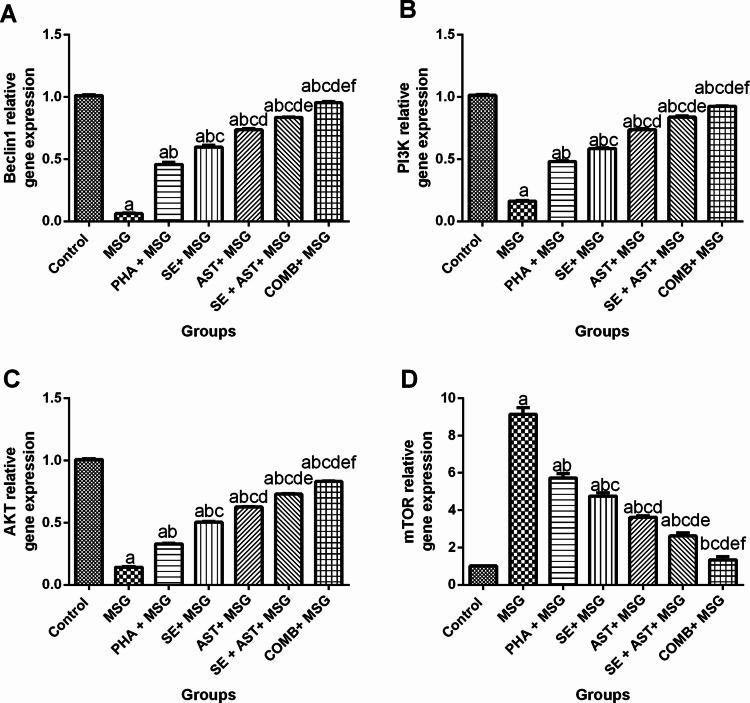
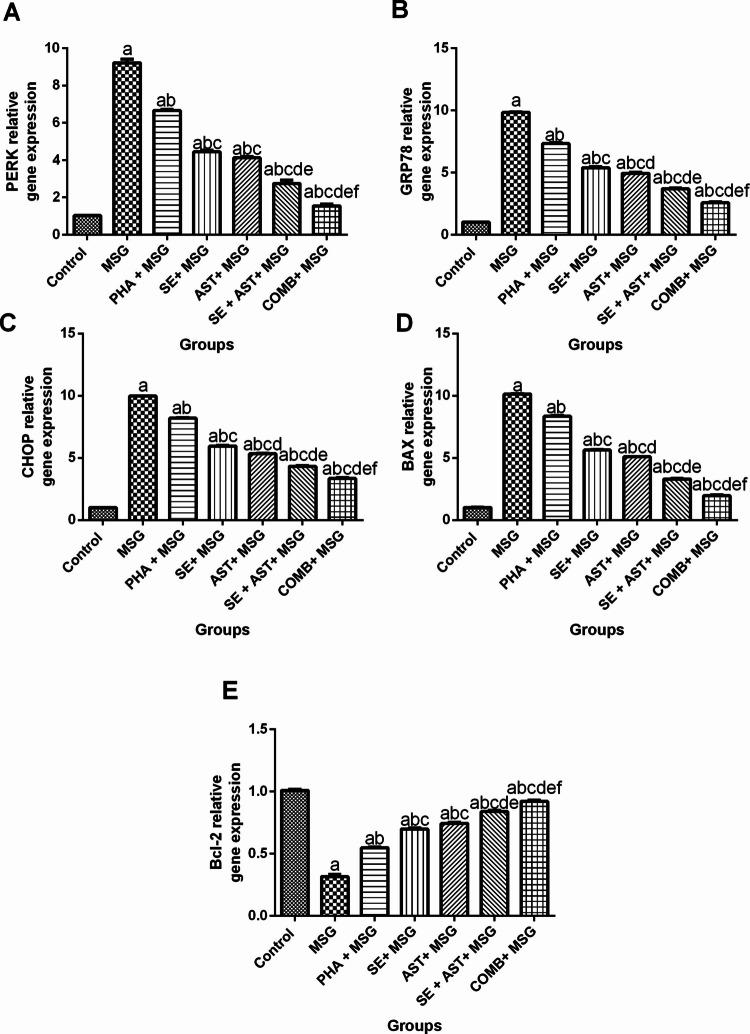
Attention deficit/hyperactivity disorder (ADHD) is a neurodevelopmental condition affecting cognitive and social functions all over childhood. Monosodium glutamate (MSG) is a common food additive associated with ADHD-like symptoms in children. Nutraceuticals, like sesamol (SE) and astaxanthin (AST), or physical activity (PHA) were reported to possess beneficial effects on human health. Meanwhile, still their neuroprotective effect against ADHD has been poorly investigated. This study aimed to investigate the impact of SE, AST and PHA either separately or combined on ADHD-like behaviors induced by MSG in rat pups. Eighty-four male Sprague Dawley rat pups were randomly allocated into seven groups; control, MSG, (PHA + MSG), (SE + MSG), (AST + MSG), (SE + AST + MSG), and (COMB [PHA + SE + AST] + MSG) and treated for eight weeks. MSG-induced ADHD-like behavior was evaluated, via assessing behavioral outcomes; neurotransmitters' levels; five pathway biomarkers, coupled with histopathological and immunohistochemical studies. Rats exposed to PHA or treated with SE or AST either separately or combined exhibited enhanced attention, locomotor, and cognitive abilities, compared to MSG-intoxicated group. All treatments remarkably improved MSG-induced abnormalities in neurotransmitters' levels; biochemical markers; along with histological findings, via modulating HMGB1/RAGE/JAK-2/STAT-3, PI3K/AKT/CREB/BDNF, AMPK/SIRT-1 and PERK/CHOP pathways. Nevertheless, the combination of PHA with nutraceuticals (SE and AST) elicited more favorable effects in all measured parameters and histological findings, compared to other treated groups. In conclusion, this study revealed the superiority of the combination of nutraceuticals with PHA, over other standalone treatments, in amelioration of MSG-induced ADHD-like behaviors in rat pups, via fine-tuning of HMGB1/RAGE, PI3K/AKT/CREB/BDNF, AMPK/SIRT-1 and PERK/CHOP pathways.
注意缺陷/多动障碍(ADHD)是一种神经发育疾病,会影响整个儿童期的认知和社交功能。味精(MSG)是一种常见的食品添加剂,与儿童的ADHD样症状有关。据报道,诸如芝麻酚(SE)和虾青素(AST)之类的营养保健品或体育活动(PHA)对人类健康具有有益作用。与此同时,它们对ADHD的神经保护作用仍未得到充分研究。本研究旨在调查SE、AST和PHA单独或联合使用对味精诱导的幼鼠ADHD样行为的影响。84只雄性斯普拉格-道利幼鼠被随机分为七组:对照组、味精组、(PHA+味精)组、(SE+味精)组、(AST+味精)组、(SE+AST+味精)组和(COMB[PHA+SE+AST]+味精)组,并进行为期八周的治疗。通过评估行为结果、神经递质水平、五种通路生物标志物,以及进行组织病理学和免疫组织化学研究,来评估味精诱导的ADHD样行为。与味精中毒组相比,单独或联合接受PHA治疗或SE或AST治疗的大鼠表现出增强的注意力、运动能力和认知能力。所有治疗均显著改善了味精诱导的神经递质水平异常、生化标志物异常以及组织学结果,其作用机制是通过调节HMGB1/RAGE/JAK-2/STAT-3、PI3K/AKT/CREB/BDNF、AMPK/SIRT-1和PERK/CHOP通路。然而,与其他治疗组相比,PHA与营养保健品(SE和AST)联合使用在所有测量参数和组织学结果方面产生了更有利的影响。总之,本研究揭示了营养保健品与PHA联合使用在改善味精诱导的幼鼠ADHD样行为方面优于其他单一治疗方法,其机制是通过微调HMGB1/RAGE、PI3K/AKT/CREB/BDNF、AMPK/SIRT-1和PERK/CHOP通路。




 Zotero 插件