
戈勒姆-斯托特病的临床特征与当前治疗经验:一项系统评价
Clinical features and current management experience in Gorham-Stout disease: a systematic review.
作者信息
Zhou Zilong, Qiu Tong, Zhou Jiangyuan, Zhang Zixin, Gong Xue, Zhang Xuepeng, Lan Yuru, Yang Congxia, Zhang Yujia, Xiang Shanshan, Ji Yi
机构信息
Division of Oncology, Department of Pediatric Surgery, West China Hospital, Sichuan University, Chengdu, Sichuan, China.
Pediatric Intensive Care Unit, Department of Critical Care Medicine, West China Hospital, Sichuan University, Chengdu, Sichuan, China.
出版信息
Orphanet J Rare Dis. 2025 Mar 19;20(1):134. doi: 10.1186/s13023-025-03649-9.
BACKGROUND
Gorham-Stout disease (GSD) is a rare complex lymphatic malformation. Since its initial description in 1838, only approximately 400 patients have been documented. There is currently no consensus on the diagnostic criteria or treatment options for GSD. The objective of this study was to review the clinical characteristics of patients with GSD and determine the current diagnostic and treatment models.
METHODS
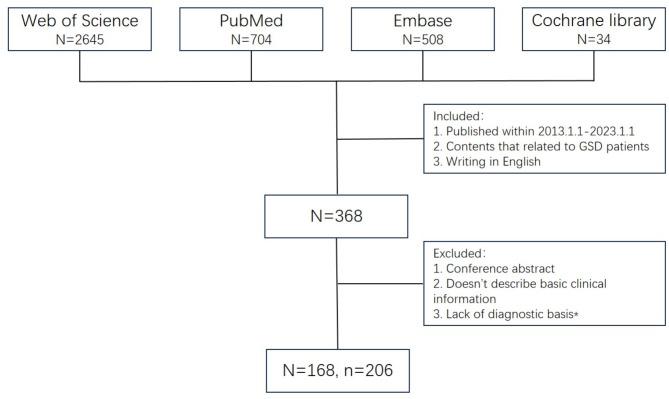
A comprehensive search of the PubMed, Web of Science, Embase, and Cochrane Library databases was conducted to identify all relevant literature on GSD published over the decade from 2013 to 2023. The clinical information extracted from these publications was analyzed.
RESULTS
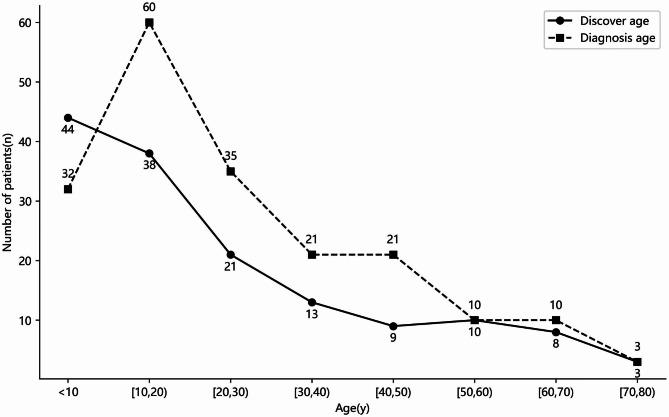
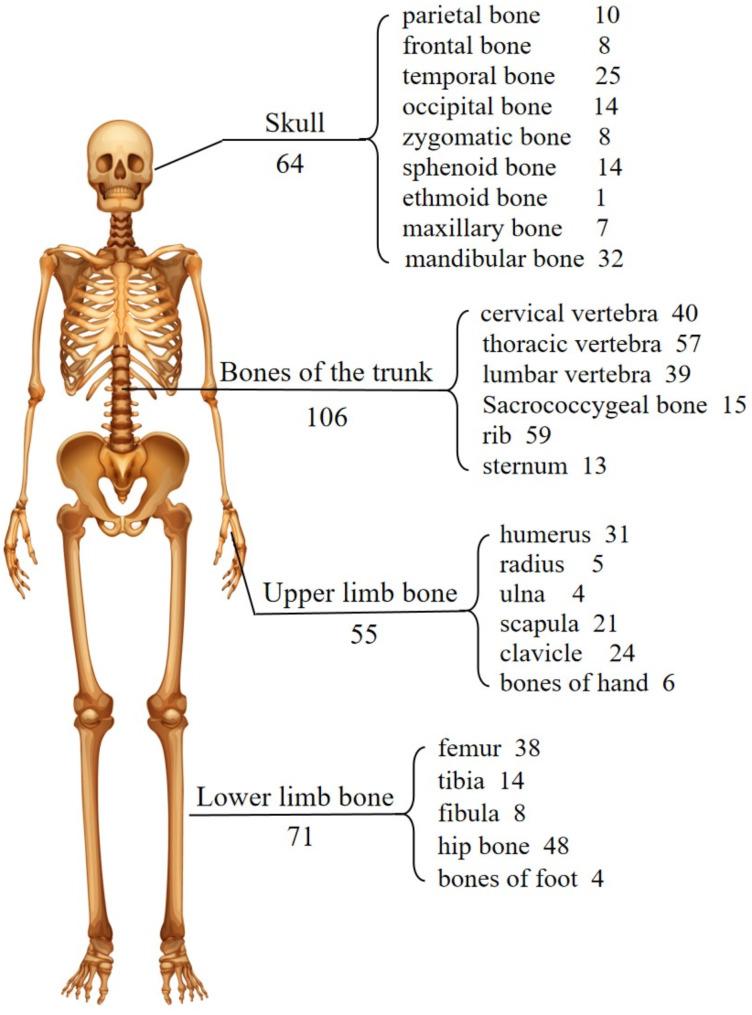
A total of 206 patients with GSD were included in the study, comprising 119 males, 81 females and 6 patients with unknown sex. The age of onset of patients was widely distributed, ranging from 0 to 77 years old. However, the majority of cases occurred in childhood (50.7%). Fifteen patients (10.3%) exhibited an onset age of less than 1 year. The average time from the onset of symptoms to diagnosis was 3.5 years. The number of patients with osteolysis in the axial bone was greater than that in the appendiceal bone (P < 0.05), and the number of patients with multiple osteolytic lesions was greater than that with single osteolytic lesions (77.2% vs. 22.8%). In general, GSD was more likely to occur in the spine (46.1%), ribs (28.6%), hip (23.3%), femur (18.4%), mandible (15.5%) and humerus (15.0%). Pain was the most common symptom, with 68.4% of patients reporting pain in the lesion area. Surgery (66.9%) and bisphosphonates (56.9%) are still the mainstream treatment methods, with a total of 33 (18.2%) patients receiving sirolimus. Pleural effusion was identified as a risk factor for patient mortality (P < 0.05).
CONCLUSIONS
GSD is most commonly observed in children, with a slight male predisposition. It commonly manifests as multiple osteolysis of the axial bone, with pain being the most common symptom. The presence of pleural effusion indicates a serious condition that requires close monitoring to prevent mortality. Despite the advent of novel therapeutic modalities, the management of GSD remains an area in need of further investigation.
背景
戈勒姆-斯托特病(GSD)是一种罕见的复杂性淋巴管畸形。自1838年首次描述以来,仅有约400例患者有文献记载。目前对于GSD的诊断标准或治疗方案尚无共识。本研究的目的是回顾GSD患者的临床特征,并确定当前的诊断和治疗模式。
方法
全面检索了PubMed、科学网、Embase和Cochrane图书馆数据库,以识别2013年至2023年这十年间发表的所有关于GSD的相关文献。对从这些出版物中提取的临床信息进行了分析。
结果
本研究共纳入206例GSD患者,其中男性119例,女性81例,6例性别未知。患者的发病年龄分布广泛,从0岁至77岁不等。然而,大多数病例发生在儿童期(50.7%)。15例患者(10.3%)发病年龄小于1岁。从症状出现到诊断的平均时间为3.5年。轴向骨骨质溶解患者的数量多于阑尾骨(P<0.05),多发骨质溶解病变患者的数量多于单发骨质溶解病变患者(77.2%对22.8%)。一般来说,GSD更易发生于脊柱(46.1%)、肋骨(28.6%)、髋部(23.3%)、股骨(18.4%)、下颌骨(15.5%)和肱骨(15.0%)。疼痛是最常见的症状,68.4%的患者报告病变部位疼痛。手术(66.9%)和双膦酸盐(56.9%)仍是主流治疗方法,共有33例(18.2%)患者接受了西罗莫司治疗。胸腔积液被确定为患者死亡的危险因素(P<0.05)。
结论
GSD最常见于儿童,男性略易患病。其通常表现为轴向骨的多发骨质溶解,疼痛是最常见的症状。胸腔积液的存在表明病情严重,需要密切监测以预防死亡。尽管出现了新的治疗方式,但GSD的管理仍是一个需要进一步研究的领域。
 Zotero 插件