
急性有机磷中毒大鼠模型中纤溶酶原激活系统的时空扰动
Spatiotemporal perturbations of the plasminogen activation system in a rat model of acute organophosphate intoxication.
作者信息
Blackmon Thomas J, MacMahon Jeremy A, Bernardino Pedro N, Hogans Ryan E, Cheng Mei-Yun, Vu Joan, Lee Ruth Diana, Saito Naomi H, Grodzki Ana Cristina, Bruun Donald A, Wulff Heike, Woolard Kevin D, Brooks-Kayal Amy, Harvey Danielle J, Gorin Fredric A, Lein Pamela J
机构信息
Department of Molecular Biosciences, School of Veterinary Medicine, University of California, Davis, CA, 95616, USA.
Department of Pharmacology, School of Medicine, University of California, Davis, CA, 95616, USA.
出版信息
Acta Neuropathol Commun. 2025 Mar 18;13(1):62. doi: 10.1186/s40478-025-01979-0.
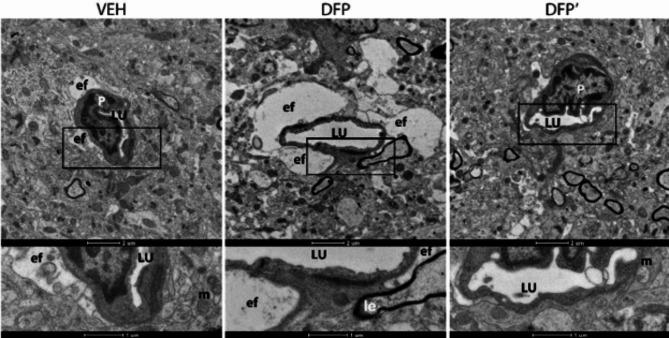
Neuroinflammation is widely posited to be a key pathogenic mechanism linking acute organophosphate (OP)-induced status epilepticus (SE) to persistent brain injury and abnormal electrical activity that contribute to epilepsy and cognitive impairment. The plasminogen activation system (PAS) promotes neuroinflammation in diverse neurological diseases but whether it is activated following acute OP intoxication has yet to be evaluated. To address this data gap, we characterized the spatiotemporal expression patterns of multiple components of the PAS in a rat model of acute intoxication with the OP, diisopropylfluorophosphate (DFP). Adult male Sprague Dawley rats administered DFP (4 mg/kg, sc), atropine sulfate (2 mg/kg, im) and 2-pralidoxime (25 mg/kg, im) went into SE that persisted for hours. One day after acute DFP-induced SE, plasmin activity and protein concentrations of plasminogen activator inhibitor-1 (PAI-1) in the plasma were increased, though not significantly. In contrast, acute DFP intoxication significantly increased brain levels of PAI-1, tissue-type plasminogen activator (tPA), urokinase plasminogen activator (uPA), and transcripts of TGF-β in a time- and region-dependent manner. In the cortex and hippocampus, quantification of PAI-1, tPA, and uPA by ELISA indicated significantly increased levels at 1 day post-exposure (DPE). PAI-1 and uPA returned to control values by 7 DPE while tPA protein remained elevated at 28 DPE. Immunohistochemistry detected elevated PAI-1 expression in the DFP brain up to 28 DPE. Co-localization of PAI-1 with biomarkers of neurons, microglia, and astrocytes demonstrated that PAI-1 localized predominantly to a subpopulation of astrocytes. Cytologically, PAI-1 localized to astrocytic end feet, but not adjacent neurovascular endothelium. Electron microscopy revealed neuronal metabolic stress and neurodegeneration with disruption of adjacent neurovascular units in the hippocampus post-DFP exposure. These data indicate that acute DFP intoxication altered PAS expression in the brain, with aberrant PAI-1 expression in a subset of reactive astrocyte populations.
神经炎症被广泛认为是一种关键的致病机制,它将急性有机磷酸酯(OP)诱导的癫痫持续状态(SE)与导致癫痫和认知障碍的持续性脑损伤及异常电活动联系起来。纤溶酶原激活系统(PAS)在多种神经系统疾病中促进神经炎症,但急性OP中毒后该系统是否被激活尚未得到评估。为了填补这一数据空白,我们在二异丙基氟磷酸酯(DFP)急性中毒的大鼠模型中,对PAS多个组分的时空表达模式进行了表征。成年雄性Sprague Dawley大鼠给予DFP(4mg/kg,皮下注射)、硫酸阿托品(2mg/kg,肌肉注射)和2-解磷定(25mg/kg,肌肉注射)后进入持续数小时的SE状态。急性DFP诱导的SE发生一天后,血浆中纤溶酶活性和纤溶酶原激活物抑制剂-1(PAI-1)的蛋白浓度虽未显著升高,但有所增加。相比之下,急性DFP中毒以时间和区域依赖性方式显著增加了大脑中PAI-1、组织型纤溶酶原激活物(tPA)、尿激酶型纤溶酶原激活物(uPA)的水平以及转化生长因子-β(TGF-β)的转录本。在皮质和海马中,通过酶联免疫吸附测定(ELISA)对PAI-1、tPA和uPA进行定量分析,结果显示暴露后1天(DPE)水平显著升高。PAI-1和uPA在7 DPE时恢复到对照值,而tPA蛋白在28 DPE时仍保持升高。免疫组织化学检测到DFP处理的大脑中PAI-1表达升高,持续至28 DPE。PAI-1与神经元、小胶质细胞和星形胶质细胞生物标志物的共定位表明,PAI-1主要定位于星形胶质细胞亚群。在细胞学上,PAI-1定位于星形胶质细胞的终足,而非相邻的神经血管内皮。电子显微镜显示,DFP暴露后海马中神经元出现代谢应激和神经退行性变,相邻神经血管单元遭到破坏。这些数据表明,急性DFP中毒改变了大脑中PAS的表达,在一部分反应性星形胶质细胞群体中出现PAI-1异常表达。


 Zotero 插件