
通过抑制表达和上皮-间质转化来抑制肝细胞癌的恶性进展。
inhibits the malignant progression of hepatocellular carcinoma by inhibiting expression and epithelial-mesenchymal transition.
作者信息
Jiang Dong, Qi Zhi, Xu Zhiying, Li Yiran
机构信息
Department of Ultrasound, Eastern Hepatobiliary Surgery Hospital, The Third Affiliated Hospital of Naval Medical University, Shanghai, 200433, China.
Department of Neurology, Eastern Hepatobiliary Surgery Hospital, The Third Affiliated Hospital of Naval Medical University, Shanghai, 200433, China.
出版信息
Oncol Res. 2025 Feb 28;33(3):709-722. doi: 10.32604/or.2024.050125. eCollection 2025.
BACKGROUND
Hepatocellular carcinoma (HCC) is a prevalent liver malignancy. This study examined the roles of transforming growth factor beta () and cytochrome b5 domain containing 2 () in HCC etiology and their prognostic biomarker potential.
METHODS
Key modules and prognostic genes were identified by analyzing the GSE101685 dataset by weighted gene co-expression network analysis (WGCNA) and Least absolute shrinkage and selection operator (LASSO) Cox regression. The expression levels of and in HCC cell lines were quantified using Quantitative reverse transcription polymerase chain reaction (qRT-PCR) and Western blotting (WB) assays. Effects of overexpression on cell proliferation, migration, invasion, and epithelial-mesenchymal transition (EMT) marker regulation were assessed , while tumorigenicity was evaluated using a xenograft model of HCC in nude mice.
RESULTS
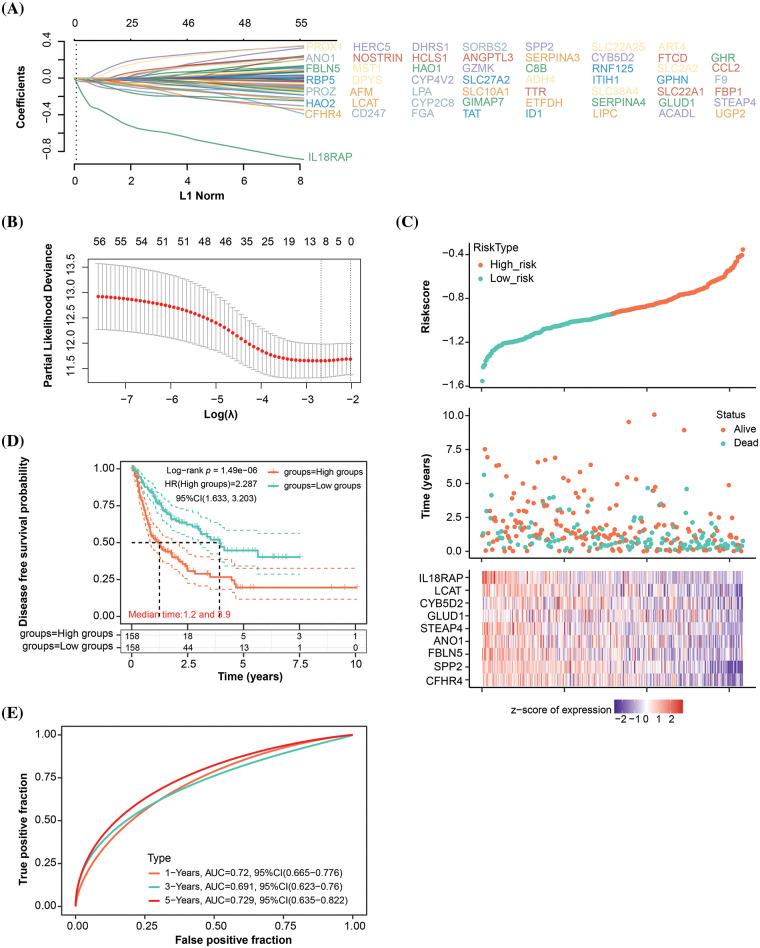
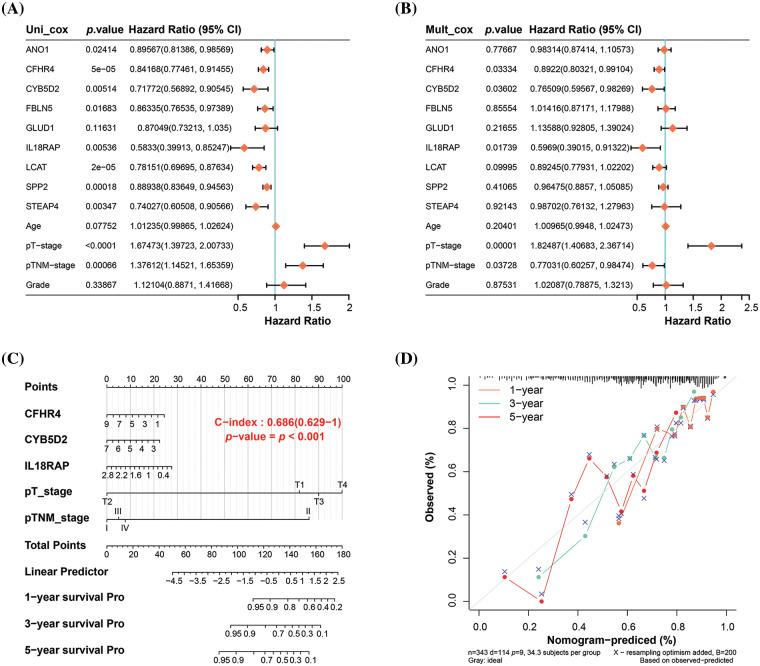
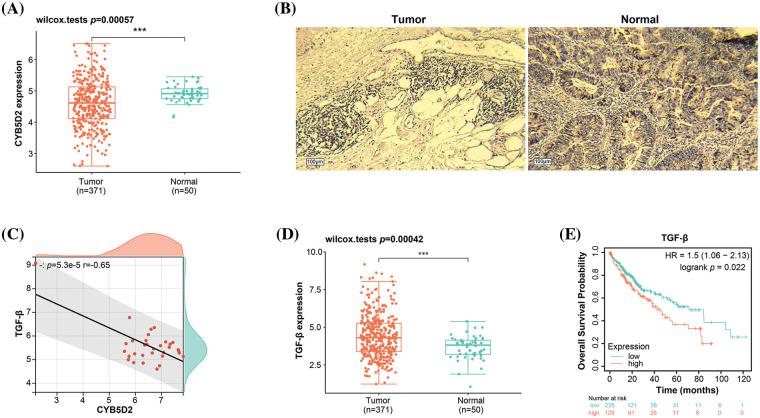
In this study, WGCNA identified the turquoise module as significantly associated with HCC, containing 452 DEGs. LASSO Cox regression analysis revealed 9 key prognostic genes, with being underexpressed in HCC cells and tissues. was negatively correlated with expression, resulting in poor patient prognosis. Functional assays demonstrated that overexpression inhibited proliferation, migration, and invasion of HCC cell lines, and altered EMT marker expression. Furthermore, the addition of partially reversed the suppressive effects caused by overexpression. , CYB5D2 overexpression significantly reduced tumor growth, indicating its potential as a therapeutic target for HCC.
CONCLUSION
The tumor suppressor function of in HCC and its interaction with offered fresh information on the molecular pathophysiology of HCC and possible treatment avenues.
背景
肝细胞癌(HCC)是一种常见的肝脏恶性肿瘤。本研究探讨了转化生长因子β(TGF-β)和含细胞色素b5结构域2(CYB5D2)在HCC病因学中的作用及其作为预后生物标志物的潜力。
方法
通过加权基因共表达网络分析(WGCNA)和最小绝对收缩和选择算子(LASSO)Cox回归分析GSE101685数据集,确定关键模块和预后基因。使用定量逆转录聚合酶链反应(qRT-PCR)和蛋白质免疫印迹(WB)分析定量检测HCC细胞系中TGF-β和CYB5D2的表达水平。评估TGF-β过表达对细胞增殖、迁移、侵袭和上皮-间质转化(EMT)标志物调节的影响,同时使用HCC裸鼠异种移植模型评估CYB5D2的致瘤性。
结果
在本研究中,WGCNA确定绿松石模块与HCC显著相关,包含452个差异表达基因(DEG)。LASSO Cox回归分析揭示了9个关键预后基因,其中TGF-β在HCC细胞和组织中表达下调。TGF-β与CYB5D2表达呈负相关,导致患者预后不良。功能分析表明,TGF-β过表达抑制了HCC细胞系的增殖、迁移和侵袭,并改变了EMT标志物的表达。此外,添加CYB5D2部分逆转了TGF-β过表达引起的抑制作用。CYB5D2过表达显著降低肿瘤生长,表明其作为HCC治疗靶点的潜力。
结论
TGF-β在HCC中的肿瘤抑制功能及其与CYB5D2的相互作用为HCC的分子病理生理学和可能的治疗途径提供了新的信息。




 Zotero 插件