
在钛氧簇表面进行单银位点分布的原子级工程以促进CO电还原。
Atomic-level engineering of single Ag site distribution on titanium-oxo cluster surfaces to boost CO electroreduction.
作者信息
Meng Ru-Xin, Zhao Lan-Cheng, Luo Li-Pan, Tian Yi-Qi, Shao Yong-Liang, Tang Qing, Wang Likai, Yan Jun, Liu Chao
机构信息
College of Chemistry and Chemical Engineering, Central South University Changsha 410083 Hunan P. R. China
School of Chemistry and Chemical Engineering, Shandong University of Technology Zibo 255049 Shandong P. R. China
出版信息
Chem Sci. 2025 Jan 22;16(16):6845-6852. doi: 10.1039/d4sc07186g. eCollection 2025 Apr 16.
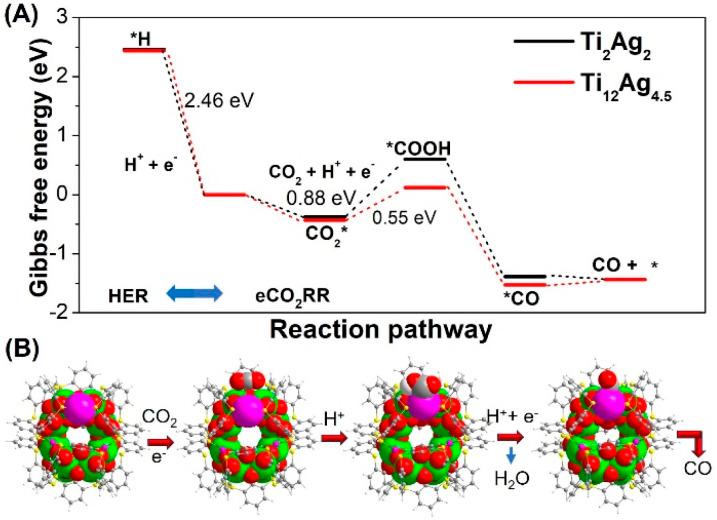
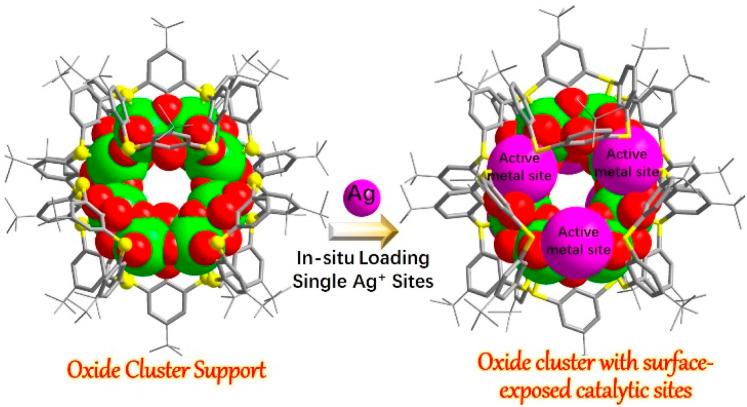
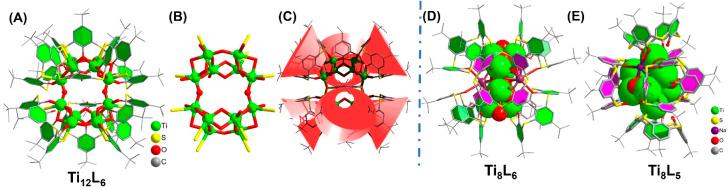
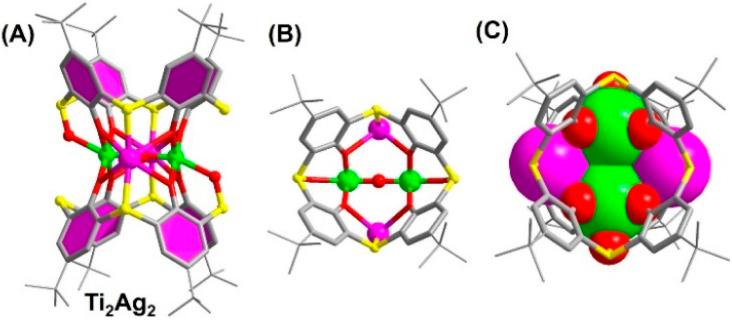
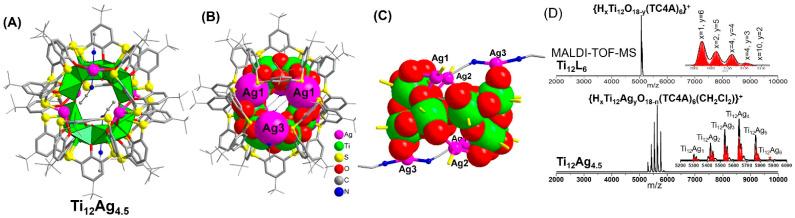
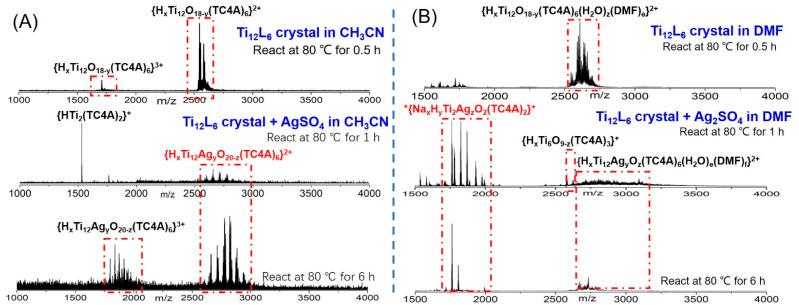
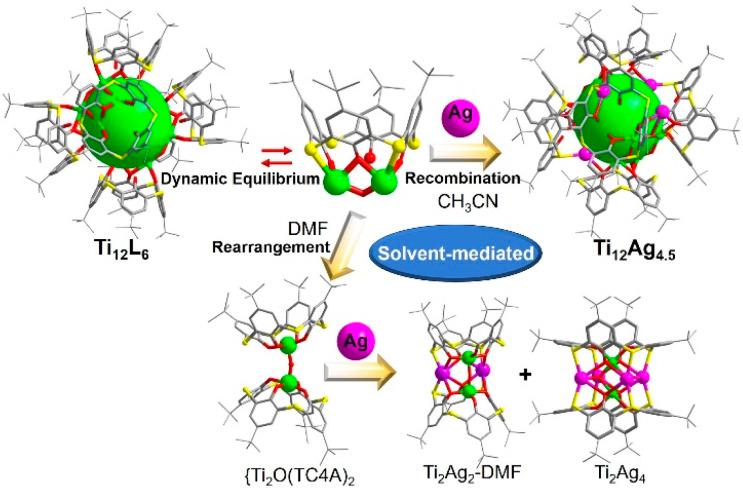
Precise control over the distribution of active metal sites on catalyst surfaces is essential for maximizing catalytic efficiency. Addressing the limitations of traditional cluster catalysts with core-embedded catalytic sites, this work presents a strategy to position catalytic sites on the surfaces of oxide clusters. We utilize a calixarene-stabilized titanium-oxo cluster (TiL) as a scaffold to anchor Ag , forming the unique nanocluster TiAg with six surface-exposed Ag sites. The transformation from TiL into TiAg clusters was traced through mass spectrometry, revealing a solvent-mediated dynamic process of disintegration and reassembly of the TiL macrocycle. The unique TiAg cluster, featuring a surface-exposed catalytic site configuration, efficiently catalyzes the electroreduction of CO to CO over a broad potential window, achieving CO faradaic efficiencies exceeding 82.0% between -0.4 V and -1.8 V. Its catalytic performance surpasses that of bimetallic TiAg, which features a more conventional design with Ag sites embedded within the cluster. Theoretical calculations indicate that the synergy between the titanium-oxo support and the single Ag sites lowers the activation energy, facilitating the formation of the *COOH intermediate. This work reveals that engineered interactions between active surface metal and the oxide support could amplify catalytic activity, potentially defining a new paradigm in catalyst design.
精确控制催化剂表面活性金属位点的分布对于最大化催化效率至关重要。为了解决传统具有核心嵌入催化位点的簇催化剂的局限性,这项工作提出了一种在氧化物簇表面定位催化位点的策略。我们利用杯芳烃稳定的钛氧簇(TiL)作为支架来锚定Ag,形成具有六个表面暴露Ag位点的独特纳米簇TiAg。通过质谱追踪了TiL向TiAg簇的转变,揭示了TiL大环的溶剂介导的动态分解和重新组装过程。独特的TiAg簇具有表面暴露的催化位点构型,在很宽的电位窗口内有效地催化CO电还原为CO,在-0.4 V至-1.8 V之间实现了超过82.0%的CO法拉第效率。其催化性能超过了双金属TiAg,后者具有更传统的设计,Ag位点嵌入簇内。理论计算表明,钛氧载体与单个Ag位点之间的协同作用降低了活化能,促进了*COOH中间体的形成。这项工作表明,活性表面金属与氧化物载体之间的工程相互作用可以放大催化活性,可能为催化剂设计定义一种新的范式。

 Zotero 插件