
可卡因使用障碍中不同的大规模网络功能连接性与药物使用结果相关。
Differential large-scale network functional connectivity in cocaine-use disorder associates with drug-use outcomes.
作者信息
Regier Paul S, Hager Nathan M, Gawrysiak Michael, Ehmann Sebastian, Ayaz Hasan, Childress Anna Rose, Fan Yong
机构信息
Perelman School of Medicine, Department of Psychiatry, University of Pennsylvania, Philadelphia, PA, 19104, USA.
Department of Psychology, West Chester University of Pennsylvania, West Chester, PA, 19383, USA.
出版信息
Sci Rep. 2025 Mar 20;15(1):9636. doi: 10.1038/s41598-025-91465-3.
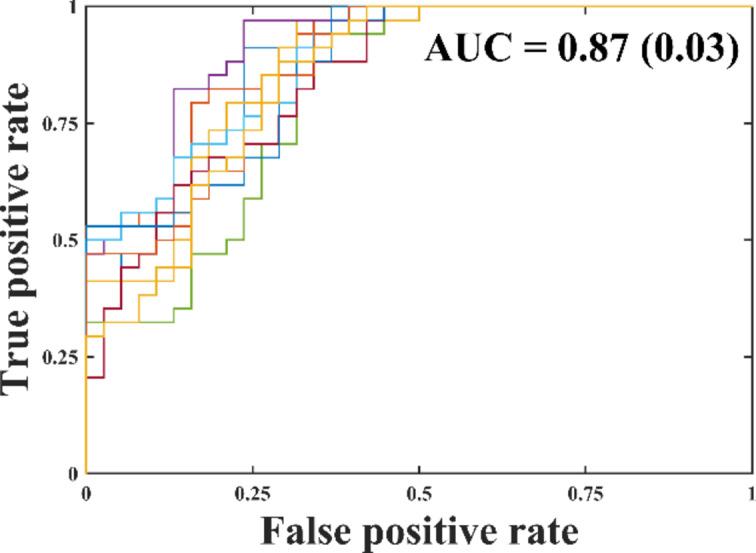
Cocaine-use disorder (CUD) affects both structure and function of the brain. A triple network model of large-scale brain networks has been useful for identifying aberrant resting-state functional connectivity (rsFC) associated with mental health disorders including addiction. The present study investigated differences between people with CUD vs. controls (CONs) and whether putative differences were associated with drug-use outcomes. Participants with CUD (n = 38) and CONs (n = 34) completed a resting functional magnetic resonance imaging (fMRI) scan. Participants with CUD completed several mental health measures and participated in an 8-week, drug-use outcomes phase. A classification framework based on the triple network model was built, and triple networks (salience [SN], executive control [ECN], default mode [DMN]) and subcortical (striatum [ST], hippocampus/amygdala) regions were identified with the algorithm of group-information-guided independent components analysis (GIG-ICA) and subsequent support-vector machines. This classifier achieved 77.1% accuracy, 73.8% sensitivity, and 80.0% specificity, with an area under the curve of 0.87 for distinguishing CUD vs. CON. The two groups differed in SN-anterior DMN (aDMN) and ECN-aDMN rsFC, with the CUD group exhibiting stronger rsFC compared to CONs. They also differed in rsFC between several subcortical and triple networks, with CUD generally showing a lack of rsFC. Within the CUD group, ST-aDMN and ST-rECN rsFC were associated with differential drug-use outcomes. Exploratory results suggested SN-aDMN rsFC was associated with anxiety symptoms. These results add to the growing literature showing aberrant triple network and subcortical rsFC associated with substance use disorders. They suggest the aDMN specifically may underlie important differences between people with CUD and CONs and may be a potential target for intervention.
可卡因使用障碍(CUD)会影响大脑的结构和功能。大规模脑网络的三重网络模型有助于识别与包括成瘾在内的精神健康障碍相关的异常静息态功能连接(rsFC)。本研究调查了可卡因使用障碍患者与对照组之间的差异,以及假定的差异是否与药物使用结果相关。可卡因使用障碍患者(n = 38)和对照组(n = 34)完成了静息功能磁共振成像(fMRI)扫描。可卡因使用障碍患者完成了多项心理健康测量,并参与了一个为期8周的药物使用结果阶段。基于三重网络模型构建了一个分类框架,并使用组信息引导独立成分分析(GIG-ICA)算法及后续支持向量机识别了三重网络(突显网络[SN]、执行控制网络[ECN]、默认模式网络[DMN])和皮质下区域(纹状体[ST]、海马体/杏仁核)。该分类器在区分可卡因使用障碍患者与对照组时,准确率达到77.1%,灵敏度为73.8%,特异性为80.0%,曲线下面积为0.87。两组在SN-前默认模式网络(aDMN)和ECN-aDMN的rsFC上存在差异,可卡因使用障碍组的rsFC比对照组更强。两组在几个皮质下区域和三重网络之间的rsFC也存在差异,可卡因使用障碍组通常显示rsFC缺乏。在可卡因使用障碍组中,ST-aDMN和ST-rECN的rsFC与不同的药物使用结果相关。探索性结果表明,SN-aDMN的rsFC与焦虑症状相关。这些结果进一步丰富了越来越多的文献,表明异常的三重网络和皮质下rsFC与物质使用障碍有关。它们表明,aDMN可能特别构成了可卡因使用障碍患者与对照组之间重要差异的基础,可能是一个潜在的干预靶点。




 Zotero 插件