
非人类哺乳动物情绪的神经生物学基础及其与面部表情的联系:对非语言交流的见解
The neurobiological basis of emotions and their connection to facial expressions in non-human mammals: insights in nonverbal communication.
作者信息
Mota-Rojas Daniel, Whittaker Alexandra L, Bienboire-Frosini Cécile, Buenhombre Jhon, Mora-Medina Patricia, Domínguez-Oliva Adriana, Martínez-Burnes Julio, Hernández-Avalos Ismael, Olmos-Hernández Adriana, Verduzco-Mendoza Antonio, Casas-Alvarado Alejandro, Lezama-García Karina, Grandin Temple
机构信息
Neurophysiology, Behavior and Animal Welfare Assessment, DPAA, Universidad Autónoma Metropolitana (UAM), Mexico City, Mexico.
School of Animal and Veterinary Sciences, University of Adelaide, Roseworthy Campus, Roseworthy, SA, Australia.
出版信息
Front Vet Sci. 2025 Mar 7;12:1541615. doi: 10.3389/fvets.2025.1541615. eCollection 2025.
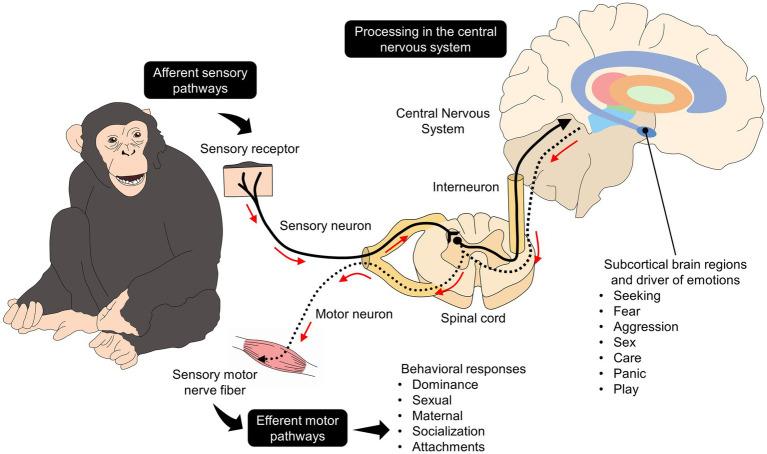
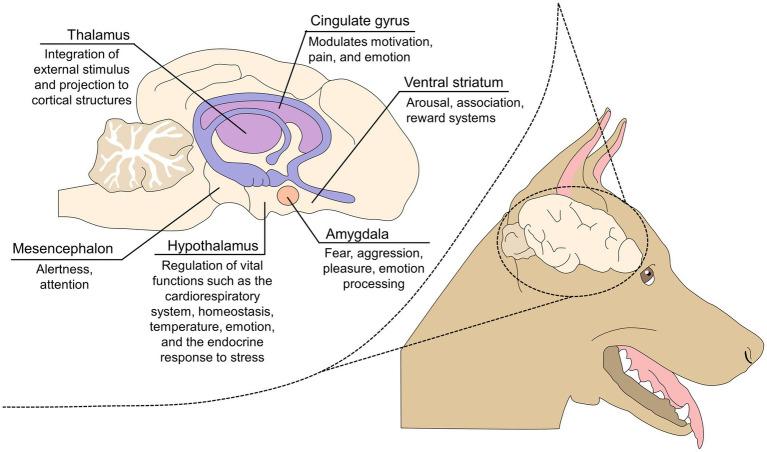
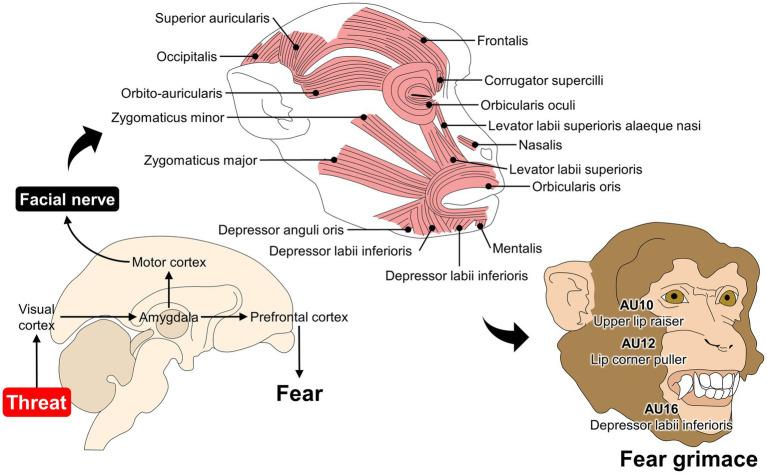
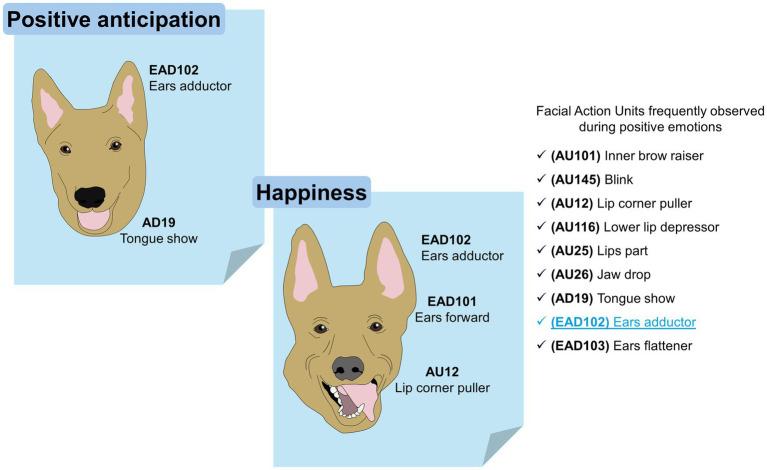
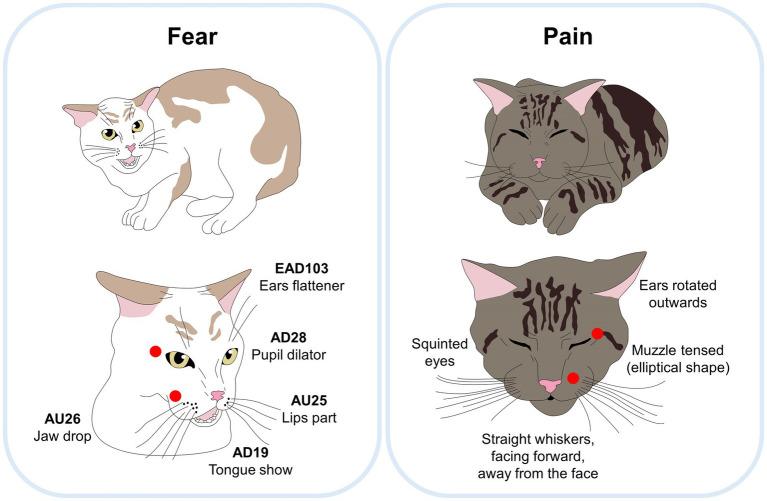
Recognizing that nonhuman animals are sentient beings has increased interest in studying their emotional state. Similar to humans, research has shown that some nonhuman mammals can modify facial expressions by contraction/relaxation of facial muscles according to their affective state. From a neurophysiological perspective, emotions are processed in several brain structures, mainly from the limbic system, such as the hypothalamus, hypophysis, hippocampus, prefrontal cortex, and amygdala. The converged pathways between the amygdala, the motor cortex, and its projections to the facial nerve control the movement of facial or mimetic muscles. Thus, facial expression is suggested to reflect the internal emotional state and could serve as an essential mode of nonverbal communication in mammals. In humans, the Facial Action Coding System (FACS) is a method that objectively analyzes facial movements using an anatomical base. In veterinary medicine, AnimalFACS is an adaptation of this system to eight animal species, including domestic animals (dogs, cats, and horses) and nonhuman primates (chimpanzees, orangutans, gibbons, macaques, and common marmosets). Considering these coded facial movements, current research aims to associate certain facial expressions with the animals' emotional states and affective contexts. Thus, this review aims to discuss recent findings associated with the neurobiology of emotions and facial expressions in non-human mammals, using AnimalFACS to understand nonverbal communication. Characterizing each facial expression according to different contexts might help identify if the animal is expressing a positive or negative emotional response to the event, which can improve nonverbal human-animal communication.
认识到非人类动物是有感知能力的生物,这激发了人们对研究它们情绪状态的兴趣。与人类相似,研究表明一些非人类哺乳动物能够根据其情感状态通过面部肌肉的收缩/放松来改变面部表情。从神经生理学角度来看,情绪在几个脑结构中进行处理,主要来自边缘系统,如下丘脑、垂体、海马体、前额叶皮质和杏仁核。杏仁核、运动皮层及其对面神经的投射之间的汇聚通路控制着面部或模仿肌肉的运动。因此,面部表情被认为能够反映内部情绪状态,并可能成为哺乳动物非语言交流的一种重要方式。在人类中,面部动作编码系统(FACS)是一种基于解剖学基础客观分析面部运动的方法。在兽医学中,动物FACS是该系统针对八种动物的改编版本,包括家畜(狗、猫和马)和非人类灵长类动物(黑猩猩、猩猩、长臂猿、猕猴和普通狨猴)。考虑到这些编码的面部运动,当前的研究旨在将某些面部表情与动物的情绪状态和情感背景联系起来。因此,本综述旨在讨论与非人类哺乳动物情绪和面部表情神经生物学相关的最新研究结果,利用动物FACS来理解非语言交流。根据不同情境对每个面部表情进行特征描述,可能有助于识别动物是否对该事件表达了积极或消极的情绪反应,这可以改善人类与动物之间的非语言交流。

 Zotero 插件