
针对胰腺癌肿瘤微环境的纳米医学策略的广泛综述
Extensive Review of Nanomedicine Strategies Targeting the Tumor Microenvironment in PDAC.
作者信息
Liu Xing, Shao Yidan, Li Yunjiang, Chen Zuhua, Shi Tingting, Tong Qiao, Zou Xi, Ju Liping, Pan Jinming, Zhuang Rangxiao, Pan Xuwang
机构信息
School of Pharmaceutical Sciences, Zhejiang Chinese Medical University, Hangzhou, Zhejiang, 311400, People's Republic of China.
Department of Pharmaceutical Preparation, Affiliated Hangzhou Xixi Hospital, Zhejiang Chinese Medical University, Hangzhou, Zhejiang, 310023, People's Republic of China.
出版信息
Int J Nanomedicine. 2025 Mar 17;20:3379-3406. doi: 10.2147/IJN.S504503. eCollection 2025.
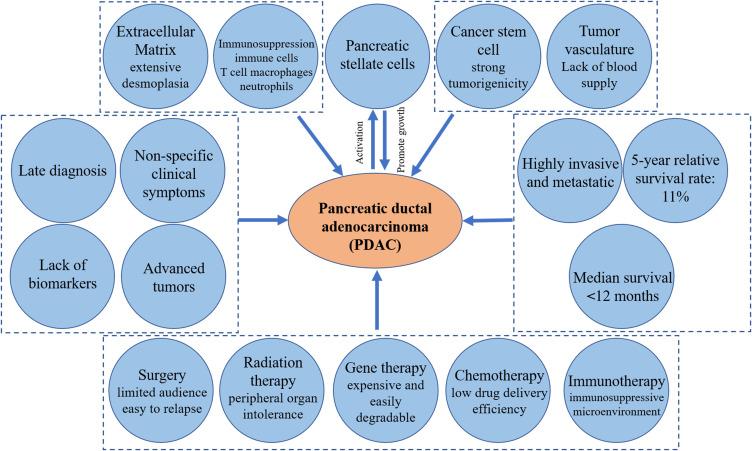
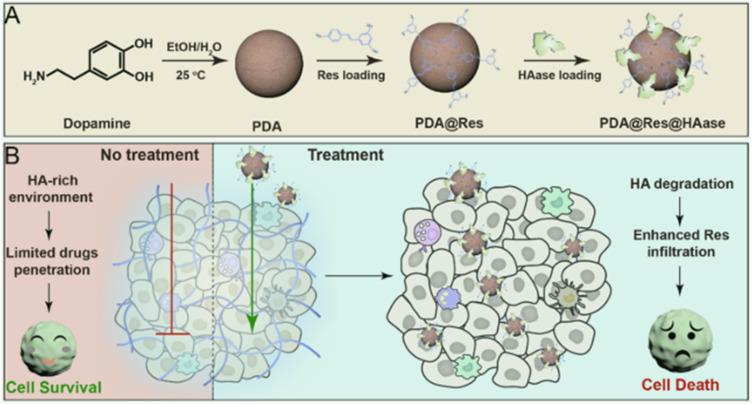
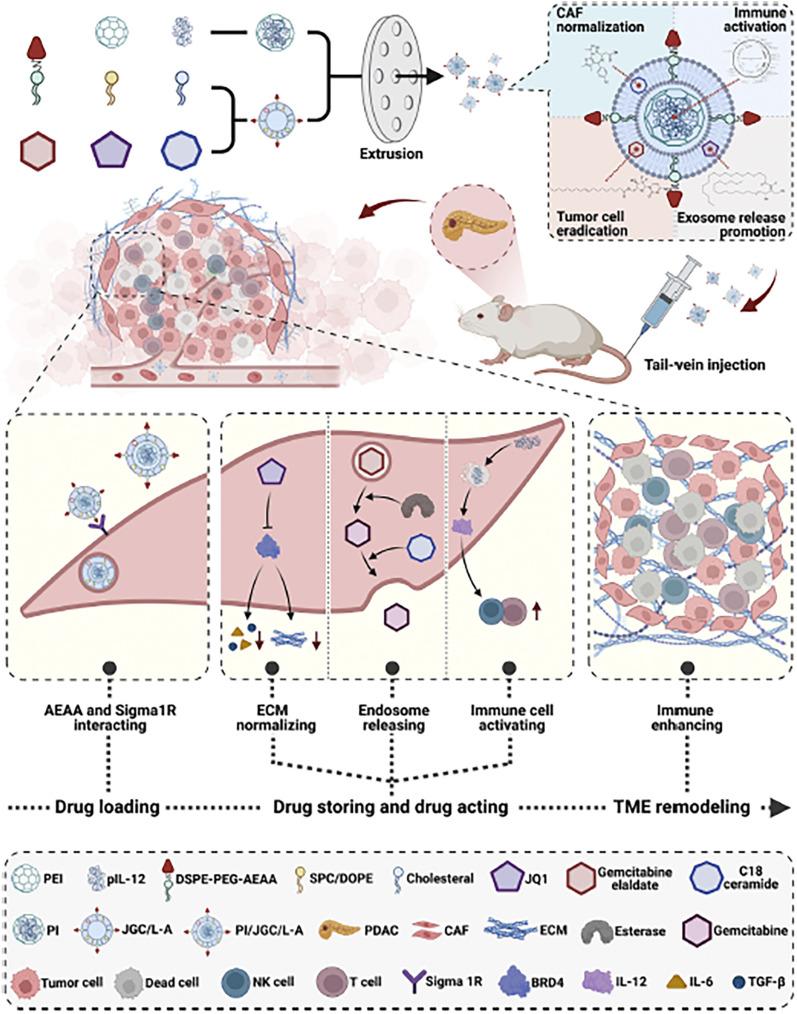
Pancreatic ductal adenocarcinoma (PDAC) is one of the deadliest cancers in the world, mainly because of its powerful pro-connective tissue proliferation matrix and immunosuppressive tumor microenvironment (TME), which promote tumor progression and metastasis. In addition, the extracellular matrix leads to vascular collapse, increased interstitial fluid pressure, and obstruction of lymphatic return, thereby hindering effective drug delivery, deep penetration, and immune cell infiltration. Therefore, reshaping the TME to enhance tumor perfusion, increase deep drug penetration, and reverse immune suppression has become a key therapeutic strategy. Traditional therapies for PDAC, including surgery, radiation, and chemotherapy, face significant limitations. Surgery is challenging due to tumor location and growth, while chemotherapy and radiation are hindered by the dense extracellular matrix and immunosuppressive TME. In recent years, the advancement of nanotechnology has provided new opportunities to improve drug efficacy. Nanoscale drug delivery systems (NDDSs) provide several advantages, including improved drug stability in vivo, enhanced tumor penetration, and reduced systemic toxicity. However, the clinical translation of nanotechnology in PDAC therapy faces several challenges. These include the need for precise targeting and control over drug release, potential immune responses to the nanocarriers, and the scalability and cost-effectiveness of production. This article provides an overview of the latest nanobased methods for achieving better therapeutic outcomes and overcoming drug resistance. We pay special attention to TME-targeted therapy in the context of PDAC, discuss the advantages and limitations of current strategies, and emphasize promising new developments. By emphasizing the enormous potential of NDDSs in improving the treatment outcomes of patients with PDAC, while critically discussing the limitations of traditional therapies and the challenges faced by nanotechnology in achieving clinical breakthroughs, our review paves the way for future research in this rapidly developing field.
胰腺导管腺癌(PDAC)是世界上最致命的癌症之一,主要是因为其强大的促结缔组织增生基质和免疫抑制性肿瘤微环境(TME),这会促进肿瘤进展和转移。此外,细胞外基质会导致血管塌陷、间质液压力增加以及淋巴回流受阻,从而阻碍有效的药物递送、深度渗透和免疫细胞浸润。因此,重塑肿瘤微环境以增强肿瘤灌注、增加药物深度渗透并逆转免疫抑制已成为关键的治疗策略。PDAC的传统治疗方法,包括手术、放疗和化疗,都面临着重大局限性。由于肿瘤位置和生长情况,手术具有挑战性,而化疗和放疗则受到致密的细胞外基质和免疫抑制性肿瘤微环境的阻碍。近年来,纳米技术的进步为提高药物疗效提供了新机会。纳米级药物递送系统(NDDS)具有多种优势,包括提高药物在体内的稳定性、增强肿瘤渗透以及降低全身毒性。然而,纳米技术在PDAC治疗中的临床转化面临若干挑战。这些挑战包括需要精确靶向和控制药物释放、对纳米载体的潜在免疫反应以及生产的可扩展性和成本效益。本文概述了最新的基于纳米的方法,以实现更好的治疗效果并克服耐药性。我们特别关注PDAC背景下的肿瘤微环境靶向治疗,讨论当前策略的优缺点,并强调有前景的新进展。通过强调纳米级药物递送系统在改善PDAC患者治疗效果方面的巨大潜力,同时批判性地讨论传统疗法的局限性以及纳米技术在实现临床突破方面面临的挑战,我们的综述为这一快速发展领域的未来研究铺平了道路。






 Zotero 插件