
术后疼痛管理的差异:处方实践与健康的社会决定因素的范围综述
Disparities in Postoperative Pain Management: A Scoping Review of Prescription Practices and Social Determinants of Health.
作者信息
Snell Aidan, Lobaina Diana, Densley Sebastian, Moothedan Elijah, Baker Julianne, Al Abdul Razzak Lama, Garcia Alexandra, Skibba Shane, Dunn Ayden, Follin Tiffany, Mejia Maria, Kitsantas Panagiota, Sacca Lea
机构信息
Charles E. Schmidt College of Medicine, Florida Atlantic University, Boca Raton, FL 33431, USA.
出版信息
Pharmacy (Basel). 2025 Feb 24;13(2):34. doi: 10.3390/pharmacy13020034.
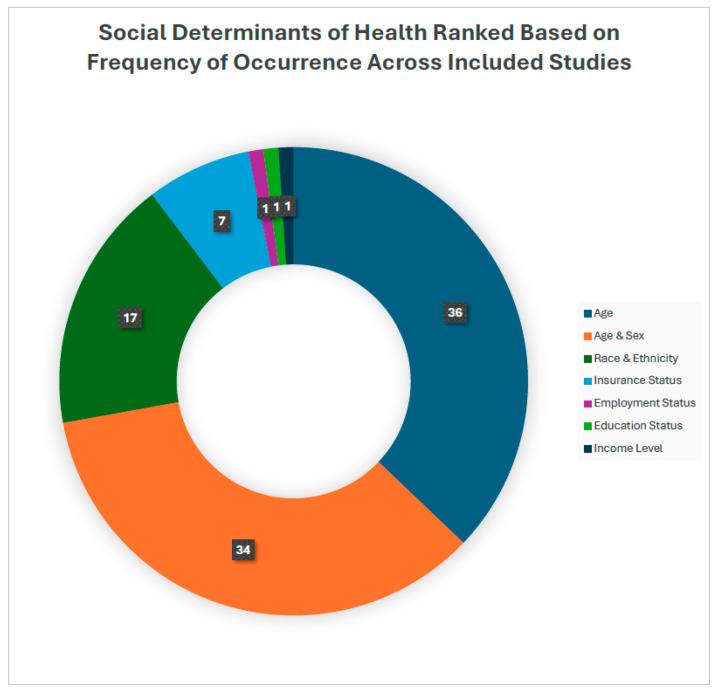
: Opioid analgesic therapy has been traditionally used for pain management; however, the variability in patient characteristics, complexity in evaluating pain, availability of treatment within facilities, and U.S. physicians overprescribing opioids have contributed to the current opioid epidemic. Despite large research efforts investigating the patterns of postsurgical pain management and influencing factors, it remains unclear how these overall trends vary across the varying sizes and available resources of academic hospitals, community hospitals, and outpatient surgery centers. The primary aim of this scoping review was to examine the patterns of contemporary postoperative pain management across healthcare settings, including academic medical centers, community hospitals, and outpatient surgery centers. Specifically, this study investigates how prescription practices for opioids, NSAIDs, and acetaminophen are influenced by patient demographics, including sex, race, gender, insurance status, and other social determinants of health (SDoH), to inform equitable and patient-centered pain management strategies. : This study utilized The Preferred Reporting Items for Systematic Reviews and Meta-Analyses extension for Scoping Reviews (PRISMA-ScR) and was used as a reference checklist. The Arksey and O'Malley methodological framework was used to guide the review process. To ensure comprehensive coverage, searches were conducted across three major databases: PubMed, Embase, and Cochrane Library. : A total of 43 eligible studies were retained for analysis. The highest reported Healthy People 2030 category was Social and community context (n = 39), while the highest reported category of SDoH was age (n = 36). A total of 34 articles listed sex and age as SDoH. Additional SDoH examined were race/ethnicity (n = 17), insurance (n = 7), employment (n = 1), education (n = 4), and income (n = 1). This review suggests that there are significant gaps in the implementation of institution-specific, patient-centered, and equitable pain management strategies, particularly in academic hospitals, which our findings show have the highest rates of opioid and NSAID prescriptions (n = 26) compared to outpatient surgical centers (n = 8). Findings from our review of the literature demonstrated that while academic hospitals often adopt enhanced recovery protocols aimed at reducing opioid dependence, these protocols can fail to address the diverse needs of at-risk populations, such as those with chronic substance use, low socioeconomic status, or racial and ethnic minorities. : Findings from this review are expected to have implications for informing both organizational-specific and nationwide policy recommendations, potentially leading to more personalized and equitable pain management strategies across different healthcare settings. These include guidelines for clinicians on addressing various aspects of postoperative pain management, including preoperative education, perioperative pain management planning, use of different pharmacological and nonpharmacological modalities, organizational policies, and transition to outpatient care.
传统上,阿片类镇痛药疗法一直用于疼痛管理;然而,患者特征的差异、疼痛评估的复杂性、医疗机构内治疗的可及性以及美国医生阿片类药物的过度处方导致了当前的阿片类药物流行。尽管人们进行了大量研究来调查术后疼痛管理模式及其影响因素,但目前仍不清楚这些总体趋势在学术医院、社区医院和门诊手术中心的不同规模和可用资源之间是如何变化的。本综述的主要目的是研究不同医疗机构(包括学术医疗中心、社区医院和门诊手术中心)当代术后疼痛管理的模式。具体而言,本研究调查了阿片类药物、非甾体抗炎药(NSAIDs)和对乙酰氨基酚的处方实践如何受到患者人口统计学因素的影响,包括性别、种族、性别认同、保险状况以及其他健康社会决定因素(SDoH),以为公平且以患者为中心的疼痛管理策略提供信息。
本研究采用了系统评价和Meta分析的首选报告项目扩展版(PRISMA-ScR)作为参考清单。采用Arksey和O'Malley的方法框架来指导综述过程。为确保全面覆盖,在三个主要数据库进行了检索:PubMed、Embase和Cochrane图书馆。
总共保留了43项符合条件的研究进行分析。报告最多的《健康人民2030》类别是社会和社区背景(n = 39),而报告最多的SDoH类别是年龄(n = 36)。共有34篇文章将性别和年龄列为SDoH。还研究了其他SDoH,包括种族/民族(n = 17)、保险(n = 7)、就业(n = 1)、教育(n = 4)和收入(n = 1)。本综述表明,在实施针对机构、以患者为中心且公平的疼痛管理策略方面存在重大差距,特别是在学术医院,我们的研究结果显示,与门诊手术中心(n = 8)相比,学术医院的阿片类药物和NSAIDs处方率最高(n = 26)。我们对文献的综述结果表明,虽然学术医院经常采用旨在减少阿片类药物依赖的强化康复方案,但这些方案可能无法满足高危人群的多样化需求,例如那些有慢性药物使用问题、社会经济地位低或少数种族和族裔的人群。
预计本综述的结果将为组织特定和全国性的政策建议提供信息,可能会在不同医疗机构中带来更个性化和公平的疼痛管理策略。这些建议包括为临床医生提供的关于术后疼痛管理各个方面的指南,包括术前教育、围手术期疼痛管理规划、不同药物和非药物方法的使用、组织政策以及向门诊护理的过渡。


 Zotero 插件