
精子携带的mRNA:在合子基因组激活和表观遗传继承中的潜在作用。
Sperm-borne mRNAs: potential roles in zygote genome activation and epigenetic inheritance.
作者信息
González Betina, González Candela Rocío
机构信息
Instituto de Investigaciones Farmacológicas, Buenos Aires, Argentina.
出版信息
Open Biol. 2025 Mar;15(3):240321. doi: 10.1098/rsob.240321. Epub 2025 Mar 26.
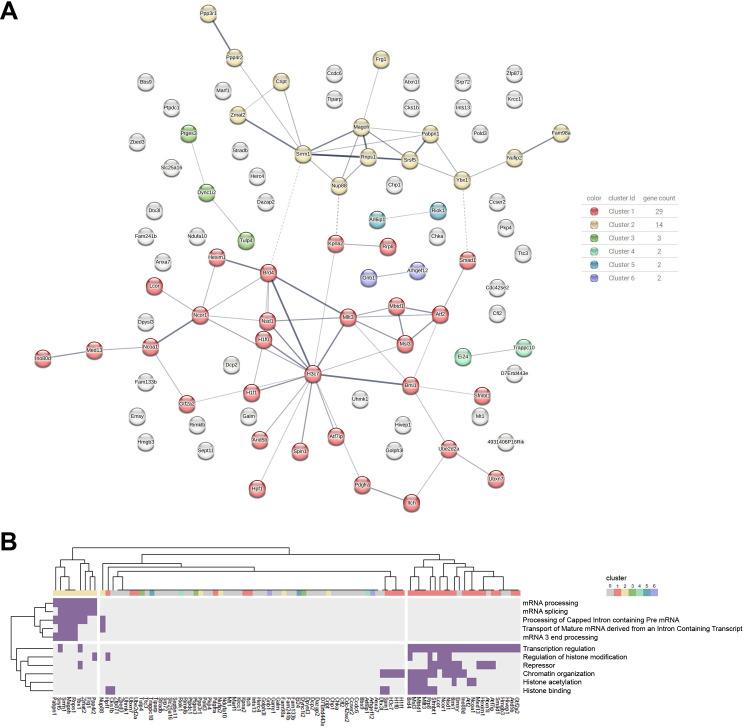
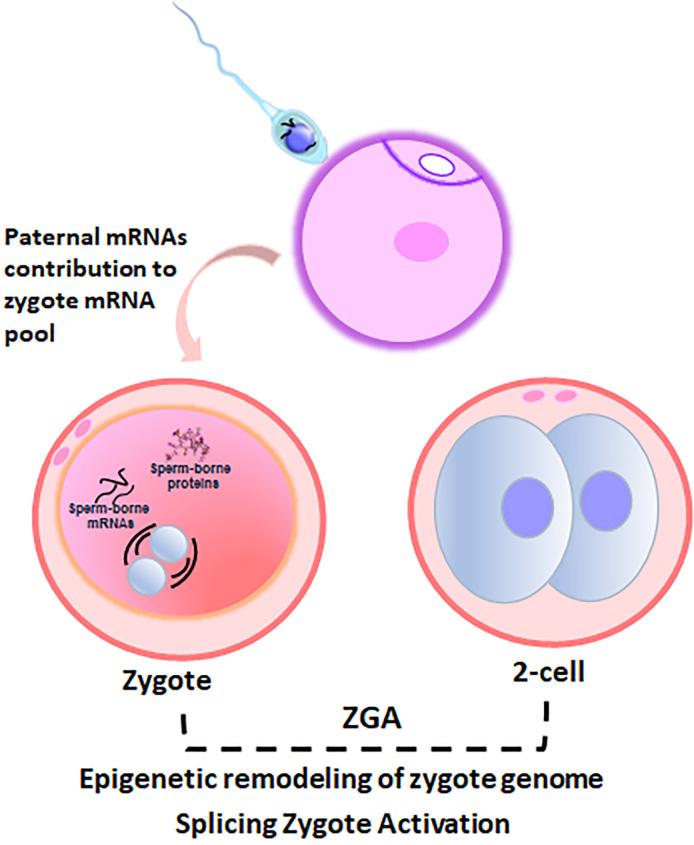
It is well accepted that sperm carry an RNA cargo with functions in early embryo development. However, most research has focused on the role of small RNAs, such as microRNAs, transfer RNAs and long non-coding RNAs, while protein-coding messenger RNAs (mRNAs) received less attention, even though they represent a substantial amount of the sperm RNA pool. Here, we curated mouse transcriptomic data from mature sperm and selected the most abundant mRNAs (above the 0.7 quantile). The obtained gene list was further filtered using two criteria: (i) mRNAs that are statistically higher in the one-cell embryo compared to the MII oocyte transcriptome, indicative of paternal mRNA contribution after fertilization; and (ii) mRNAs that are found bound to ribosomes in the one-cell embryo, indicative of positive translation in the zygote translatome. Our analysis identified 94 genes that form networks functionally involved in epigenetic chromatin organization, gene expression, RNA processing and translation during zygote genome activation. These findings underscore the significant role of sperm-borne mRNAs in early embryonic development and epigenetic inheritance, highlighting the need for further research to fully understand their functions.
精子携带的RNA货物在早期胚胎发育中具有功能,这一点已被广泛接受。然而,大多数研究都集中在小RNA的作用上,如微小RNA、转运RNA和长链非编码RNA,而蛋白质编码信使RNA(mRNA)受到的关注较少,尽管它们在精子RNA库中占了相当大的比例。在这里,我们整理了来自成熟精子的小鼠转录组数据,并选择了最丰富的mRNA(高于0.7分位数)。使用两个标准对获得的基因列表进行进一步筛选:(i)与MII卵母细胞转录组相比,在单细胞胚胎中统计学上更高的mRNA,表明受精后父本mRNA的贡献;(ii)在单细胞胚胎中发现与核糖体结合的mRNA,表明合子翻译组中的正向翻译。我们的分析确定了94个基因,它们形成了在合子基因组激活期间功能上参与表观遗传染色质组织、基因表达、RNA加工和翻译的网络。这些发现强调了精子携带的mRNA在早期胚胎发育和表观遗传遗传中的重要作用,突出了进一步研究以充分了解其功能的必要性。

 Zotero 插件