
体外暴露于内分泌干扰化学物质克霉唑会损害人类精子活力、激素信号传导和线粒体活性。
In Vitro Exposure to the Endocrine-Disrupting Chemical Climbazole Impairs Human Sperm Motility, Hormonal Signalling, and Mitochondrial Activity.
作者信息
Annunzi Eugenia, Luongo Francesca Paola, Girolamo Francesca, Ponchia Rosetta, Passaponti Sofia, Piomboni Paola, Luddi Alice
机构信息
Department of Molecular and Developmental Medicine, University of Siena, 53100 Siena, Italy.
Department of Medicine, Surgery and Neuroscience, University of Siena, 53100 Siena, Italy.
出版信息
Cells. 2025 Mar 13;14(6):427. doi: 10.3390/cells14060427.
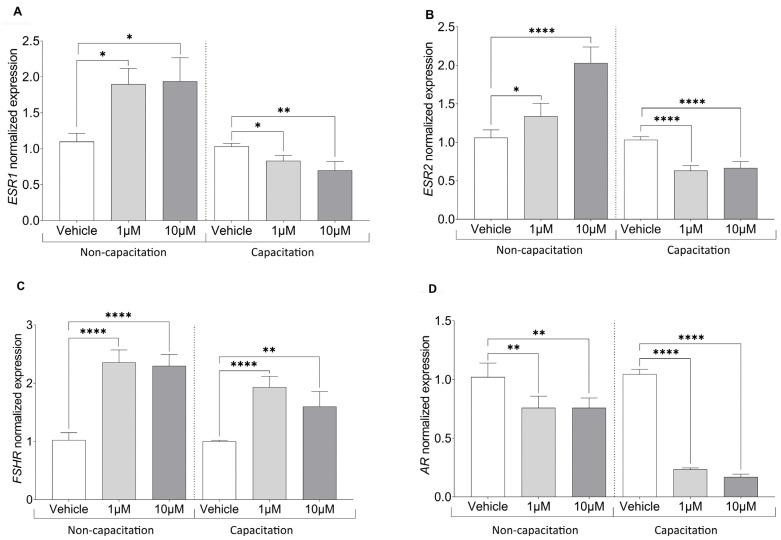
This study explores the endocrine-disrupting effects of climbazole (CBZ), an environmental and lifestyle stressor, on male fertility. The impact of CBZ on sperm vitality, motility, and molecular pathways related to hormone receptors and apoptosis was evaluated, in non-capacitated and capacitated conditions. Gene expression of key components, including hormone receptors (, , , ), apoptosis-related genes (, ), and (involved in mitochondrial function), was analyzed. Protein tyrosine phosphorylation, a marker of capacitation, was also examined using immunofluorescence and Western blot analysis. We demonstrated that CBZ significantly reduced sperm vitality at concentrations above 25 µM and motility at 1 and 10 µM in non-capacitated and capacitated conditions. Changes in tyrosine phosphorylation patterns were also observed. Gene expression analysis revealed an upregulation of , , , and , while and expression were downregulated. These findings offer new insights into the potential endocrine-disrupting and cytotoxic effects of CBZ, highlighting its potential role in compromising male reproductive health.
本研究探讨了作为一种环境和生活方式应激源的克霉唑(CBZ)对男性生育能力的内分泌干扰作用。在未获能和获能条件下,评估了CBZ对精子活力、运动能力以及与激素受体和细胞凋亡相关的分子途径的影响。分析了关键成分的基因表达,包括激素受体(、、、)、细胞凋亡相关基因(、)以及(参与线粒体功能)。还使用免疫荧光和蛋白质印迹分析检测了作为获能标志物的蛋白质酪氨酸磷酸化。我们证明,在未获能和获能条件下,浓度高于25 µM时CBZ显著降低精子活力,1和10 µM时降低精子运动能力。还观察到酪氨酸磷酸化模式的变化。基因表达分析显示、、、上调,而和表达下调。这些发现为CBZ潜在的内分泌干扰和细胞毒性作用提供了新见解,突出了其在损害男性生殖健康方面的潜在作用。




 Zotero 插件