
父源性邻苯二甲酸二(2-乙基己基)酯暴露通过组蛋白H3赖氨酸27三甲基化的表观遗传修饰引发子代生殖毒性。
Paternal DEHP Exposure Triggers Reproductive Toxicity in Offspring via Epigenetic Modification of H3K27me3.
作者信息
Zhang Lu, Yang Rui, Xu Guiyong, Wang Lingqiao, Chen Weiyan, Tan Yao, Zhang Guowei, Liu Wenbin, Zhang Guanghui, Li Jun, Zhou Ziyuan
机构信息
The Key Laboratory of Environmental Pollution Monitoring and Disease Control, School of Public Heath, Ministry of Education, Guizhou Medical University, Guiyang 561113, China.
Department of Environmental Health, College of Preventive Medicine, Third Military Medical University (Army Medical University), Chongqing 400038, China.
出版信息
Toxics. 2025 Feb 27;13(3):172. doi: 10.3390/toxics13030172.
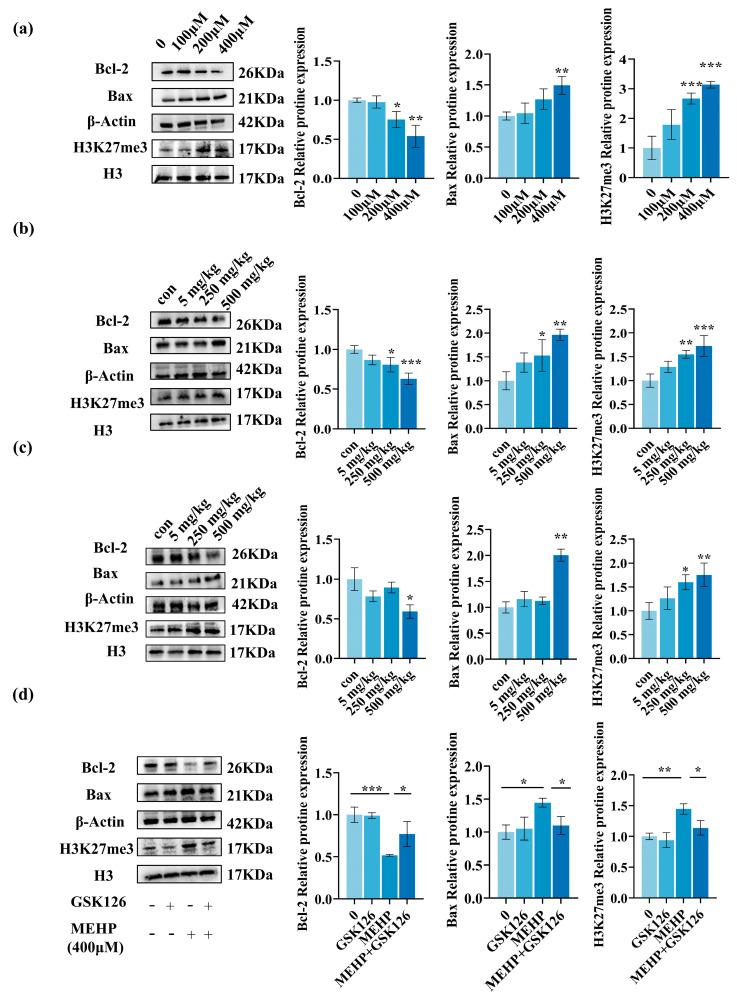
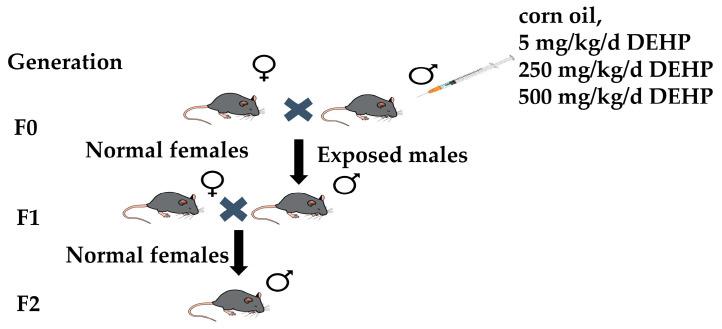
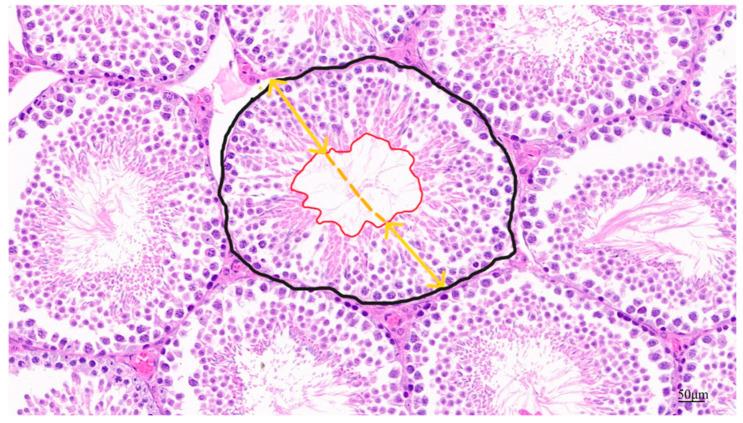
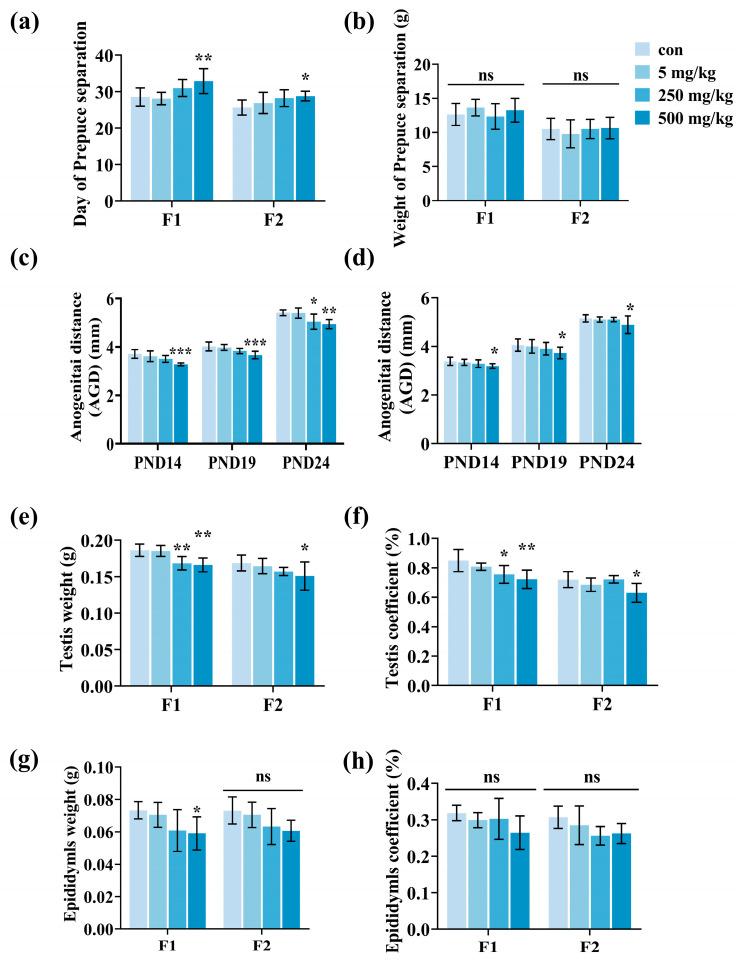
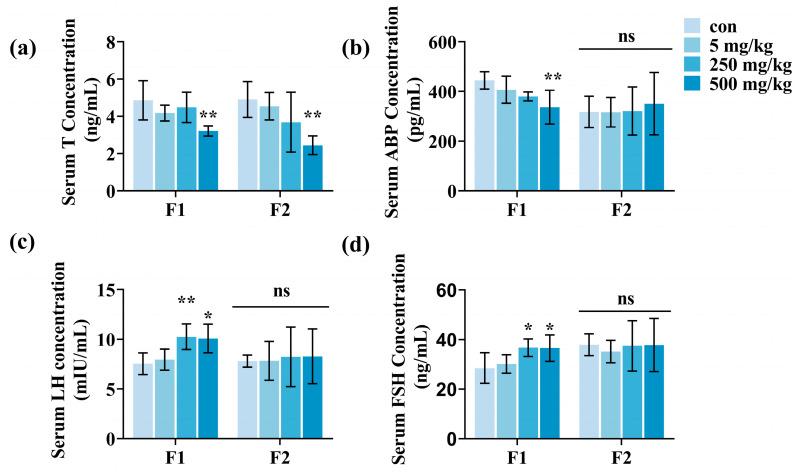
Di (2-ethylhexyl) phthalate (DEHP) is an acknowledged endocrine disruptor with male reproductive toxicity; nevertheless, the transgenerational impacts on male offspring resulting from paternal exposure, along with the mechanisms involved, are not well understood. To develop a transgenerational model of DEHP paternal exposure, male C57BL/6J mice (4-week) exposed to DEHP (5, 250, and 500 mg/kg/d) for 35 days were then bred with unexposed female mice at a ratio of 1:2 to produce offspring. Findings indicate that the sperm quality and relative sex hormones were adversely affected in males of F1 and F2 generations, and pathological damage in the testes and the apoptosis of testicular cells were also observed. Interestingly, an increase in the expression levels of H3K27me3 was observed in the testicular tissues of male descendants. It was further confirmed by in vitro approach that H3K27me3 may down-regulate the expression of Bcl-2 and plays a role in regulating the initiation of apoptosis in Leydig cells triggered by MEHP (the primary metabolite of DEHP). Additionally, the down-regulation of Bcl-2 can be reversed by treatment with the H3K27me3 inhibitor GSK126. To conclude, DEHP leads to transgenerational harm to male offspring reproductive systems, with the epigenetic mechanism of H3K27me3 playing a key role in mediating these effects.
邻苯二甲酸二(2-乙基己基)酯(DEHP)是一种公认的具有雄性生殖毒性的内分泌干扰物;然而,父本暴露对雄性后代的跨代影响及其相关机制尚不清楚。为建立DEHP父本暴露的跨代模型,将4周龄的雄性C57BL/6J小鼠暴露于DEHP(5、250和500 mg/kg/d)35天,然后以1:2的比例与未暴露的雌性小鼠交配产生后代。研究结果表明,F1和F2代雄性的精子质量和相关性激素受到不利影响,同时还观察到睾丸的病理损伤和睾丸细胞的凋亡。有趣的是,在雄性后代的睾丸组织中观察到H3K27me3表达水平升高。体外实验进一步证实,H3K27me3可能下调Bcl-2的表达,并在调节由MEHP(DEHP的主要代谢产物)触发的睾丸间质细胞凋亡起始中发挥作用。此外,用H3K27me3抑制剂GSK126处理可逆转Bcl-2的下调。总之,DEHP对雄性后代生殖系统造成跨代损害,H3K27me3的表观遗传机制在介导这些影响中起关键作用。



 Zotero 插件