
1号染色体1q31.3区域内的常见单倍型决定整个补体因子H蛋白家族的系统浓度。
Common Haplotypes within the Chromosome 1q31.3 Region Determine Systemic Concentrations of the Entire Complement Factor H Protein Family.
作者信息
Veuskens Bert R J, van Rossum Mara, Cattenstart Emi, Brouwer Mieke C, van Mierlo Gerard, Geissler Judy, van Leeuwen Karin, Liu Jin, Anstadt Robert A, Richards Burt T, Hageman Gregory S, Kuijpers Taco W, Toonen Erik J M, Pouw Richard B
机构信息
Sanquin Research and Landsteiner Laboratory, Amsterdam University Medical Centers, University of Amsterdam, Amsterdam, The Netherlands,
Amsterdam Institute for Immunology and Infectious Diseases, Immunology, Amsterdam University Medical Centers, University of Amsterdam, Amsterdam, The Netherlands,
出版信息
J Innate Immun. 2025;17(1):244-261. doi: 10.1159/000545342. Epub 2025 Mar 26.
INTRODUCTION
The alternative pathway of complement activation is consistently active, keeping the complement system primed for immediate response. This constant "tick-over" mechanism is regulated by the factor H (FH) protein family, which encompasses seven highly related proteins: FH, FHL-1, and five FH-related (FHR-1 to -5) proteins. The current model is that the FHRs compete with FH and FHL-1 to fine-tune their activities. Genetic studies of this complex locus have revealed distinct haplotypes associating with a wide array of human diseases, underscoring its significant role in complement regulation. Nevertheless, a comprehensive analysis of systemic concentrations of all FH protein family members, accounting for known genetic variability within the population, is still lacking.
METHODS
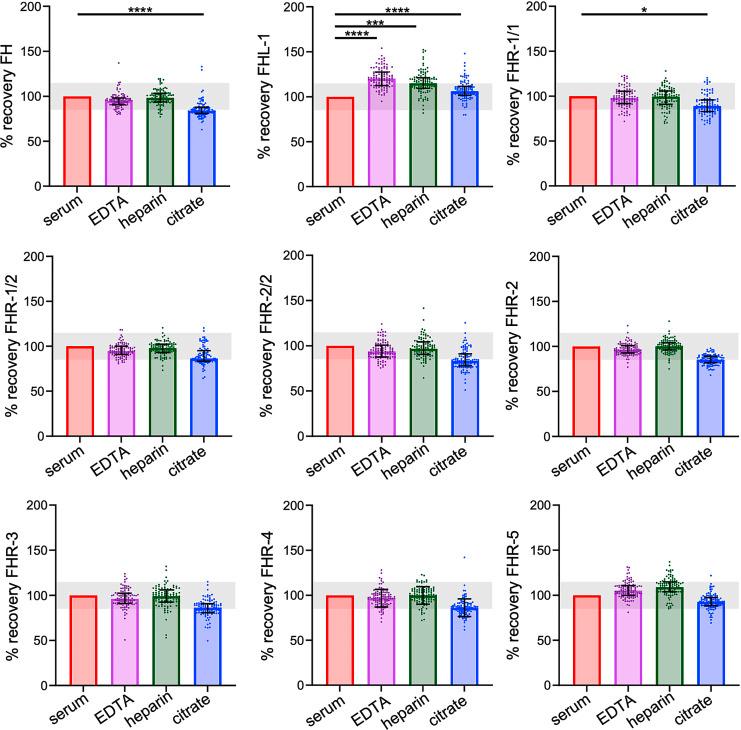
Systemic levels of each member of the FH protein family were quantified with the use of recently developed target specific ELISAs. Next, a genetic analysis focused on the chromosome 1q31.3 region was performed using next generation sequencing and multiplex ligase probe-dependent amplification.
RESULTS
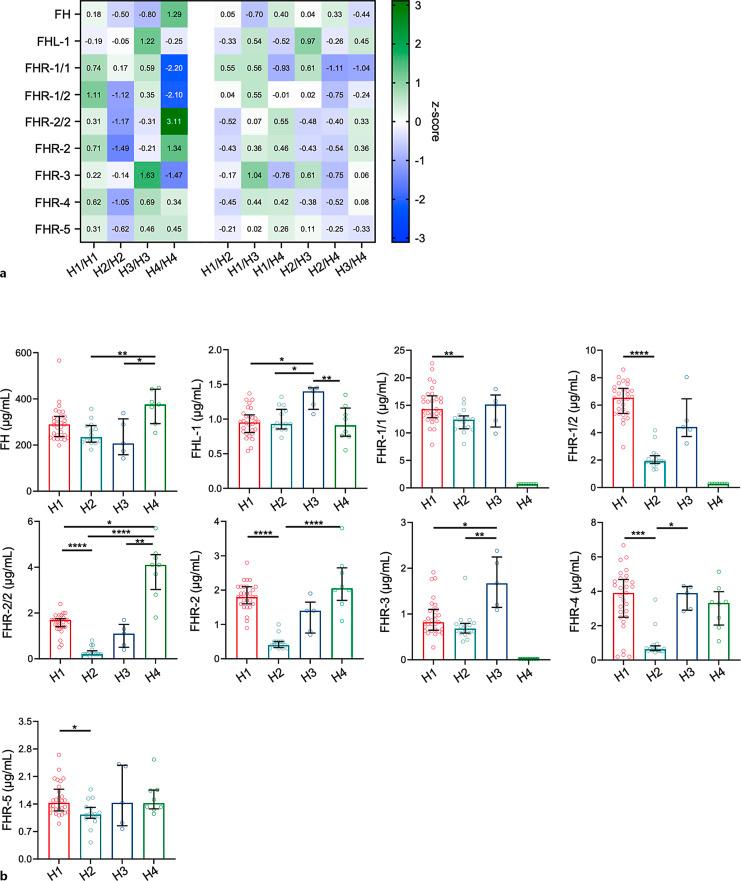
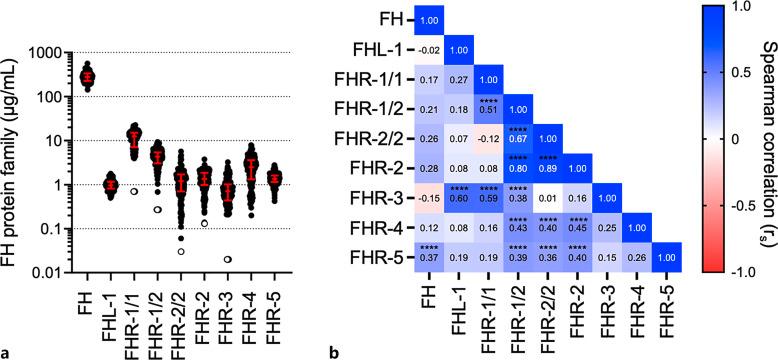
We report systemic protein levels of each member of the FH protein family found in vivo and demonstrate common haplotypes within the CFH locus give rise to classifiable protein expression patterns, establishing distinct ratios between FH, FHL-1, and the FHRs.
CONCLUSIONS
The established reference intervals and identified genetic effects provide a benchmark for further research and emphasize the importance of including all family members when studying their role in both health and disease.
引言
补体激活的替代途径持续活跃,使补体系统随时准备立即做出反应。这种持续的“周转”机制由因子H(FH)蛋白家族调节,该家族包含七种高度相关的蛋白:FH、FHL-1以及五种FH相关(FHR-1至-5)蛋白。目前的模型认为,FHR与FH和FHL-1竞争以微调它们的活性。对这个复杂基因座的遗传学研究揭示了与多种人类疾病相关的不同单倍型,突显了其在补体调节中的重要作用。然而,仍缺乏对所有FH蛋白家族成员全身浓度的综合分析,未考虑人群中已知的基因变异性。
方法
使用最近开发的靶向特异性酶联免疫吸附测定法(ELISA)对FH蛋白家族各成员的全身水平进行定量。接下来,使用下一代测序和多重连接酶探针依赖性扩增对1q31.3染色体区域进行基因分析。
结果
我们报告了在体内发现的FH蛋白家族各成员的全身蛋白水平,并证明CFH基因座内的常见单倍型产生了可分类的蛋白表达模式,确定了FH、FHL-1和FHR之间的不同比例。
结论
既定的参考区间和确定的遗传效应为进一步研究提供了基准,并强调在研究它们在健康和疾病中的作用时纳入所有家族成员的重要性。


 Zotero 插件