
使用人工智能辅助形态学分析评估双层微生理系统中的灌注细胞培养条件
Evaluation of Perfusion Cell Culture Conditions in a Double-Layered Microphysiological System Using AI-Assisted Morphological Analysis.
作者信息
Kutsuzawa Naokata, Goto Tomomi, Nakamura Hiroko, Maeda Miwa, Kinehara Masaki, Sakagami Junko, Kimura Hiroshi
机构信息
Micro/Nano Technology Center, Tokai University, 4-1-1 Kitakaname, Hiratsuka 259-1292, Kanagawa, Japan.
Division of Pulmonary Medicine, Department of Medicine, Tokai University School of Medicine, 143 Shimokasuya, Isehara 259-1143, Kanagawa, Japan.
出版信息
Micromachines (Basel). 2025 Mar 12;16(3):327. doi: 10.3390/mi16030327.
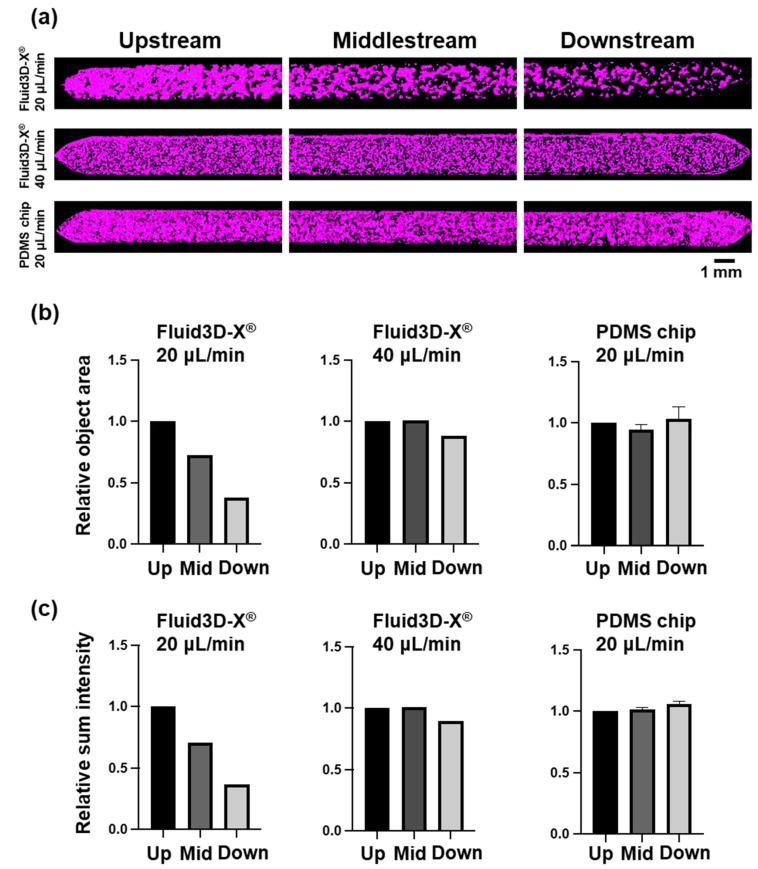
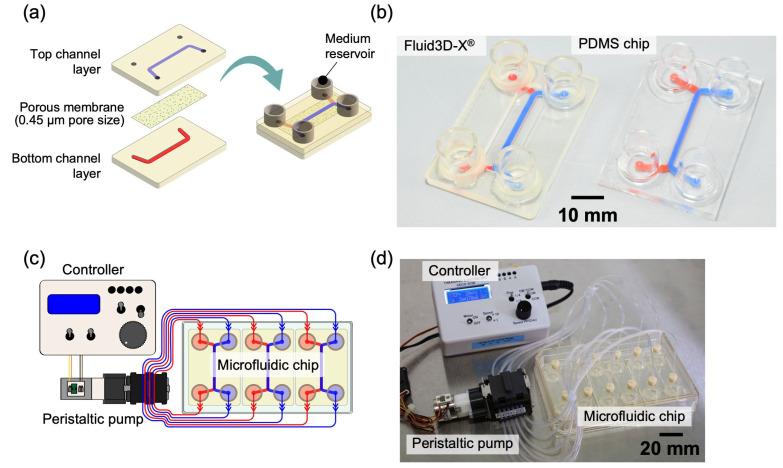
In recent years, microphysiological systems (MPS) using microfluidic technology as a new in vitro experimental system have shown promise as an alternative to animal experiments in the development of drugs, especially in the field of drug discovery, and some reports have indicated that MPS experiments have the potential to be a valuable tool to obtain outcomes comparable to those of animal experiments. We have commercialized the Fluid3D-X, a double-layer microfluidic chip made of polyethylene terephthalate (PET), under the Japan Agency for Medical Research and Development (AMED) MPS development research project and have applied it to various organ models. When intestinal epithelial cells, Caco-2, were cultured using Fluid3D-X and a peristaltic pump, villi-like structures were formed in the microchannels. Still, the degree of formation differed between the upstream and downstream sides. To examine the consideration points regarding the effects of the nutrient and oxygen supply by the chip material and the medium perfusion rate and direction on cells in the widely used double-layer microfluidic chip and to demonstrate the usefulness of a new imaging evaluation method using artificial intelligence technology as an assistive tool for the morphological evaluation of cells, the cell morphology in the channels was quantified and evaluated using the Nikon NIS.ai and microscopic observation. Villi-like structures were predominant upstream of the top channel, independent of the medium perfusion on the bottom channel, and those structures downstream developed with an increased flow rate. Additionally, compared to the Fluid3D-X, the chip made of PDMS showed almost uniform villi-like sterilization in the channel. The result indicates that the environment within the microchannels differs because the amount of nutrients and oxygen supply varies depending on the medium's perfusion and the material of the chips. As the amount of oxygen and nutrients required by different cell types differs, it is necessary to study the optimization of culture conditions according to the characteristics of the cells handled. It was also demonstrated that the AI-based image analysis method is helpful as a quantification method for the differences in cell morphology in the microchannel observed under a microscope.
近年来,作为一种新的体外实验系统,采用微流控技术的微生理系统(MPS)在药物研发中,特别是在药物发现领域,有望替代动物实验,一些报告表明,MPS实验有可能成为获得与动物实验结果相当的有价值工具。我们在日本医疗研究与开发机构(AMED)的MPS开发研究项目下,将由聚对苯二甲酸乙二酯(PET)制成的双层微流控芯片Fluid3D-X商业化,并将其应用于各种器官模型。当使用Fluid3D-X和蠕动泵培养肠上皮细胞Caco-2时,微通道中形成了绒毛状结构。然而,上下游两侧的形成程度有所不同。为了研究在广泛使用的双层微流控芯片中,芯片材料、培养基灌注速率和方向对营养物质和氧气供应的影响以及对细胞的影响的考量要点,并展示一种使用人工智能技术作为细胞形态评估辅助工具的新成像评估方法的实用性,使用尼康NIS.ai和显微镜观察对通道内的细胞形态进行了量化和评估。顶部通道上游主要是绒毛状结构,与底部通道的培养基灌注无关,下游的这些结构随着流速增加而发展。此外,与Fluid3D-X相比,由聚二甲基硅氧烷(PDMS)制成的芯片在通道中显示出几乎均匀的绒毛状灭菌。结果表明,微通道内的环境不同,因为营养物质和氧气的供应量根据培养基的灌注和芯片材料而变化。由于不同细胞类型所需的氧气和营养物质数量不同,有必要根据所处理细胞的特性研究培养条件的优化。还证明了基于人工智能的图像分析方法作为显微镜下观察到的微通道中细胞形态差异的量化方法是有帮助的。


 Zotero 插件