
全身炎症标志物在上皮性卵巢癌中的预后和预测价值
Prognostic and Predictive Value of Systemic Inflammatory Markers in Epithelial Ovarian Cancer.
作者信息
İdrisoğlu Cem, Muğlu Harun, Hamdard Jamshid, Açıkgöz Özgür, Olmusçelik Oktay, Müezzinoğlu Bahar, Ölmez Ömer Fatih, Yıldız Özcan, Bilici Ahmet
机构信息
Department of Internal Medicine, Faculty of Medicine, Medipol University, Istanbul 34214, Turkey.
Department of Medical Oncology, Faculty of Medicine, Medipol University, Istanbul 34214, Turkey.
出版信息
Medicina (Kaunas). 2025 Feb 22;61(3):380. doi: 10.3390/medicina61030380.
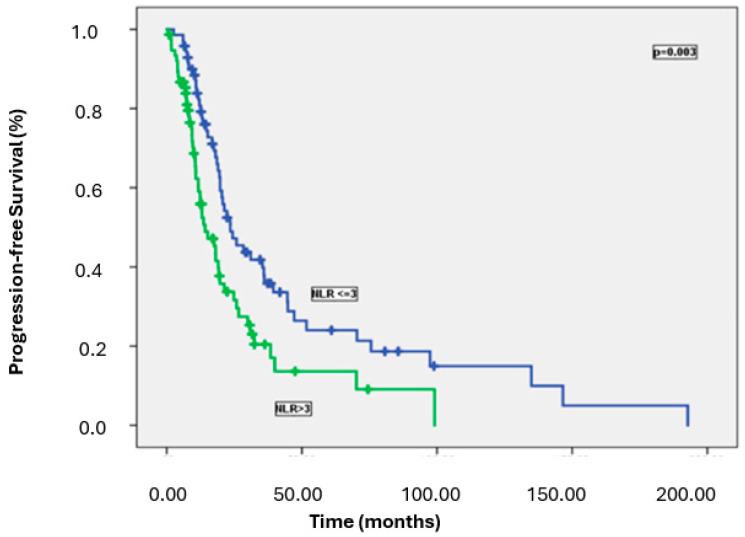
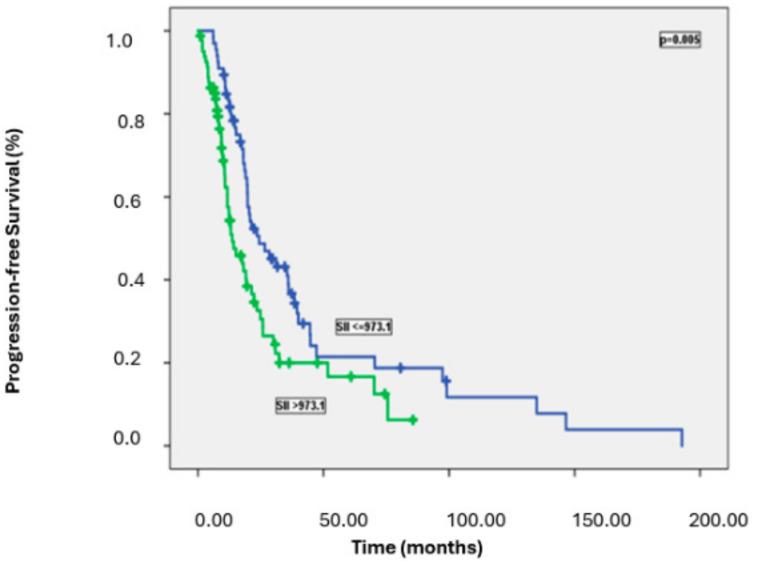
Epithelial ovarian cancer (EOC) remains a significant global health challenge. While traditional prognostic factors are well established, emerging biomarkers continue to gain attention. This retrospective study evaluated the impact of systemic inflammatory markers on progression-free survival (PFS) and overall survival (OS) in 154 EOC patients. Pre-treatment neutrophil/lymphocyte ratio (NLR), platelet/lymphocyte ratio (PLR), and systemic inflammatory index (SII) were calculated and categorized into low and high groups. Univariate and multivariate analyses were conducted to identify independent prognostic factors, while logistic regression analysis was used to determine predictors of platinum resistance. In the univariate analysis, elevated NLR and PLR were associated with poorer PFS and OS. However, these markers did not maintain statistical significance in the multivariate analysis. Although SII demonstrated a trend toward worse outcomes, it did not reach statistical significance. Histopathological type, PLR, and surgical approach were identified as independent predictors of platinum resistance. Our findings indicate that systemic inflammatory markers may hold prognostic value in EOC; however, further validation through larger prospective studies is necessary.
上皮性卵巢癌(EOC)仍然是一项重大的全球健康挑战。虽然传统的预后因素已得到充分确立,但新兴的生物标志物仍在不断受到关注。这项回顾性研究评估了全身炎症标志物对154例EOC患者无进展生存期(PFS)和总生存期(OS)的影响。计算了治疗前的中性粒细胞/淋巴细胞比值(NLR)、血小板/淋巴细胞比值(PLR)和全身炎症指数(SII),并将其分为低分组和高分组。进行单因素和多因素分析以确定独立的预后因素,同时使用逻辑回归分析来确定铂耐药的预测因素。在单因素分析中,升高的NLR和PLR与较差的PFS和OS相关。然而,这些标志物在多因素分析中未保持统计学意义。虽然SII显示出预后较差的趋势,但未达到统计学意义。组织病理学类型、PLR和手术方式被确定为铂耐药的独立预测因素。我们的研究结果表明,全身炎症标志物可能在EOC中具有预后价值;然而,需要通过更大规模的前瞻性研究进行进一步验证。



 Zotero 插件