
奥罗普切病毒:利用体外系统从巴西里约热内卢的一份人类病例样本中分离及超微结构特征分析
Oropouche Virus: Isolation and Ultrastructural Characterization from a Human Case Sample from Rio de Janeiro, Brazil, Using an In Vitro System.
作者信息
de Almeida Ana Luisa Teixeira, da Costa Igor Pinto Silva, Garcia Maycon Douglas do Nascimento, da Silva Marcos Alexandre Nunes, Lazzaro Yasmim Gonçalves, de Filippis Ana Maria Bispo, Nogueira Fernanda de Bruycker, Barreto-Vieira Debora Ferreira
机构信息
Laboratory of Viral Morphology and Morphogenesis, Oswaldo Cruz Institute, Oswaldo Cruz Foundation-Fiocruz, Rio de Janeiro 21040-900, RJ, Brazil.
Laboratory of Arboviruses and Hemorrhagic Viruses, Oswaldo Cruz Institute, Oswaldo Cruz Foundation-Fiocruz, Rio de Janeiro 21040-900, RJ, Brazil.
出版信息
Viruses. 2025 Mar 5;17(3):373. doi: 10.3390/v17030373.
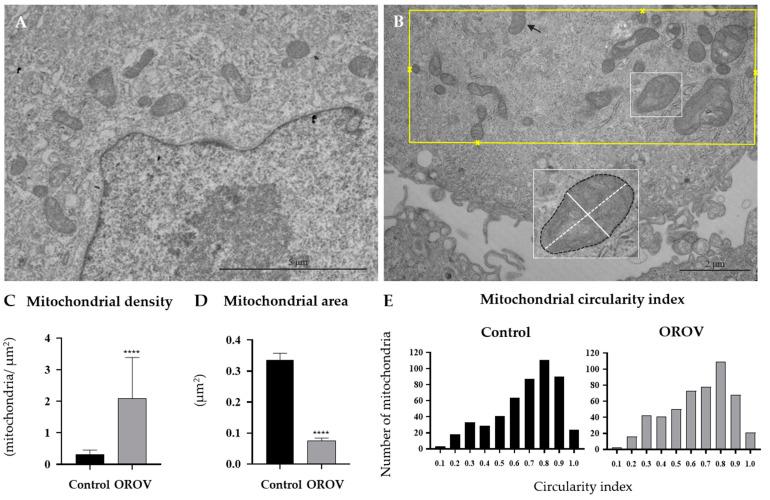
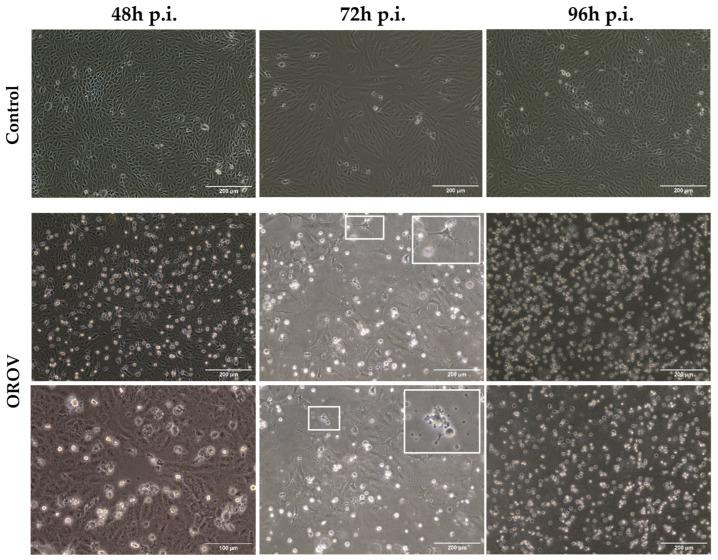
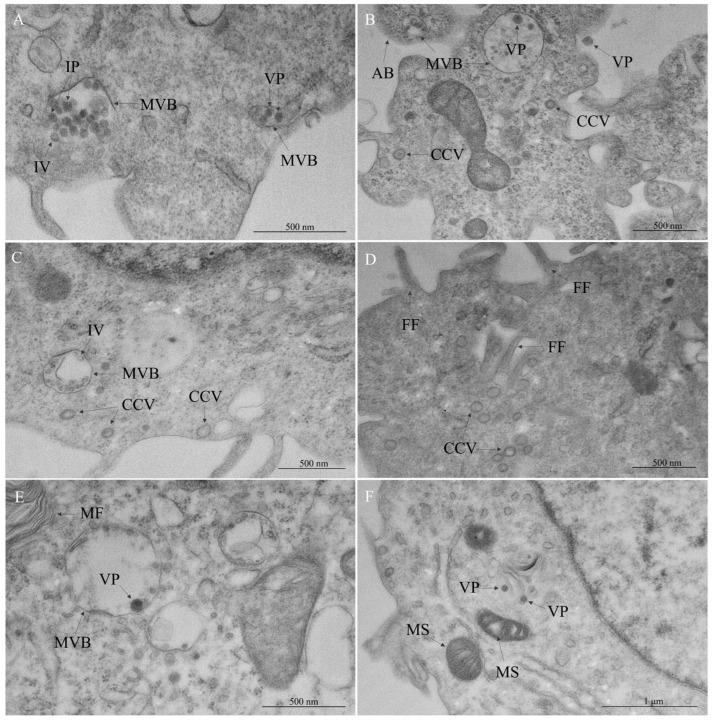
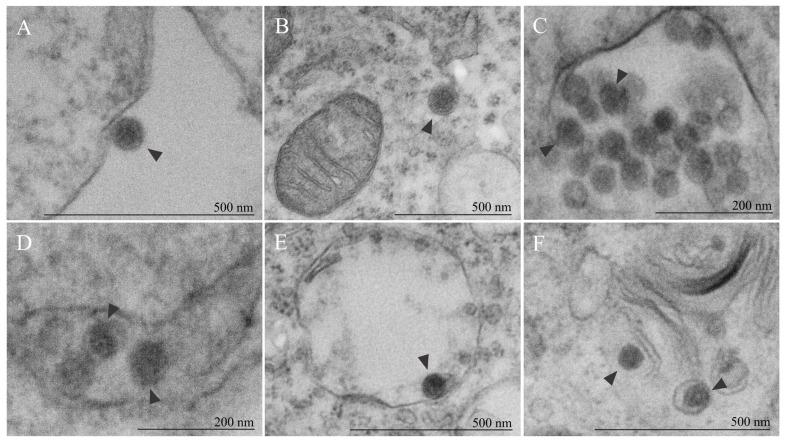
The Oropouche virus (OROV) is a segmented negative-sense RNA arbovirus member of the family, associated with recurring epidemics of Oropouche fever in Central and South America. Since its identification in 1955, OROV has been responsible for outbreaks in both rural and urban areas, with transmission involving sylvatic and urban cycles. This study focuses on the characterization of an OROV isolate from a human clinical sample collected in the state of Rio de Janeiro, a non-endemic region in Brazil, highlighting ultrastructural and morphological aspects of the viral replicative cycle in Vero cells. OROV was isolated in Vero cell monolayers which, following viral inoculation, exhibited marked cytopathic effects (CPEs), mainly represented by changes in cell morphology, including membrane protrusions and vacuolization, as well as cell death. Studies by transmission electron microscopy (TEM) revealed significant ultrastructural changes, such as apoptosis, intense remodeling of membrane-bound organelles and signs of rough endoplasmic reticulum and mitochondrial stress. Additionally, the formation of specialized cytoplasmic vacuoles and intra- and extracellular vesicles emphasized trafficking and intercellular communication as essential mechanisms in OROV infection. RT-qPCR studies confirmed the production of viral progeny in high titers, corroborating the efficiency of this experimental model. These findings contribute to a better understanding of the cytopathogenic mechanisms of OROV infection and the contribution of cellular alterations in OROV morphogenesis.
奥罗普切病毒(OROV)是该病毒家族的一种分节段负链RNA虫媒病毒,与中南美洲奥罗普切热的反复流行有关。自1955年被发现以来,OROV已在农村和城市地区引发疫情,其传播涉及野生和城市传播循环。本研究重点对从巴西非流行地区里约热内卢州采集的一份人类临床样本中分离出的OROV进行特性分析,突出了该病毒在Vero细胞中复制周期的超微结构和形态学方面。OROV在Vero细胞单层中分离培养,病毒接种后,细胞单层出现明显的细胞病变效应(CPE),主要表现为细胞形态变化,包括膜突出和空泡化,以及细胞死亡。透射电子显微镜(TEM)研究揭示了显著的超微结构变化,如细胞凋亡、膜结合细胞器的强烈重塑以及粗面内质网和线粒体应激迹象。此外,特殊细胞质空泡以及细胞内和细胞外囊泡的形成强调了运输和细胞间通讯是OROV感染的重要机制。逆转录定量聚合酶链反应(RT-qPCR)研究证实产生了高滴度的病毒子代,证实了该实验模型的有效性。这些发现有助于更好地理解OROV感染的细胞致病机制以及细胞改变在OROV形态发生中的作用。


 Zotero 插件